Winter Truck Driving: Black Ice, Jackknife Risk and When to Stop
Winter truck driving means slower speeds, double or triple following distance and a plan to park. How to spot black ice and prevent a jackknife.
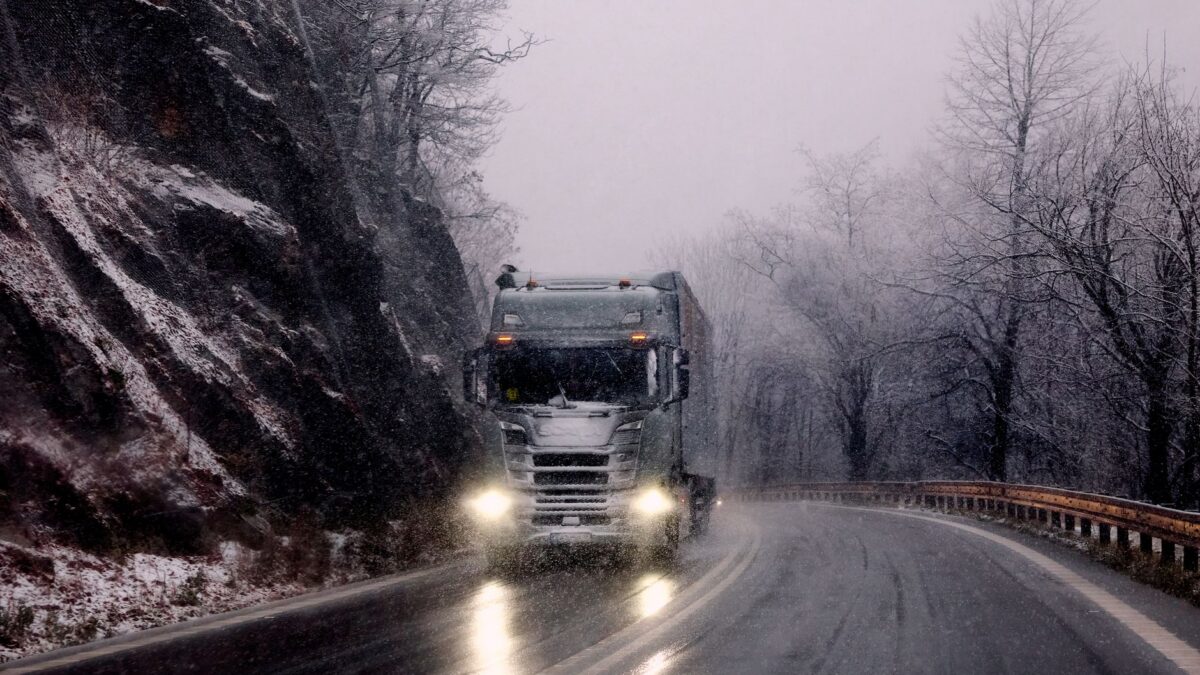
Safe winter truck driving comes down to three habits: slow down well below the posted limit, keep at least double your normal following distance (often 14 seconds or more for a loaded tractor-trailer), and park before conditions get past what you and the truck can handle. Federal rules back this up. Under 49 CFR 392.14, a driver must reduce speed when snow, ice or sleet affect traction and must stop driving when conditions become too dangerous to operate safely.
Black ice and jackknifes cause many winter truck crashes, and both are easier to prevent than to recover from.
How do you spot black ice from the cab?
You usually cannot see black ice, so you watch for the conditions that make it. Black ice is a thin, clear glaze that forms when the pavement is at or just below 32°F (0°C), and the road surface can be colder than the air temperature on your dash display.
- Bridges, overpasses and ramps freeze first because cold air reaches them from above and below.
- Shaded stretches, cuts through hills and low spots near rivers stay icy after the sun has dried the rest of the road.
- Ice building on your mirror arms, antenna or the top corner of the windshield means water on the road can freeze too.
- When the spray from vehicles ahead suddenly stops while the road still looks wet, the water has likely turned to ice.
- Early morning, evening and nights after a daytime thaw carry the highest risk, since meltwater refreezes as the temperature drops.
If the steering suddenly feels light or the road gets quiet, assume you are on ice. Ease off the throttle, keep the wheel straight and avoid braking or sharp steering until you feel grip again.
What causes a jackknife and how do you prevent one?
A jackknife happens when the drive wheels or trailer wheels lose traction and the two units stop following the same path. Locked or spinning drive wheels let the tractor swing around, and locked trailer wheels let the trailer slide out to the side.
The usual triggers are hard braking, a sudden downshift, an engine brake or retarder biting on a slick surface, and turning while braking. Empty or lightly loaded trailers are more prone to it because there is less weight pressing the tires to the road.
- Brake early and gently, and do all your braking in a straight line before a curve or exit.
- Turn off the engine brake or retarder on slippery roads, as the CDL manual advises.
- Do not use cruise control on wet, snowy or icy pavement.
- Downshift before a hill or curve, while the tires still have good traction.
- Steer smoothly; a quick lane change can start the trailer swinging.
If the trailer starts to swing, release the brakes so the wheels can roll and regain grip. Steer only as much as needed to keep the tractor pointed where you want to go. Braking harder makes a skid worse.
How much following distance does a truck need on snow and ice?
A tractor-trailer on snow or ice needs at least two to three times its dry-road following distance. The standard CDL rule is one second for every 10 feet (about 3 m) of vehicle length at speeds under 40 mph (64 km/h), plus one extra second above 40 mph.
For a typical 70-foot (21 m) rig at highway speed, that comes to 8 seconds on dry pavement. On wet roads, add more. On packed snow or ice, 16 to 24 seconds is reasonable, and on glare ice the safe answer is often to slow to a crawl or get off the road. Count the gap by picking a fixed point, like a sign, and counting seconds from when the vehicle ahead passes it until your bumper reaches it.
Lower speed matters as much as the gap. Stopping distance grows with speed, and on ice it can be several times longer than on dry pavement. Speeding in winter also draws enforcement attention, as in the case of a semi stopped at 98 mph in a 55 zone.
When should a truck driver stop and park?
Stop when you can no longer see far enough to stop within that distance, when the truck is losing traction on grades or curves, or when you are relying on luck to stay in your lane. Section 392.14 says operation must be discontinued in those conditions and not resumed until the truck can be operated safely.
Signs that it is time to find a parking spot:
- Visibility drops in whiteout or blowing snow and you cannot see the fog line or the vehicles ahead.
- Other trucks are pulling off, or the state has closed the road or posted chain requirements you cannot meet.
- You feel the drive tires spinning on grades or the trailer stepping out in curves.
- Gusty crosswinds hit an empty or light trailer on an icy road.
- You are tired from hours of white-knuckle driving, which slows reaction time.
Park in a truck stop, rest area or another legal spot. Do not park on a highway shoulder or ramp in a storm unless you have no choice, because stopped trucks are often hit in low visibility. Tell your dispatcher or broker early, with your location and the road conditions, so the delivery can be rescheduled. A late load costs less than a wreck or an out-of-service order after an inspection or crash.
Do hours-of-service rules allow extra time for bad weather?
Yes. The adverse driving conditions exception lets a property-carrying driver add up to 2 hours to the 11-hour driving limit and extend the 14-hour window by up to 2 hours when snow, sleet, fog or other unusual road or traffic conditions were not known at the start of the trip. The exception does not cover weather that was already forecast when you were dispatched, and it does not let you keep driving through conditions that are unsafe. The Federal Motor Carrier Safety Administration publishes the full hours-of-service rules and guidance.
What should be in the truck before winter?
A winter-ready truck has working equipment and enough supplies to wait out a closure that may last a day or longer.
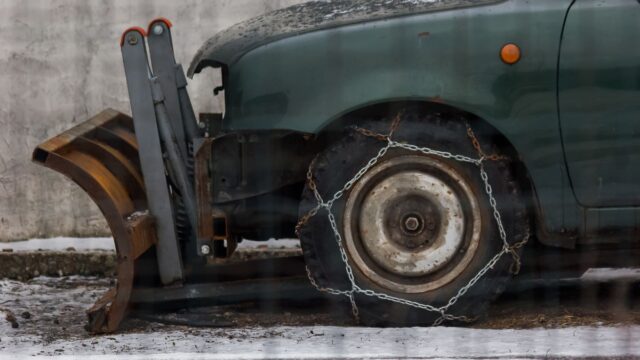
- Tire chains that fit your drive tires, plus bungees or tensioners, and practice putting them on before you need to. Some states, including Colorado, require trucks to carry chains on certain mountain routes in winter.
- Winter-blend diesel or an anti-gel additive, and a spare fuel filter.
- Washer fluid rated for freezing temperatures, spare wiper blades, an ice scraper and a snow brush.
- Warm clothes, gloves, boots, blankets or a sleeping bag, water and food for at least 24 hours.
- A flashlight, reflective triangles, a small shovel and sand or kitty litter for traction.
- A fully charged phone and a charger. Check conditions only when parked, since hand-held phone use while driving is banned for CMV drivers.
During pre-trip inspections, clear ice from lights, reflectors, mirrors and the windshield, and drain air tanks to keep moisture out of the brake system. The National Weather Service posts winter storm warnings by area.
Quick answers
Should I use the engine brake on snow?
Turn off the engine brake or retarder on snow, ice or wet roads. It can lock or slow the drive wheels enough to start a skid or a jackknife.
Is an empty trailer more dangerous in winter?
Yes. An empty or light trailer has less weight on its tires, so it loses grip more easily and is more likely to swing out or be pushed by crosswinds.
At what temperature does black ice form?
Black ice forms when the road surface is at or below 32°F (0°C). Watch closely whenever the air temperature is between about 28°F and 38°F (about minus 2°C to 3°C), since pavement and bridges can be colder than the air.
Can I refuse to drive in a snowstorm?
Federal rules require you to stop when conditions are too dangerous to drive safely, and federal whistleblower protections cover drivers who refuse to operate in conditions that risk serious injury. Report the refusal and the reason to your dispatcher in writing.