Humble Robotics Raises $51 Million for Driverless Electric Haulers
Humble Robotics closed a $51 million Series A for autonomous electric haulers aimed at port and warehouse runs. See the design, range and Q3 2027 timeline.
Humble Robotics, a startup building self-driving electric freight vehicles for short hauls, has closed a $51 million Series A round, FreightWaves reported. The money pays for customer pilots and early manufacturing, and it lifts the company’s total funding to $75 million when combined with an earlier $24 million seed round.
The company is just over a year old and is aiming for commercial operations in Q3 2027. Pilots with customers are planned before that date. Its first targets are the repetitive runs that many local drivers and drayage carriers handle today: port to transload facility, warehouse to warehouse, and moves inside terminals.
A chassis that pulls itself
Humble’s vehicle has no separate tractor. It is a flat, self-propelled chassis, essentially a trailer with its own drive, that can carry an intermodal container or a box body built onto it. The company calls these units “haulers.”
Because the tractor and trailer are combined into one chassis, Humble says the hauler is roughly 20% lighter than a conventional tractor-trailer. The company argues that the weight savings allow heavier payloads, which matters on electric equipment where the battery itself eats into how much freight a vehicle can legally carry.
The haulers are designed for a 200-mile range. Founder and CEO Eyal Cohen told FreightWaves the figure was chosen partly because 87% of U.S. truck-tonnage routes are shorter than 250 miles. He tied the choice of battery power to the short, automated duty cycle: “We like electric for short, we like electric for autonomous,” he said. Cohen also noted that plugging in a driverless vehicle is far easier to automate than refueling one with diesel.
Mapping routes with regular trucks first
Before any autonomous hauler shows up at a customer site, Humble runs conventional trucks fitted with sensors over that customer’s routes. Those trucks map the roads and record how each depot, terminal or warehouse operates, and the data goes into the hauler’s onboard software.
The company describes its method as “unified autonomy.” In practice, that means Humble designs the sensors and AI software together with the vehicle itself, instead of bolting a self-driving kit onto an existing truck.
Commercial service will not start until Humble finishes internal validation and a “supervised driving” phase. During that phase, human monitors watch over the haulers while they run on customer routes. Humble says it wants the vehicles to slot into existing freight operations, covering capacity gaps and making jobs such as unmanned night shifts possible.
What it means for drayage and short-haul freight
The work Humble is chasing is the same short, repetitive freight that keeps many port drayage drivers and local fleets busy. Its stated plan is to fill capacity gaps and run shifts that are hard to staff, such as overnight work, rather than replace whole operations at once. Anyone who hauls containers between ports, transload yards and nearby warehouses is in the market segment the company has named.
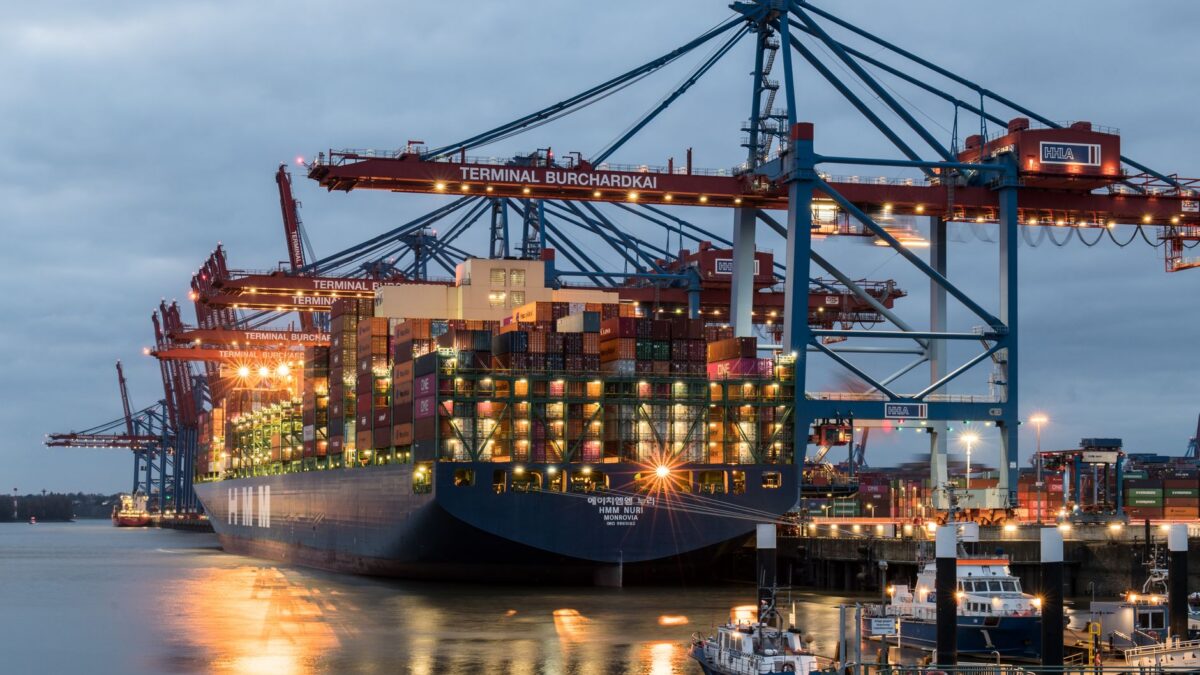
Ports are one place where automation already has a foothold. The Port of Long Beach uses automated chassis inside its terminal for stack-to-stack container moves, and Humble sees that familiarity as a way in. Cohen also pointed to China, where he said 50% of new heavy-truck sales are now electric, as a sign of where freight equipment is heading.
For background on how battery-electric trucks are being used on U.S. roads now, see our guide to electric semi trucks in service, with range and charging details.
What comes next
Humble’s near-term steps are customer pilots, early manufacturing and the supervised driving phase. The company has not disclosed which customers are taking part in pilots or where the haulers will be built. Its stated target for starting commercial operations remains Q3 2027.
Source: FreightWaves