Electric Semi Trucks in Service: Range, Charging and Incentives
Electric semis are working in ports and on short regional lanes, with published ranges of about 150 to 500 miles. The federal tax credit ended for trucks acquired after September 30, 2025.
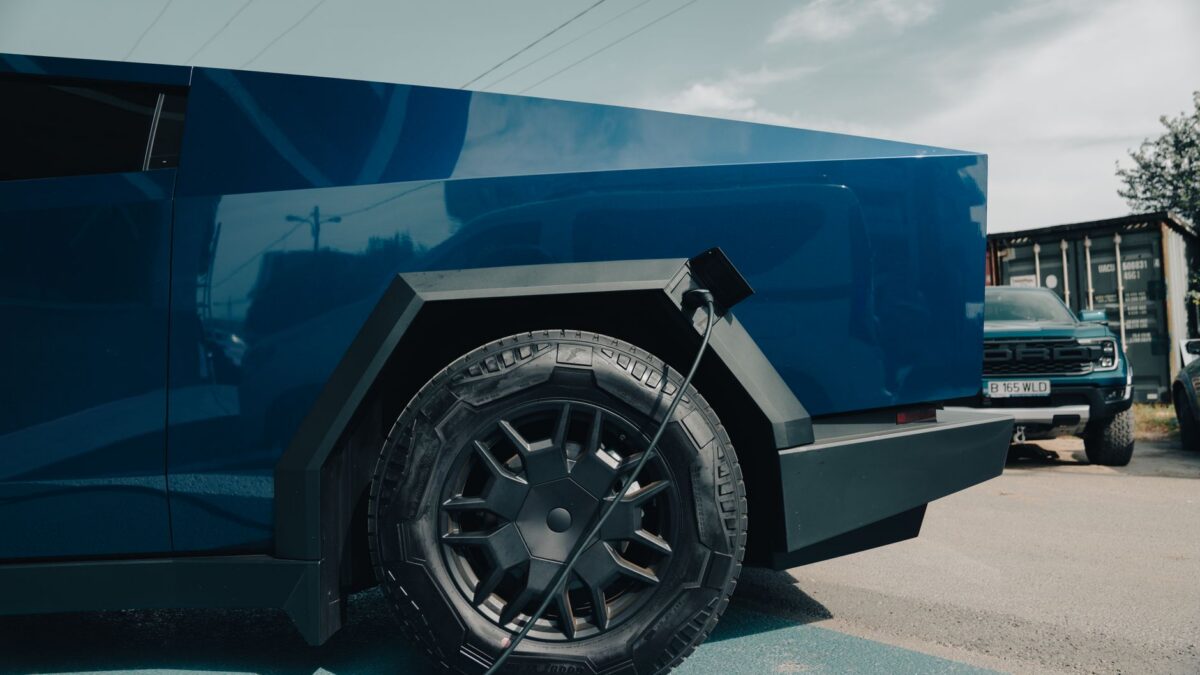
Battery-electric Class 8 trucks in US service include the Tesla Semi, Freightliner eCascadia, Volvo VNR Electric, Peterbilt 579EV and Kenworth T680E. Makers publish ranges from about 155 to 275 miles for most models and up to about 500 miles for Tesla’s long-range Semi. Most run port drayage and regional routes that return to a depot charger each night.
Which electric semi trucks are in service?
Five truck makers sell battery-electric Class 8 tractors in the US. Published figures differ in how they are measured, so compare like with like and ask the dealer for the duty cycle behind each number.
| Model | Maker’s published range | Charging as published | Gross combination weight |
|---|---|---|---|
| Tesla Semi | Up to about 500 miles (long-range version) | Tesla’s Megacharger network, rated around 1.2 MW in company materials | Check Tesla’s spec sheet |
| Freightliner eCascadia | 155 miles (291 kWh, 4×2); 230 miles (438 kWh, 4×2); 220 miles (438 kWh, 6×4) | 0 to 80% in as little as 90 minutes | Up to 82,000 lb |
| Volvo VNR Electric | Up to 275 miles (6×2 and 6×4 tractors, 565 kWh) | 0 to 80% in 60 minutes (4-battery) or 90 minutes (6-battery) on a 250 kW CCS1 charger | Up to 82,000 lb (6×2) |
| Peterbilt 579EV | See Peterbilt’s current spec sheet | See maker | See maker |
| Kenworth T680E | See Kenworth’s current spec sheet | See maker | See maker |
Freightliner says its ranges assume loads taper off over the trip, regenerative braking is used and the trip starts on a full charge. Volvo says typical range is lower than the maximum, about 220 miles for the 275-mile rating. Heavy loads, cold weather, hills and highway speeds all cut range.
Where do fleets run electric semis?
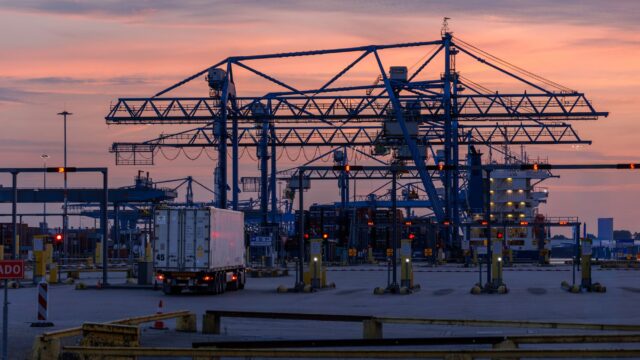
Most battery-electric tractors work routes that fit within one charge and return to base: port drayage, rail ramp shuttles, warehouse-to-store delivery and short regional runs. Drayage suits them because trips are short, speeds are low, trucks idle in terminal lines and the truck parks at a yard with a charger every night. How that work is organized is covered in how port drayage works.
Long-haul electric trucking is still rare. It needs megawatt-class public charging along freight corridors, and charging sessions must fit within hours-of-service limits. Tesla Semis are in service with Tesla and some customer fleets, and Tesla said in 2026 that the first Semi came off a new high-volume line in Nevada.
What do electric semis mean for weight and payload?
Battery packs weigh several thousand pounds more than a diesel engine, transmission and fuel, which reduces legal payload under the 80,000 lb federal gross limit. Federal law gives battery-electric and natural gas trucks some extra allowance on Interstates, and states set rules on their own roads, so check current limits before quoting loads near the maximum. The basic limits are in truck size and weight limits.
What incentives are available as of November 2026?
The federal incentive that made many purchases work is gone for new orders. The IRS commercial clean vehicle credit (Section 45W) is not available for vehicles acquired after September 30, 2025. A truck acquired by then, meaning under a binding written contract with a payment made on or before that date, can still qualify when placed in service later. For vehicles of 14,000 lb GVWR or more the maximum credit was $40,000.
State and local programs remain:
- California HVIP (Clean Truck and Bus Voucher Incentive Project) gives point-of-sale vouchers on eligible zero-emission trucks. As of late 2026 its program site said standard voucher funding was closed and that it aimed to reopen with more funding by the end of 2026.
- Port, air district and state programs in several states fund trucks and chargers, often for drayage fleets, with their own rules and deadlines.
- Utility make-ready programs may pay part of the cost of installing depot chargers.
Federal rules have also shifted. EPA repealed its greenhouse gas standards for trucks in 2026, removing the Phase 3 rules that would have pushed makers to sell more zero-emission trucks from model year 2027. Details are in EPA truck emissions rules.
What should a carrier check before buying an electric semi?
- Daily route miles, including deadhead, against the maker’s typical range rather than the maximum.
- Where the truck will charge each night and whether the utility can supply power to the yard, which can take many months.
- Charger hardware and connector type, since makers do not all use the same charging standard.
- Payload on your heaviest loads after battery weight.
- Incentives that are open today, their deadlines and any requirement to scrap an older truck.
- Dealer service capacity for high-voltage repairs and parts lead times.
- Warranty terms on the battery pack.
Bottom line
Electric semis work today where a truck runs a predictable route under about 200 miles and parks at a depot charger, which is why ports lead adoption. With the federal tax credit gone and California’s main voucher program between funding rounds, the purchase math depends heavily on local incentives and utility costs, so price a specific route rather than a fleet average.
FAQ
How far can an electric semi go on one charge?
Published maximum ranges are about 155 to 275 miles for the eCascadia and VNR Electric, and up to about 500 miles for Tesla’s long-range Semi. Real range depends on load, weather, terrain and speed.
Is there still a federal tax credit for electric trucks?
No, not for trucks acquired after September 30, 2025. Trucks acquired under a binding contract with payment by that date can still claim the Section 45W credit when placed in service.
How long does it take to charge an electric semi?
Volvo lists 60 to 90 minutes to 80 percent on a 250 kW charger, and Freightliner lists as little as 90 minutes to 80 percent. Overnight depot charging on smaller chargers takes longer but fits a daily route.