LTL vs Truckload: How the Two Freight Networks Differ
Two ways to move freight by truck, with different equipment, pricing, jobs and risks. How each works, what the 2025 NMFC density overhaul changed, and who the largest carriers are.
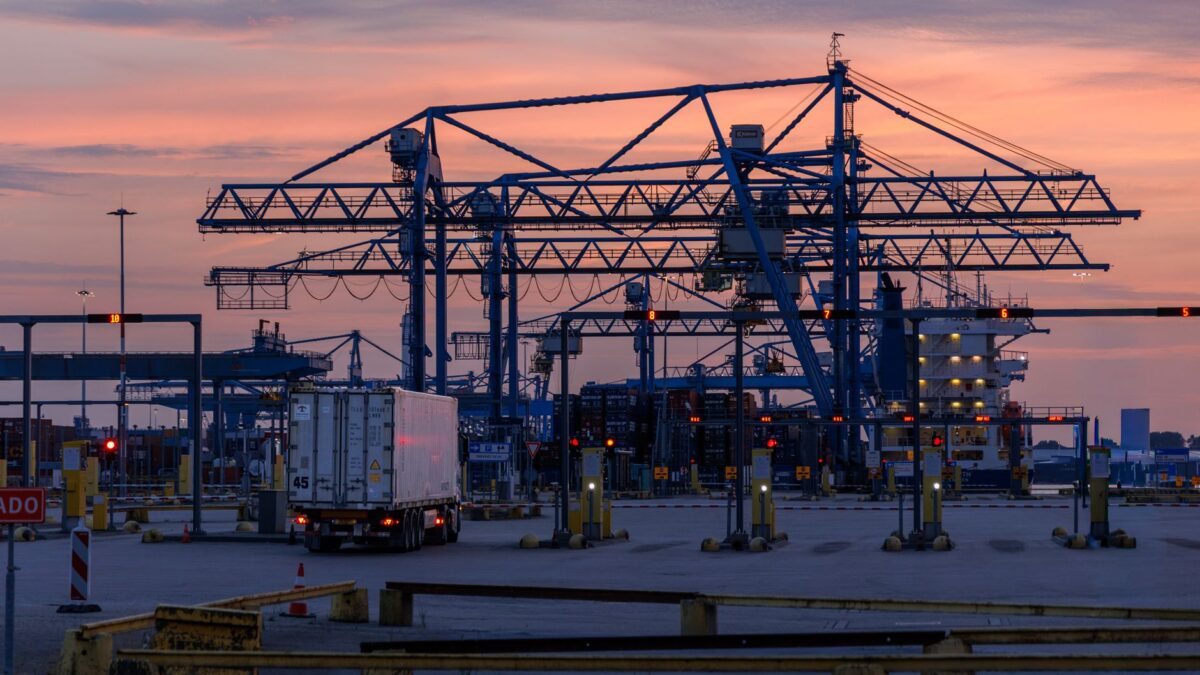
Less-than-truckload (LTL) carriers combine many small shipments, usually 1 to 6 pallets each, on one trailer and move them through a network of terminals, pricing each by weight, distance and freight class. Truckload (TL) carriers haul one shipper’s freight from pickup straight to delivery and price the whole trailer, usually per mile or per load. LTL is cheaper for small shipments; truckload is faster and handles freight less.
How does LTL freight move compared with truckload?
An LTL shipment typically makes several stops before delivery. A local driver picks it up in a city route and brings it to an origin terminal. Dock workers cross-dock it onto a linehaul trailer, often with freight from dozens of other shippers. The trailer runs overnight to a hub or breakbulk, where freight is sorted again, then to the destination terminal, where a local driver delivers it.
A truckload shipment usually has one pickup and one delivery. The same driver, or a team, takes the loaded trailer directly to the receiver. Some truckload moves include extra stops, but the freight is not sorted through terminals.
| Factor | LTL | Truckload |
|---|---|---|
| Typical shipment | 1 to 6 pallets, a few hundred to several thousand pounds | Full or mostly full trailer, up to legal weight |
| Route | Pickup, terminal, hub, terminal, delivery | Pickup to delivery |
| Handling | Freight is loaded and unloaded several times | Usually loaded once and unloaded once |
| Pricing basis | Tariff rate by freight class, weight and lane, minus a discount, plus accessorials | Rate per mile or flat rate per load, plus fuel surcharge |
| Transit time | Set service days by lane, often longer than truckload | Depends on miles and hours-of-service limits |
| Driver jobs | Local pickup and delivery, and linehaul between terminals, often home daily or most nights | Over-the-road, regional or dedicated, often away for days |
| Equipment | Pup trailers (28 ft) and doubles common, plus 53-ft trailers | Mostly 53-ft dry vans, reefers and flatbeds |
How is LTL freight priced?
LTL rates start from a carrier’s tariff, which lists a base rate for each origin and destination, weight break and freight class. Shippers with contracts get a percentage discount off that base, and the carrier adds a fuel surcharge and accessorial charges such as liftgate, residential delivery, inside delivery or appointment. Many carriers also set a minimum charge per shipment.
Weight breaks lower the rate per hundredweight as a shipment gets heavier. A carrier can reweigh or reinspect freight at its terminal and rebill if the weight or class on the bill of lading was wrong, so accurate paperwork matters; see bill of lading explained. Truckload pricing follows different rules, covered in how freight rates work.
What is NMFC freight class?
Freight class is a number from 50 to 500 that the National Motor Freight Classification (NMFC) assigns to commodities. It reflects how costly an item is to move, based on four characteristics: density, stowability, handling and liability. Low classes are dense, sturdy freight that is cheap to ship per pound; high classes are light, bulky or fragile freight that costs more. The NMFC is published by the National Motor Freight Traffic Association (NMFTA), a carrier organization, and LTL carriers adopt it through their tariffs.
What changed in the NMFC in 2025?
The NMFTA’s Docket 2025-1 took effect on July 19, 2025, and moved a large share of commodities from fixed, commodity-based classes to density-based classification. Under the change:
- the standard density scale grew from 11 subprovisions to 13, so density decides more classes;
- many items without special handling, stowability or liability issues now take their class from pounds per cubic foot rather than from a fixed listing;
- items that still need special treatment keep separate provisions.
The practical effect for shippers is that measuring each pallet’s dimensions and weight now matters more, because a pallet’s density determines its class for many items. Many LTL carriers check with dimensioning machines at their terminals. The NMFTA released further updates in later dockets, so shippers should check the current classification for each item rather than rely on a pre-2025 class.
Who are the largest LTL and truckload carriers?
The 2026 Transport Topics Top 100 For-Hire Carriers list, which ranks companies by 2025 revenue, gives these leaders in each segment. Figures are as listed by Transport Topics; two LTL figures are its own estimates.
| Rank in segment | LTL carrier (2025 revenue) | Truckload/dedicated carrier (2025 segment revenue) |
|---|---|---|
| 1 | FedEx Freight ($8.68 billion) | Knight-Swift Transportation ($4.87 billion) |
| 2 | Old Dominion Freight Line ($5.50 billion) | J.B. Hunt Transport Services ($4.11 billion) |
| 3 | Estes Express Lines ($4.99 billion, estimate) | TFI International ($2.73 billion) |
| 4 | XPO ($4.83 billion) | Penske Logistics ($2.60 billion) |
| 5 | R+L Carriers ($3.73 billion, estimate) | Schneider ($2.47 billion) |
| 6 | Saia ($3.23 billion) | Ryder Dedicated Transportation Solutions ($2.34 billion) |
FedEx Freight appeared on the 2026 list for the first time as a stand-alone public company after its separation from FedEx. The LTL market is far more concentrated than truckload: a separate ranking by Logistics Management and SJ Consulting put the total US LTL market at $51.8 billion in 2025, and in that ranking the top three alone, FedEx Freight, Old Dominion and Estes, held about 37 percent of it. Truckload is split among thousands of carriers, most of them small fleets and owner-operators.
Which is better for drivers, LTL or truckload?
LTL jobs at large carriers are often local or linehaul runs with regular schedules and more home time, and many involve dock work, doubles and triples endorsements. Truckload jobs range from long-haul over-the-road to dedicated routes, with pay usually per mile. The tradeoffs in pay type are covered in how truck drivers are paid.
Bottom line
Since the 2025 density changes, the biggest single factor in an LTL bill for many items is an accurate measurement of each pallet, not the commodity name. Truckload carriers bear a narrower cargo risk because freight is handled less, while LTL tariffs often cap liability per pound, which matters if a damaged shipment turns into a Carmack cargo claim.
FAQ
When should a shipper switch from LTL to truckload?
Shippers often compare both kinds of quotes once a shipment takes up a large part of a trailer. Volume LTL and partial truckload options sit between the two, and the right choice depends on the lane and the freight.
Can an owner-operator haul LTL freight?
Some do, as contractors running linehaul for LTL carriers or hauling consolidated loads for brokers. Most LTL pickup and delivery work is done by the carriers’ own employee drivers.
What is a reclass on an LTL bill?
A reclass is when the carrier inspects a shipment, finds a different class than the bill of lading listed, and rebills at the correct class. Since the 2025 NMFC changes, reclasses often come from density measurements.
Is freight class used in truckload?
Generally no. Truckload rates are set per mile or per load, so freight class does not set the price.