Big Fleets Want FMCSA Crackdown to Stay, FreightWaves CEO Says
FreightWaves CEO Craig Fuller says large fleets back the FMCSA crackdown and expects CDL rules and a $604 million verdict to squeeze brokers.
Small carriers and freight brokers hoping a new administration will loosen federal trucking enforcement should not count on it, FreightWaves founder and CEO Craig Fuller said Nov. 2. Speaking at Optym’s Convergence 2026 conference in Frisco, Texas, he argued that the largest fleets now support the crackdown, so it will continue no matter which party holds power.
Fuller linked three developments: the federal move against non-domiciled commercial driver’s licenses, a Supreme Court ruling that lets brokers be sued for negligent hiring, and a $604 million jury verdict against C.H. Robinson. In his view, brokers and small carriers will have fewer low-cost trucks to hire and more legal exposure for the ones they use. He called it the biggest change in trucking since deregulation in 1980.
Why big carriers back tighter hiring rules
According to Fuller, large motor carriers, the American Trucking Associations and the Truckload Carriers Association have decided that stricter driver hiring standards are what they need to survive. “Follow the money,” he told the audience when asked whether a change in Washington would bring relief.
For years, he said, ATA argued that the industry had a driver shortage, and lawmakers used that argument to fund driver schools and other measures. Many of the new drivers went to small fleets that found loads through brokers instead of joining large carriers. Fuller said brokers handled 6% of freight in the early 2000s and “probably in excess of 30%” today, as shipper procurement teams moved to bids.
Access to brokered loads changed how downturns play out. Fuller said small carriers failed in large numbers during the 2008 financial crisis but mostly survived the freight recession that started in 2022. A carrier that covers its variable cost per mile, he said, can keep running for years without going bankrupt.
Non-domiciled CDLs and the long freight slump
Fuller said drivers with non-domiciled CDLs, along with operators who work outside the rules and often for lower pay, are probably the main reason the market stayed weak for so long. In a November 2025 debate, he estimated the federal interim rule could take 5% to 7% of drivers out of the market.
Others point elsewhere. FTR’s Avery Vise said in September 2024 that the market still had roughly 95,000 more for-hire carriers than before the pandemic. When the D.C. Circuit stayed FMCSA’s interim rule in November 2025, the majority cited agency data showing non-domiciled holders made up about 5 percent of CDL holders and about 0.2 percent of fatal crashes. One judge dissented. FMCSA’s final rule, published in February, took effect March 16.
What it means for brokers and shippers
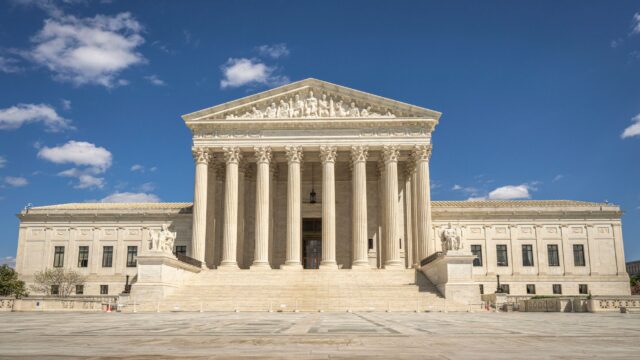
On May 14, the Supreme Court ruled 9-0 in Montgomery v. Caribe Transport II that a state negligent-hiring claim against a broker fits the safety exception in federal law, so brokers cannot use preemption to block those suits. In July, a Dallas County jury found C.H. Robinson 23% responsible for a 2021 Mississippi crash that killed three people and returned the $604 million verdict in Lipe v. Lupus Superior. Overdrive reported that interest brings the total to about $711 million, and the jury’s finding that the driver was effectively a company employee leaves the broker exposed to nearly all of it.
C.H. Robinson has said the carrier held a Satisfactory FMCSA rating when it was chosen and plans to appeal. The company reports one serious accident claim for every 500 million miles driven on its customers’ loads. By late May it had started moving some carriers to non-certified status based on safety scores, without publicly linking that step to the ruling.
Fuller said the risk is reaching shippers and warehouses too. An amended complaint over the crash that injured Dalilah Coleman names Unilever and United States Cold Storage alongside C.H. Robinson, alleging they did not verify the carrier that took the load. Fuller estimated that at least 20% to 30% of loads leave a warehouse without anyone confirming the truck belongs to the assigned carrier.
Safety data and the open legal questions
FMCSA data show large trucks in fatal crashes rose from 1.22 per 100 million vehicle miles in 2010 to 1.76 in 2022. NHTSA puts the rate at 1.58 more recently, with 5,340 people killed in large-truck crashes in 2024. FMCSA does not track crashes by CDL category.
The reach of broker liability is still unsettled. Justice Brett Kavanaugh, joined by Justice Samuel Alito, wrote that brokers that acted reasonably should be able to defend against such suits. Fuller expects shippers to give large asset-based carriers more freight in coming bids, and brokers and shippers heading into 2027 truckload bids will have to price in liability alongside a smaller pool of cheap carriers.
Source: FreightWaves