Driving a Truck in Dense Fog: Speed, Lights and Following Distance
In dense fog, slow until you can stop within the distance you can see, use low beams and leave extra room. Also covers pile-ups and when to pull off.
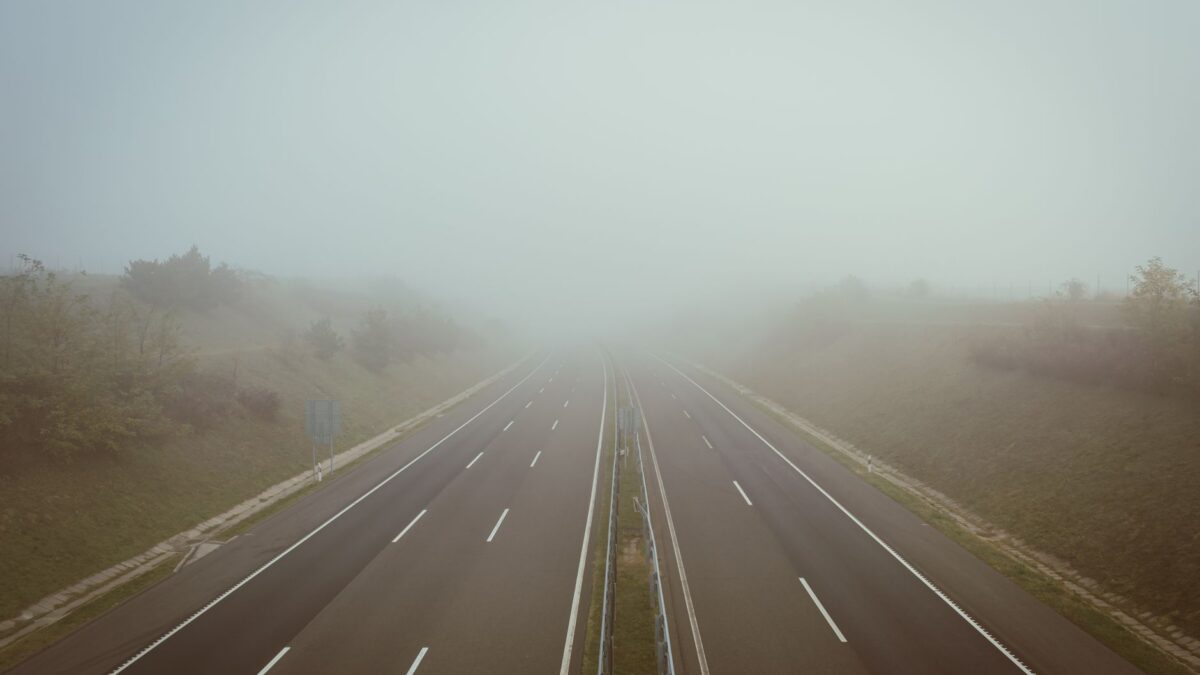
In dense fog, a truck driver should slow down until the rig can stop within the distance he or she can clearly see, drive on low beams, and leave far more room than in clear weather. If visibility drops so low that you cannot judge that distance, get off the road. A loaded tractor-trailer needs much more space to stop than a car, and fog hides the brake lights of whatever is ahead.
How slow should a truck drive in dense fog?
Slow enough that you can stop inside the distance your lights and eyes cover. Dense fog is generally described as visibility of a quarter mile or less, and in many patches it is much worse. A loaded rig at highway speed needs several hundred feet to stop on dry pavement, so there is no safe highway speed once you can see only a few hundred feet.
The federal rule is short. Under FMCSA regulations on hazardous conditions, drivers must use extreme caution when fog, snow, ice, rain, dust or smoke cuts visibility or traction, must reduce speed, and must stop driving if conditions become sufficiently dangerous. The rule sets no number. The decision is yours, and it is yours to defend after a crash.
Fog is patchy. A clear stretch can end at a low spot or a river crossing, so do not speed up because the last mile looked fine. Treat each stretch as dense until the road shows otherwise.
Which lights should you use in fog?
Use low beams. High beams throw light into the water droplets and bounce it back at your eyes, which shrinks what you can see. If your truck has fog lights, they sit low and spread wide, and they can help you see the edge line and the shoulder.
- Turn on all required marker and clearance lights so drivers behind you can pick out the length of the trailer.
- Clean headlights, taillights and reflective tape before the trip. A dirty trailer rear is much harder to see in fog.
- Keep the windshield and mirrors clean, and run the defroster or wipers when moisture builds up.
- Use hazard flashers only where your state allows them while moving. Some states restrict them to stopped vehicles, so check the law for the states on your route.
How much following distance does a truck need in fog?
More than the usual rule. The common starting point in CDL training is one second of gap for every ten feet of vehicle length at speeds under 40 mph, plus one second above that speed. A 70-foot rig at highway speed therefore starts at about eight seconds. In fog, add to that, because you are judging distance by faint lights, not by shapes.
Watch the lane markings and the taillights ahead, but do not lock onto them. Following a vehicle’s lights at close range feels safe and is not: if that driver brakes hard or stops, you have no room left. If you cannot see a vehicle until you are almost on it, your speed is too high for the conditions.
Why do fog crashes turn into chain-reaction pile-ups?
Because drivers behind the first crash are traveling too fast to stop in the distance they can see, and each one arrives at the wreck with no time to react. A single stalled vehicle or minor collision becomes a pile-up when the next driver hits it, then the next. Trucks make these crashes worse because of their mass and stopping distance.
Several habits feed the pattern:
- Following the lights ahead at the speed of the lead vehicle, so that everyone in line is going too fast together.
- Braking late, then braking hard, which can lead to a jackknife or a trailer swing on slick pavement. The same risk is covered in winter truck driving guidance.
- Stopping in a travel lane with lights on, which invites the next driver to follow those lights into the back of your trailer.
What should you do when you cannot see?
Leave the roadway at the next safe exit, rest area or truck stop. If that is not possible, pull off as far from the travel lanes as you can, preferably on a wide shoulder or in a parking area, and set the parking brake.
- Turn off your headlights and taillights once you are stopped off the road. Moving drivers may mistake your lights for a lane to follow.
- Keep your foot off the brake pedal so your brake lights do not come on.
- Turn on the hazard flashers if the shoulder is narrow and you need to be seen.
- Get out of the cab on the side away from traffic and move well clear of the vehicle if you must leave it.
- Wait until visibility improves, and tell dispatch where you are and why you stopped.
Stopping costs time. Hours of service limits still count, so plan around them; how teams split shifts and sleeper time shows one way to keep a truck moving when one driver has to park. A delay is cheaper than a crash.
How can you prepare before fog sets in?
Check the forecast and road conditions for dense fog advisories before you leave, since fog is most common in the early morning and near water, valleys and low ground. The National Weather Service explains fog safety and how its advisories work. Build extra time into the schedule so you are not tempted to drive faster than visibility allows.
If a long haul runs into cold weather as well, carry the gear in the winter emergency kit for truck drivers, including a flashlight, reflective triangles and warm clothing for a long wait.
Quick answers
Should a truck use high beams in fog?
No. High beams reflect off the fog and reduce visibility. Use low beams, and fog lights if the truck has them.
Is it legal to keep driving in fog?
Federal rules allow it but require extreme caution and reduced speed, and require you to stop when conditions become sufficiently dangerous. Some states post their own reduced limits or close roads in severe fog.
Should you use hazard lights while driving in fog?
Only where state law permits it. Some states allow flashers on a moving vehicle in poor visibility, while others reserve them for stopped vehicles. Low beams and marker lights remain the main tools.
What is the safest place to stop in fog?
An exit, rest area or truck stop is best. If you must stop on the road, get as far from the travel lanes as possible, turn off your lights and keep your foot off the brake.