What to Do After a Truck Crash: Steps for CDL Drivers and Carriers
The first hour after a crash decides a lot: safety at the scene, whether a DOT test is required, what goes in the accident register, and what the driver should and should not say.
After a crash, a CDL driver must secure the scene, call for help and report to the carrier, which must decide whether a DOT post-accident test is required. Under 49 CFR 382.303, a fatal crash always requires drug and alcohol testing; injury or tow-away crashes require it only if the driver gets a citation. Alcohol tests must happen within 8 hours and drug tests within 32 hours.
What should a truck driver do first at the scene?
The first duty is safety for people at the scene, then the paperwork. A practical order:
- Stop, turn on the hazard flashers, and check yourself and others for injuries. Call 911 if anyone is hurt or the road is blocked.
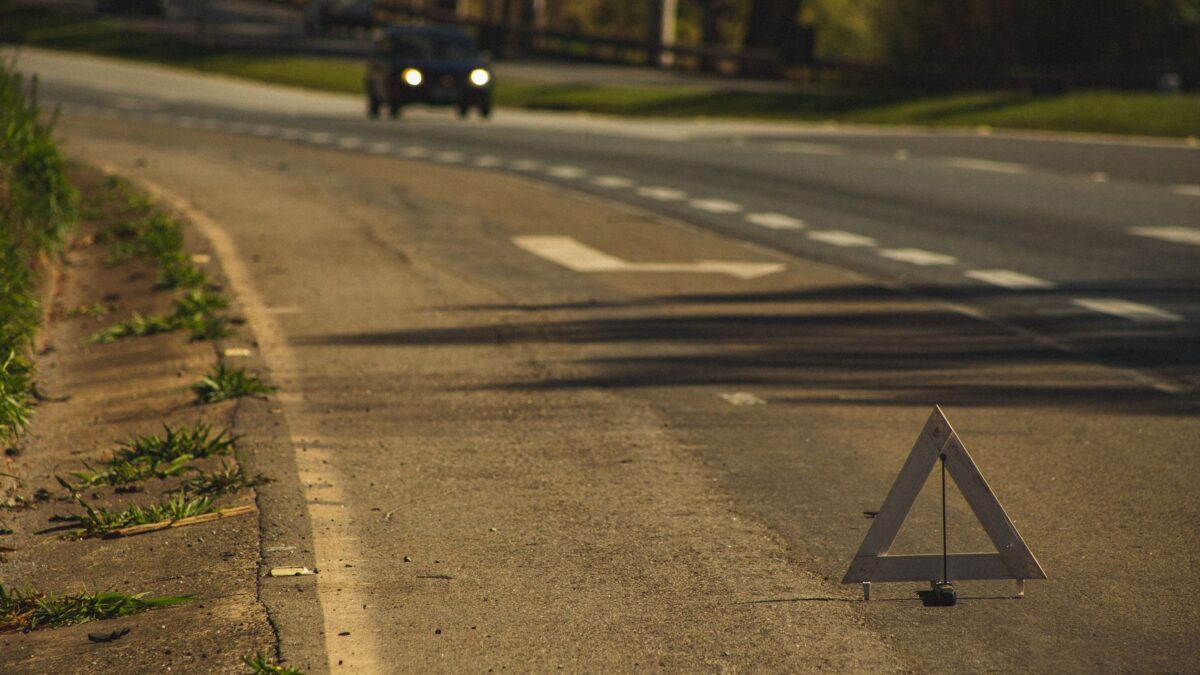
- Place warning devices as soon as possible and within 10 minutes, as 49 CFR 392.22 requires: one about 10 feet from the truck on the traffic side, and one about 100 feet behind and one 100 feet ahead (different spacing applies on divided highways and near hills or curves).
- If you haul hazmat, follow the emergency response information on your shipping papers and keep people away from any release.
- Call your carrier’s safety department or dispatch. Most carriers have a crash card in the cab listing the numbers and steps.
- Exchange information with other drivers: names, insurance, plate numbers and vehicle descriptions. Get the responding officer’s name and the report number.
- Take photos of all vehicles, the road, skid marks, signs, weather and cargo, if it is safe to do so.
- Do not move the truck unless police tell you to or it is creating a further hazard.
Federal rules do not make a driver delay medical care to wait for a test. Section 382.303(e) says a driver may leave the scene to get help or emergency treatment.
What is a DOT-recordable accident?
An “accident” under 49 CFR 390.5 is an occurrence involving a commercial motor vehicle on a highway in interstate or intrastate commerce that results in at least one of these:
- a fatality;
- bodily injury to a person who immediately receives medical treatment away from the scene;
- disabling damage to one or more vehicles that requires a tow truck or other vehicle to remove it.
Disabling damage means the vehicle cannot leave the scene in its usual manner in daylight after simple repairs. Crashes involving only getting on or off a stopped vehicle, or only loading and unloading cargo, are excluded. A minor scrape in a lot with no injury and no tow is not a DOT-recordable accident, although the carrier may still need to report it to its insurer.
When is post-accident drug and alcohol testing required?
The carrier, not the police, is responsible for post-accident testing. The table below follows 49 CFR 382.303.
| Type of crash | Citation to the CMV driver? | Test required? |
|---|---|---|
| Human fatality | Yes | Yes |
| Human fatality | No | Yes |
| Injury with immediate treatment away from the scene | Yes | Yes |
| Injury with immediate treatment away from the scene | No | No |
| Disabling damage requiring tow-away | Yes | Yes |
| Disabling damage requiring tow-away | No | No |
The citation must be for a moving violation arising from the crash. For alcohol, it counts if issued within 8 hours; for drugs, within 32 hours. The full rule is on the eCFR page for 49 CFR 382.303.
What are the time limits for testing?
| Test | Target | Hard limit | If missed |
|---|---|---|---|
| Alcohol | Within 2 hours | Stop trying at 8 hours | Carrier writes and keeps a record of why |
| Controlled substances | As soon as practicable | Stop trying at 32 hours | Carrier writes and keeps a record of why |
Two driver rules apply while the clock runs. A driver who must take an alcohol test may not drink alcohol for 8 hours after the crash or until tested, whichever comes first (49 CFR 382.209). The driver must also stay readily available for testing, or the carrier may treat it as a refusal. A refusal is reported to the FMCSA Drug and Alcohol Clearinghouse and takes the driver off safety-sensitive work until return-to-duty steps are done; see the Drug and Alcohol Clearinghouse explained.
Breath or blood tests done by police with their own authority can satisfy the alcohol requirement, and police urine tests can satisfy the drug requirement, if the carrier gets the results.
What goes in the accident register?
Every motor carrier must keep an accident register for 3 years after each accident, under 49 CFR 390.15. For each DOT-recordable accident it lists:
- the date, and the city or town and state where it happened;
- the driver’s name;
- the number of injuries and fatalities;
- whether hazardous materials other than fuel from the vehicle’s own tanks were released.
The carrier must also keep copies of accident reports required by states, other government agencies or insurers, and give FMCSA and state investigators the records they ask for. Crashes reported by police also appear in FMCSA’s crash data and can affect the carrier’s Crash Indicator; carriers can ask for a not-preventable finding on eligible crash types through DataQs, as explained in CSA scores explained.
What should a driver say, and not say, after a crash?
A driver should give police accurate facts and stay calm. The common guidance from carriers and their insurers:
- Answer the officer’s questions truthfully and provide license, registration, insurance and medical card.
- Describe what happened in plain facts: speed, lane, what you saw. Do not guess at distances or times you are unsure of.
- Do not admit fault, apologize in ways that sound like blame, or argue with other drivers at the scene.
- Do not post photos or comments about the crash on social media.
- Refer insurance adjusters and attorneys from the other side to your carrier.
- Write your own notes as soon as you can, while details are fresh, and give them to your safety department.
Everything from the scene can end up in a lawsuit, including texts and ELD data. That is one reason carriers move fast to preserve evidence; see nuclear verdicts in trucking. A driver facing a citation or criminal charge should talk to an attorney before giving a detailed statement beyond what the law requires. Some convictions arising from a crash can also lead to CDL disqualification, listed in CDL disqualification offenses.
Bottom line
Post-accident testing hinges on whether the driver gets a citation, and that citation can come hours after the crash; carriers that wait for the police report often miss the 8-hour alcohol window. A crash card in every cab with the testing rule, the 382.209 alcohol ban and the safety department’s number avoids most of those misses.
FAQ
Do I need a DOT test if the other driver was at fault?
If someone died, yes, regardless of fault. For injury or tow-away crashes, a test is required only if you, the CMV driver, receive a citation for a moving violation arising from the crash within the time limits.
Can I drive after a crash?
Only if the truck is safe to operate, police allow it, and your carrier clears you. If you are subject to post-accident testing, you must stay available for the test.
Does a crash I did not cause hurt my record?
Police-reported crashes go into FMCSA data. The carrier can request a not-preventable determination for eligible crash types through DataQs, which removes that crash from the carrier’s Crash Indicator calculation if approved.
Who reports a hazmat spill?
The carrier must give immediate notice of certain hazmat incidents to the National Response Center under DOT hazmat rules. The driver’s job at the scene is to call 911, follow the emergency response information and alert the carrier.