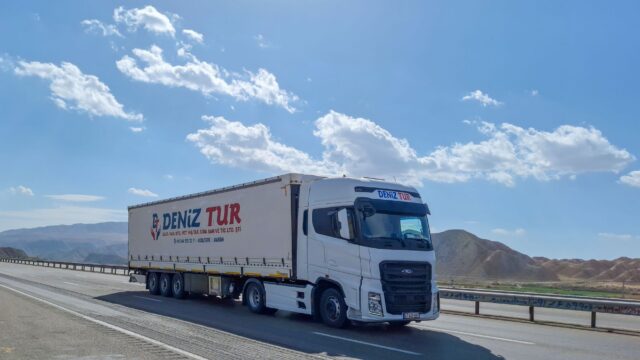
Graypool Opens Exchange So 7 Carriers Can Trade Loads They Can’t Haul
Graypool's new invitation-only exchange lets seven carriers swap tendered loads they lack trucks for, as tender rejections ran 14.5% last quarter.
Graypool, a freight software firm based in Atlanta that was previously called HOPTEK, started up its Graypool Exchange this Wednesday, FreightWaves reported. A truckload carrier with a tendered load and no truck available can now hand the freight to another member carrier rather than returning it to the shipper. Seven founding carriers joined at launch.
Demand for such a tool is high. Carriers refused an average of 14.5% of contract loads in the third quarter, compared with 5.3% a year before, according to the SONAR Truckload Rejection Index. The index’s most recent weekly figure is 12.77%, its lowest since early May.
How trades happen on the exchange
Graypool already runs tender software for its carrier customers, and the exchange sits inside it. When a member wants to keep a load but cannot assign a truck, the software can show that load to fellow members first, ahead of any refusal by the carrier. Every member chooses what freight it will put up, what freight it will take, and its price.
CEO Marc Held said the software already knows which loads suit each carrier’s network, so it can poll all members simultaneously about a given load. Replies must arrive within five seconds. Nobody has to place a bid on a separate load board, he said.
Carriers join by invitation only. Per the release, members work to shared standards covering business terms, data and insurance, and their insurers have approved the interchange agreements. A load is eligible only if its shipper permits a hand-off. If a shipper insists that its contracted carrier haul the freight itself, the load stays off the exchange.
Graypool owns no freight and does not act as a broker. “We run the floor,” Held said in the release. Shippers cannot post freight to the exchange. Its supply is the contracted and spot freight that Graypool is already handling on behalf of its carriers.
The cost of a rejected tender
Under current practice, a carrier’s refusal sends the shipper down its routing guide to the following carrier, and the price climbs with each step. When SONAR launched its Routing Guide Premiums index in late October, it showed shippers paying 9.25% extra when the second tender was the one accepted. Loads that dropped to a third tender or lower cost 19.84% extra.
Held told FreightWaves how the exchange changes that. Say a shipper tenders a load to Carrier A at $100, but Carrier A cannot place a truck. Carrier B will run it for $80. Carrier A holds on to the shipper and earns $20 in margin, and Carrier B receives a load it would not have found otherwise. In Held’s words, carriers get to accept freight and still make money.
Who Graypool is and who funds it
The exchange is the third product from the company. Graypool Accept screens which tendered freight a carrier’s network takes in. Graypool Source locates spot freight and bids on it; the company said carriers have booked annualized revenue of $150 million through that product.
Among its customers are Maybach International Group, Paper Transport, Hirschbach, Prime, Marten and Werner. The October change from the HOPTEK name came with a pre-seed round of $5 million, funded by Werner Enterprises, Venture 53, LPX Partners, Kearney and Jerk Ventures.
Paper Transport, a Graypool customer, endorsed the exchange in the release, with corporate development officer Ben Schill describing it as the carrier’s first choice for trusted capacity. Held compared Graypool’s role with that of Nasdaq and Intercontinental Exchange.
Why it matters
Carriers that own their trucks and are bidding on 2027 contract freight may be able to commit to lanes beyond their trucks’ regular reach, provided fellow members cover the gaps, according to FreightWaves. The outlet cited a SONAR analysis saying that if rejections hold above 12% through January, contract rate increases in the double digits become the base case.
For now the network is small: seven carriers, handling only freight that already moves through Graypool’s software.
Source: FreightWaves