Delaware, Maryland Add Truck Snow Removal Fines Up to $1,500
Delaware and Maryland now fine commercial trucks up to $1,500 when snow or ice flies off and causes a crash. Here is how both laws work.
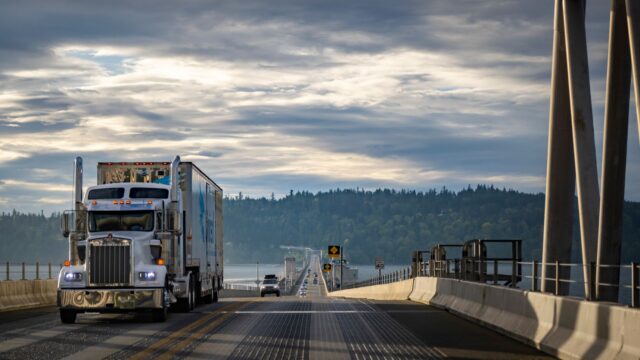
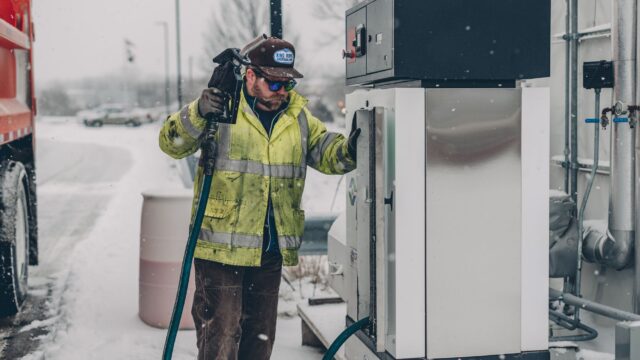
Delaware and Maryland have new laws that require drivers to clear snow and ice off their vehicles, including tractor-trailers. For commercial trucks, the fine reaches $1,500 in both states if falling snow or ice causes injury or property damage, according to HDT Trucking Info.
Both laws took effect this fall, ahead of winter driving. A citation is only part of the exposure for a carrier: a flying-ice crash can also bring a negligence lawsuit.
Delaware: Senate Bill 233
Delaware’s law took effect Sept. 24, 2026. Drivers must remove accumulated snow and ice before operating a vehicle. The fine is $25 to $75 even if nothing falls off, and a driver cannot receive more than one penalty in a 24-hour period.
If snow or ice falls from a moving vehicle and causes injury or property damage, the range rises. Noncommercial vehicles face $200 to $1,000. Commercial vehicles face $500 to $1,500.
Police can stop a vehicle when they have reasonable, articulable suspicion of a violation. The law does not apply on roads with speed limits of 25 mph or less. Drivers also do not have to clear snow and ice that builds up while the vehicle is in continuous operation, except from the windshield, so a truck does not have to pull over every time snow starts to fall.
Maryland: the Clear Before You Drive Act
Maryland’s law took effect Oct. 1, 2026. Drivers must make reasonable efforts to remove accumulated snow and ice that could threaten people or property. It names the hood, trunk, windshield, windows and roof, plus truck cabs and the tops of trailers and semitrailers.
The law excuses compliance that would violate workplace safety rules or endanger the driver’s health or safety. That exception matters for fleets, since a trailer roof is about 13 feet off the ground.
Maryland generally treats a snow-removal violation as a secondary offense. Police ordinarily cannot stop a truck only because of snow or ice on it, but they can cite the driver after stopping it for another suspected violation. The exception is a crash that causes property damage, death or serious bodily injury. Then the commercial fine is $500 to $1,500.
Otherwise, commercial fines climb with each repeat offense:
- First offense: $75
- Second offense: $150
- Third offense: $300
- Fourth offense: $600
- Fifth or later offense: $1,000
As in Delaware, a driver cannot be found in violation more than once in 24 hours.
Other states with similar rules
Several Northeast states already have laws on snow and ice. Connecticut sets a $75 basic fine and $500 to $1,250 for commercial vehicles when falling ice causes injury or damage. New Jersey fines drivers $25 to $75 with nothing falling, and commercial operators $500 to $1,500 if flying snow or ice hurts someone or damages property. Pennsylvania has a $50 basic fine, rising to $200 to $1,500 if dislodged snow or ice causes death or serious bodily injury.
Maine counts snow and ice as an unsecured load, with fines of $150 to $500. New Hampshire enforces through its negligent-driving law, with $250 to $500 for a first offense. Rhode Island bars driving with snow or ice that could blow off and block another driver’s view. Other states may rely on laws about unsecured loads, obstructed visibility or careless driving. For carriers crossing state lines, the law of the state where the truck is operating applies, not that of the truck’s home base.
Why it matters: lawsuits cost more than citations
Plaintiffs’ attorneys would likely use a traffic offense against a carrier or driver in a lawsuit after a crash, HDT reported. Suits over ice flying off trucks are old. In 1951, a driver on the Alaska Highway lost his right eye when a chunk of ice fell from an Alaska Freight Lines tractor-trailer and went through his windshield. A federal district court found negligence and awarded him more than $16,000. The Ninth Circuit upheld that judgment in 1955 and rejected the company’s argument that the danger was too remote. The court noted that winter snow and ice buildup was foreseeable and that the carrier already had procedures for clearing trucks at some locations.
A more recent case involved FedEx Freight. A motorist sued after a large piece of ice came through his windshield in Vermont in 2014, causing serious injuries to his face and eye. He alleged the ice came from a FedEx Freight trailer whose roof had not been properly cleared. A federal judge found insufficient evidence that one of its trucks was responsible, and the company won in 2017. Years of litigation can be expensive even when the carrier wins.
In both new laws, the higher penalty tier applies once snow or ice causes a crash, and both include exceptions tied to ongoing operation or workplace safety.
Source: HDT Trucking Info