What Does 10-4 Mean? Trucker Slang and CB Terms Explained
10-4 means message received and understood on a CB radio. Find what common trucker slang like bear, reefer and bobtail means.
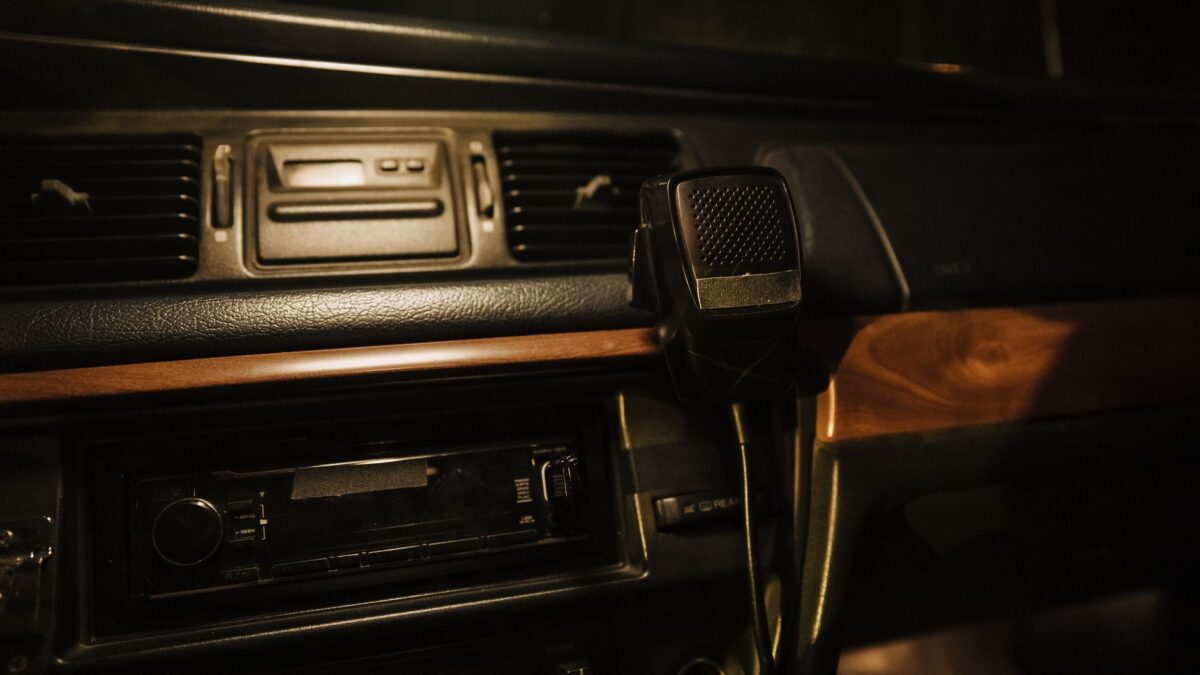
10-4 means “message received” or “okay, I understand” on a CB radio. Truckers say it to confirm they heard an instruction, a warning or a question, and it has spread so widely that people use it in everyday talk to mean “got it.” Most other ten-codes have faded from daily use, while plain-language slang is what drivers actually say on the air and at the fuel island.
Where does 10-4 come from?
The ten-code system was created for police and public safety radio, where short numbered signals kept transmissions brief and clear over noisy channels. Each signal starts with the word “ten” followed by a number, and 10-4 was the acknowledgment. Citizens band radio, known as CB, borrowed the habit, and truckers made it famous through the 1970s CB craze, movies and songs.
Ten-codes were never fully standardized. Agencies and regions assigned different meanings to the same numbers, which is one reason many public safety groups moved toward plain speech. A driver who answers “10-4” will be understood nearly anywhere. A driver who tries an obscure code may get a confused reply.
Do truck drivers still use CB radio?
Yes, though far less than in past decades. Many drivers still keep a CB in the cab to hear road conditions, wrecks, backups, weigh station chatter and weather warnings from other trucks ahead. Smartphones, navigation apps and dispatch messaging now handle routing and company communication, so the CB has become a local, real-time channel between nearby drivers.
A CB is a short-range, open radio. Anyone nearby can hear what you say, including enforcement and competitors, so drivers keep it brief and avoid naming customers, loads or exact cargo. The Federal Communications Commission regulates CB operation, and its rules are posted on the FCC site.
What are the most common CB phrases?
A handful of radio phrases cover most CB conversation. They are short on purpose, since the channel is shared.
- 10-4: message received, understood, or “okay.”
- Copy: I heard you. “Do you copy?” asks whether the other driver can hear you clearly.
- Breaker: a request to join the conversation, often followed by a channel or a question.
- Come back: please repeat or reply.
- Handle: a driver’s CB nickname, used instead of a real name.
- Radio check: a request for someone to confirm your signal is readable.
- Go ahead: it is your turn to speak.
- Good buddy: a friendly term for another driver, now used mostly as a joke or as nostalgia.
- Over and out: the conversation is finished and the speaker is signing off.
- Base: a stationary radio, such as a dispatcher’s or a home setup.
- Mobile: a radio in a moving vehicle.
What does trucker slang for people and police mean?
Drivers have long used animal and nickname slang to talk about law enforcement and other road users without sounding formal. These terms are still understood, even if younger drivers use them with a grin.
- Bear, Smokey or Smokey Bear: a state trooper or other police officer.
- Bear in the air: a police aircraft watching traffic.
- Gator: a strip of tire tread on the road, usually from a blown retread.
- Four-wheeler: any passenger car or pickup.
- Seat cover: a female passenger in a vehicle, a term many drivers now consider outdated.
- Rubber duck: the first truck in a convoy.
- Pickle park: a rest area, truck stop or roadside lot where drivers stop for the night.
- Lot lizard: a person who solicits at truck stops. Many drivers consider the term derogatory, so it is worth knowing mostly so you can understand it.
What does trucker slang for equipment and freight mean?
Equipment and cargo slang is the part of the glossary most likely to matter in daily work, because it shows up in dispatch messages, load boards and shop talk as well as on the radio.
- Reefer: a refrigerated trailer, or a load that needs temperature control.
- Dry van: an enclosed, unrefrigerated trailer for general freight.
- Flatbed: an open trailer with no sides or roof, used for steel, lumber and machinery.
- Bobtail: driving a tractor without a trailer attached.
- Deadhead: driving empty, without a paying load.
- Drop and hook: swapping a loaded trailer for an empty one without waiting for it to be loaded or unloaded.
- Lumper: a worker paid to unload a trailer at a warehouse, often charged to the driver or carrier.
- Detention: unpaid waiting time at a shipper or receiver that carriers try to recover as a fee.
- Bill of lading: the shipping document that lists the freight, and the one drivers sign at pickup and delivery.
- Scale: a weigh station, where trucks are checked for weight and often for credentials.
- Chicken coop: a weigh station, from older slang.
- Washboard: a rough, bumpy stretch of road.
- Greasy side up: a vehicle flipped on its roof, a warning term when describing a wreck.
What slang describes the job and pay?
Several terms describe how drivers are paid and how they run. Pay structure affects whether a driver is entitled to extra pay for long weeks, which is covered in why most truck drivers do not get overtime and who still does.
- Owner-operator: a driver who owns or leases the truck and contracts with carriers or brokers.
- Company driver: an employee who drives a truck owned by the carrier.
- Team: two drivers who share a truck and take turns driving so it keeps moving.
- Dispatcher: the person who assigns loads, sets pickup times and handles problems on the road.
- Broker: a middleman who matches freight with carriers.
- Cents per mile: the most common pay rate for over-the-road drivers.
- Logbook: the record of driving and rest time. It is now kept electronically on an electronic logging device, or ELD.
Employers also watch how much it costs to find and keep drivers, a trend reported in this coverage of rising cost per hire.
How should a new driver use CB slang?
A new driver should start with plain speech and a few common terms, then pick up local slang by listening. Radio talk differs by region and by crowd, and a term that sounds natural in one area can sound forced in another. Stay calm, keep transmissions short, and skip profanity, which can draw complaints and fines.
Safety and compliance rules do not change with slang. If a problem with a carrier, broker or a safety defect needs to go on record, file it through the official channel, such as the one described in the FMCSA Complaint Center relaunch. The agency’s main site, FMCSA, lists the federal rules for drivers and carriers.
Quick answers
What does 10-4 good buddy mean?
It means “message received, friend.” The phrase was popular during the 1970s CB craze, and drivers today mostly use it as a joke or in a nostalgic way.
Is “copy” the same as 10-4?
Nearly. Both confirm that you heard and understood the message. “Copy” is plain speech and is the safer pick when the person you are talking to may not know ten-codes.
What is a handle on a CB?
A handle is a driver’s radio nickname. Drivers use handles to avoid giving out their real names on an open channel.
What does bobtail mean in trucking?
Bobtail means driving the tractor alone with no trailer hooked up. Insurance, parking and braking all behave differently in that state, so many carriers and insurers treat it as its own situation.