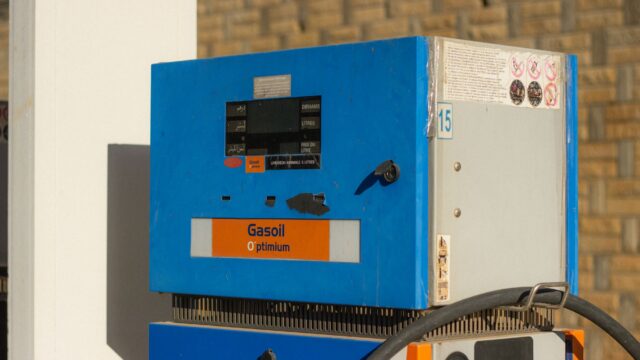
Diesel Hits $6.13 a Gallon as US Distillate Stocks Sink
Diesel costs $6.13 a gallon, up about 60% in a year, with distillate stocks near 99.3 million barrels. What caused it and which figures truckers should watch.
A gallon of diesel runs $6.13 right now, versus about $3.84 twelve months ago, according to an AOL report built on a weekly check of roughly 350 retail outlets. That works out to a rise of about 60%. The report expects the bill to spread to grocery shelves, parcel deliveries and home repair costs through the winter.
Thin inventories are behind it. Stocks of distillate, a category that covers diesel and heating oil, sit near 99.3 million barrels. Should the historical comparison be right, no weekly reading has been lower since May 2003. West Texas Intermediate crude has cooled to $99.64 a barrel, a drop of 3.6% over a week, yet diesel supplies have not recovered alongside it.
Diesel and gasoline have drifted apart
Regular gasoline sells for $4.15, about 36% above its level a year earlier. A gallon of diesel therefore costs roughly $1.97 more. Trucks, tractors, trains and construction machinery all burn diesel, so shoppers end up paying for it through nearly everything that gets hauled.
How supplies got so tight
Trouble started in early March. Fighting between the U.S. and Iran disrupted shipping through the Strait of Hormuz, and diesel went from $3.90 on March 2 to $4.86 a week afterward. Later, Ukrainian drone attacks on Russian refineries squeezed worldwide diesel supply further and sent margins on middle distillates to record levels. Buyers abroad bid U.S. barrels away. The Energy Information Administration (EIA), a federal agency that tracks energy data, said the Hormuz disruption lifted U.S. refinery margins and petroleum exports in the second quarter.
The EIA’s May Short-Term Energy Outlook forecast distillate inventories of 112.4 million barrels at the close of 2026, compared with 128.2 million at the end of 2025. Today’s level is about 13.1 million barrels short of that projection, and the heating season is just beginning.
Why it matters for carriers and shippers
Fleets and retailers face larger fuel surcharges while holiday shipping reaches its peak. Refiners, meanwhile, earn strong margins on every added barrel. Household budgets were already strained: the Consumer Price Index climbed 0.6% in September alone, and the University of Michigan sentiment gauge fell to 48.1, far under the 60 mark the survey connects with recessions. September retail sales still came in at $745.0 billion, so people continue to buy, though the report says higher freight costs leave families with less money to spend. Fuel taxes also vary by state, a topic covered in this explainer on why some states cost more at the pump.
Why refiners have little room to respond
Low stocks raise the odds of a lasting price jump without ensuring one. Output, imports, exports and demand will settle it. The EIA’s May projection put refinery utilization at 96% for the third quarter of 2026, close to full capacity, so plants cannot run much harder. Extra supply would need to come from shipping less abroad or from softer demand. With margins overseas so high, the report says holding back exports would work against refiners’ own financial interest.
What to watch before the new year
The report names two numbers in the EIA’s weekly petroleum report. One is whether distillate inventories rise past 100 million barrels as refineries finish fall maintenance. The other is how much distillate leaves the country. If Gulf Coast refiners keep sending barrels abroad, U.S. stocks stay low going into January, when heating demand is highest.
The report adds that if inventories are still under 100 million barrels by mid-December, diesel could head back toward its September high of $6.53. One summary line in the report rounds the price to $6 a gallon, while the body of the text uses $6.13.
Source: AOL