Venti Runs About 60 Driverless Yard Trucks in California, Texas
Venti Technologies says about 60 autonomous container trucks run 24/7 in California and Texas rail yards. Key numbers on its deployment and cost claims.
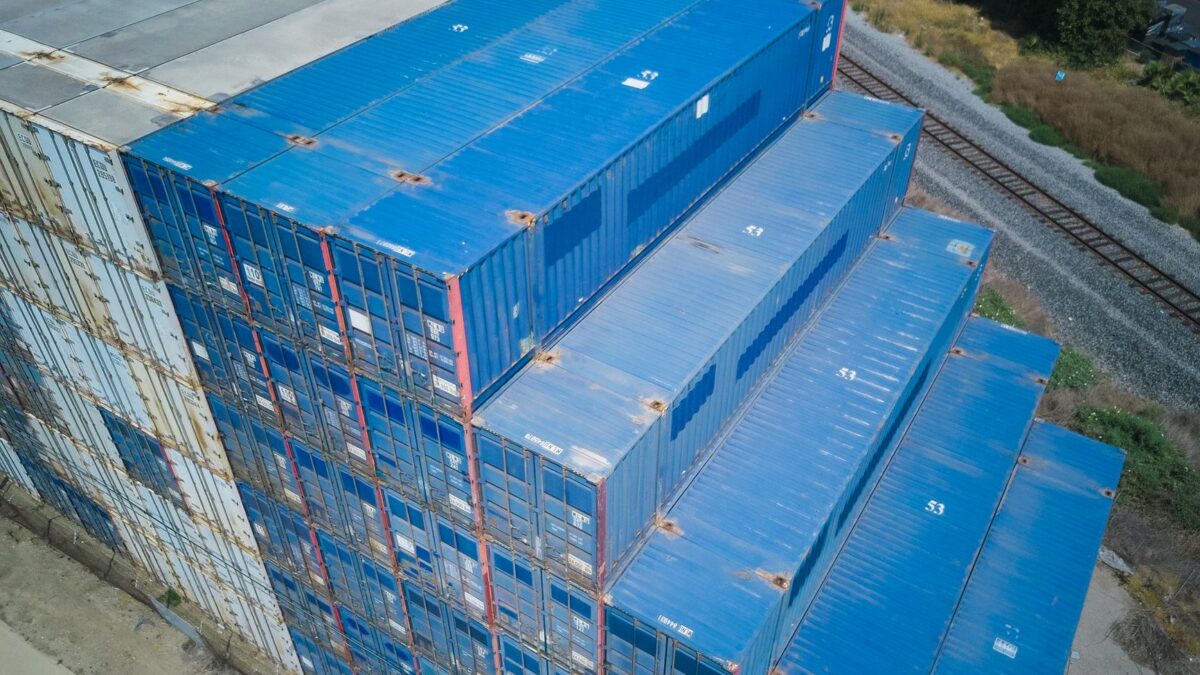
Venti Technologies, a software company founded at MIT, says about 60 large container trucks are operating fully autonomously, around the clock, in intermodal yards in California and Texas. CEO Heidi Wyle told FreightWaves the fleet has a clean safety record and is more productive than human benchmarks.
The trucks operate inside yards, not on public roads. Wyle said Venti has agreements with several Class I railroads (the largest U.S. freight railroads) and is talking with the rest of the industry. The figures below come from the company’s own account in that interview and have not been independently verified.
The numbers behind the deployment
- About 60 trucks: the autonomous container trucks Venti says run 24/7 in live production in California and Texas yards.
- 40% to 70%: the share of transportation costs Wyle said the technology can address, which she called a big win “in the right environments.”
- 85% to 90%: the portion of the core software that Wyle said carries over between applications.
- About two months: the extra software development needed to move from port operations to rail yards, covering train detection, signal recognition and rail-specific functions.
- $55 billion: the value of goods Wyle said the supply chain yard segment moves every day.
- 30 vehicles: the size of a second Singapore fleet that is set to launch this year.
How the system works
Venti describes itself mainly as a software company. Customers own the trucks, and Venti supplies the full autonomy stack, including yard mapping and functions specific to each job. Wyle characterized the software system as worth roughly $70 million to $80 million.
The platform is sensor-agnostic. It uses LiDAR (laser-based sensing) as a foundation, adds cameras, and in some cases ultrasound, depending on the application.
The company’s first fleet launched in Singapore, which Wyle described as home to the second-largest container port in the world. It has operated there for nearly three years.
Why it matters
FreightWaves described the deployment as one of the first documented full-scale autonomous yard operations in the United States running in live production rather than controlled pilots. For railroads and the carriers and shippers that move containers through their yards, it is an early look at driverless trucks doing daily work at scale.
Wyle drew a line between enclosed sites and city streets. Yards and ports, she said, are financially straightforward because the trucks work in controlled spaces on mission-critical tasks. She put autonomous trucking in inner-city settings at “probably 7 to 10 years out.”
What to watch
Wyle said significant rail-yard volume across the railroad sector is on track to arrive “in 2 years” as the technology scales. Venti has not named which railroads it works with. The second Singapore fleet is due to launch this year.
Source: FreightWaves