What Is a TEU? How Container Volume Is Counted for Truckers
A TEU is one 20-foot container, and a 40-footer counts as two. Here is how ports report TEUs and what the monthly numbers mean for truckers.
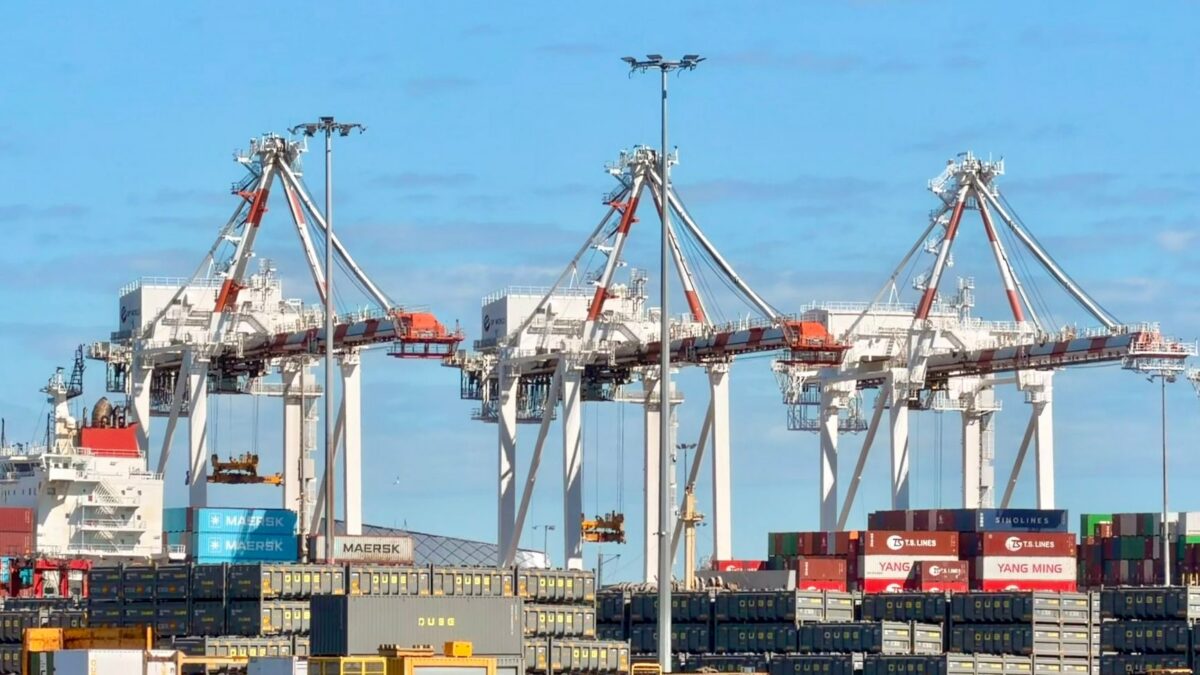
A TEU, short for twenty-foot equivalent unit, is the standard measuring stick for ocean container volume. One TEU equals one 20-foot container. A 40-foot container counts as two TEUs. Ports, ocean carriers and ship operators use the unit so that boxes of different lengths can be added into a single number.
For a driver, the number matters because it tells you how much freight is landing at a port, even though your own trailer never gets counted in TEUs. When a port reports a record month, more boxes are coming off ships and more of them need a truck.
How does a TEU differ from a container?
A container is a physical steel box. A TEU is a count. The two are not the same, because one 40-foot box adds two TEUs to a port’s total while it still takes up one chassis and one truck move.
The common ocean sizes are 20-foot and 40-foot boxes, plus the 40-foot high-cube, which is a foot taller than the standard box but still counts as two TEUs. Some ports and carriers also handle 45-foot boxes, which are counted as roughly two TEUs as well. Domestic 53-foot containers, which move mostly by rail and truck inside North America, are not part of the ocean TEU system.
How do ports count TEUs?
A terminal tallies each container that crosses its dock, whether it is lifted off a ship or loaded onto one. A 40-foot box counts as two TEUs and a 20-foot box as one. Ports add these up and publish monthly and yearly totals, usually split into several groups:
- Imports, meaning loaded containers arriving from overseas.
- Exports, meaning loaded containers leaving the country.
- Empties, meaning boxes moved back out without cargo.
The headline figure is normally the sum of all three. That is why a port can post strong total TEUs while its export volume stays flat: a surge of empties going back to Asia raises the total without adding any loaded freight for outbound trucks.
The Port of Los Angeles milestone covered in our report on its record container pace is an example of the kind of volume number that ports publish and that shippers and drivers watch.
Why do TEUs and truck moves not match?
Every loaded 40-foot box needs one truck trip out of the terminal, while a 20-foot box also needs one. So 1,000 TEUs could be 1,000 trucks if all boxes are 20-footers, or about 500 trucks if all are 40-footers. In practice most import boxes are 40-foot, so the number of truck moves is well below the TEU total.
Some 20-foot boxes can also be paired on a single chassis, depending on the chassis and the terminal rules, which makes the match even looser. Treat TEUs as a signal of direction and size, not as a dispatch forecast.
What do the monthly numbers mean for truckers?
Monthly TEU reports are the earliest public read on how busy the gates will be. A few patterns are worth knowing:
- Rising import TEUs usually mean more drayage loads, longer lines at terminal gates and tighter chassis supply.
- A jump in empties often means ocean carriers are repositioning boxes, which can mean more empty returns for drivers but little loaded freight.
- Falling TEUs can mean fewer drayage loads and more trucks competing for the ones that remain.
- Month to month swings are normal. Many importers pull freight forward before holidays and tariff or contract deadlines, so one strong month does not set a trend.
Drivers who haul out of a port should also expect delays when volume spikes. Wait times, appointment availability and detention rules shift with the flow of boxes, and our guide on gates, appointments and detention pay at ports explains how those pieces fit together when terminals back up.
Where can you find official container numbers?
Most large ports publish monthly TEU statistics on their own websites, usually within the first few weeks after a month ends. The US Department of Transportation’s Bureau of Transportation Statistics, at BTS, publishes national freight and port data, and the Maritime Administration covers the nation’s ports and waterways. Ocean carriers and industry groups also release their own volume estimates, but their methods can differ, so compare like with like: loaded imports against loaded imports, total TEUs against total TEUs.
Quick answers
Is a TEU a measure of weight?
No. A TEU describes the length of the box, not what is inside or how much it weighs. A 20-foot container full of heavy cargo and an empty one both count as one TEU.
What is an FEU?
FEU stands for forty-foot equivalent unit. One FEU is one 40-foot container, which equals two TEUs. Some carriers and brokers quote rates per FEU instead of per TEU.
Does a 40-foot high-cube count as one or two TEUs?
Two. The extra height does not change the length used for counting, so a high-cube 40-footer is two TEUs, the same as a standard 40-foot box.
Why do some ports report containers instead of TEUs?
Some reports count lifts or boxes, which tracks truck and crane work more directly. TEUs are used when the goal is to compare volume between ports or years, because they treat different box sizes on the same scale.