Trucking Costs Hit $2.336 Per Mile as Diesel Averages $6.292
For-hire trucking cost $2.336 per mile in 2025, ATRI found, and diesel now averages $6.292 a gallon. See the cost breakdown and fuel figures.

Running a for-hire truck cost an average of $2.336 per mile in 2025, according to the latest survey from the American Transportation Research Institute (ATRI), as reported by FleetOwner. Costs grew 3.4%, faster than the 2.7% general Consumer Price Index inflation rate.
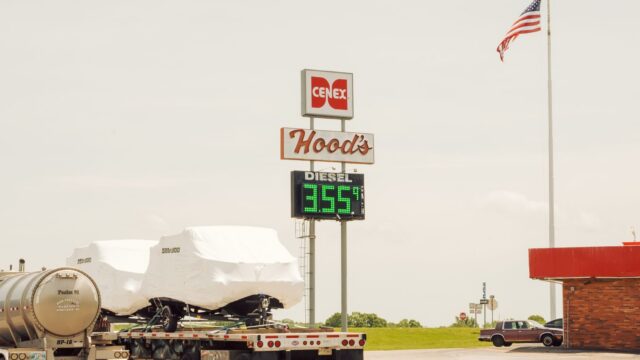
Diesel has climbed sharply since. The Energy Information Administration (EIA) put the average price at $6.292 per gallon as of Nov. 2, while AAA reported $6.172. FleetOwner says that is up about 65% from a year ago.
Where the money goes, mile by mile
ATRI’s annual operational costs analysis draws on survey data from fleets running roughly 182,248 combination trucks, about 5% of all registered combination trucks in the U.S. The 2025 averages per mile were:
- Driver wages: $0.818
- Driver benefits: $0.210
- Fuel: $0.482
- Truck and trailer payments: $0.404
- Repair and maintenance: $0.215
- Insurance: $0.106
- Tires: $0.050
- Tolls: $0.043
- Permits: $0.008
Wages and benefits together were the largest expense at $1.28 per mile. Tolls rose fastest in 2025 at 13.2%, followed by repair and maintenance at 8.6% and driver benefits at 6.6%.
The report covers only for-hire operations, so private fleets, which spend differently on items such as driver pay, are not represented. This year’s sample slightly overrepresents less-than-truckload carriers, and back-office overhead is left out.
Why diesel is so high
FleetOwner ties the fuel spike to the Iran war, which closed the Strait of Hormuz and disrupted Middle East oil shipping. According to EIA, the spot price of a barrel of oil on Nov. 6 was $97.83 for Brent crude (up 54% year over year) and $94.37 for West Texas Intermediate (up 56%).
U.S. field oil production is averaging 13,788,750 barrels per day so far in 2026, more than in any previous year, per EIA. FleetOwner reports that the added output has not made up for tight supply and a drawdown of inventories.
ATRI surveyed more than 3,000 respondents on industry concerns from August to October. Fuel ranked first by a wide margin.
What fuel could cost per mile
Large trucks burned about 17,022,000,000 gallons of fuel in 2024, according to the Bureau of Transportation Statistics. At today’s average retail diesel price, FleetOwner puts that at about $105,536,400,000 a year.
ATRI respondents averaged 7.43 miles per gallon in 2025. Trucks in the 30,001 to 40,000 pound weight range averaged about 6.73 mpg, which FleetOwner considers closer to over-the-road hauling. If efficiency holds and diesel stays near $6.29, FleetOwner estimates fleets buying at retail could be paying $0.847 per mile for fuel, compared with the $0.482 ATRI recorded for 2025.
Alternative powertrains remain rare
ATRI’s survey found 4.39% of truck-tractors use something other than diesel. Compressed natural gas leads at 3.24%, followed by liquid natural gas at 0.69%, battery electric at 0.43%, liquid petroleum gas at 0.03% and hydrogen fuel cell at 0.003%.
The International Council on Clean Transportation counted 875 Class 8 electric truck sales in the U.S. in 2025, even with California’s Advanced Clean Fleets and Trucks mandates in place. Its estimates for other markets were 239 in India, 464 in the United Kingdom, 5,021 in the European Union and 232,001 in China.
By share of Class 8 trucks that are electric, the Engine Technology Forum’s analysis of Mobility Global 2025 data ranks Massachusetts first at 2.0%, ahead of Hawaii at 1.5% and Washington at 1.4%. California tied New York at 0.9% and placed sixth.
What this means for carriers and drivers
Fuel was the second-largest single line in ATRI’s 2025 figures, behind driver wages and ahead of equipment payments, and those figures were collected before the current price surge. Fleets and owner-operators who buy diesel at retail face a per-mile fuel bill far above the 2025 average if prices stay where they are, based on FleetOwner’s estimate.
FleetOwner expects trucking costs in 2026 to outpace inflation again. Its coverage continues this week with a segment on driver pay.
Source: FleetOwner