Driverless Trucks in the US: Where They Run and Which Rules Apply
Driverless semis now haul paying freight on a handful of Sun Belt lanes. Federal rules mostly allow them, while states range from welcoming to restrictive.
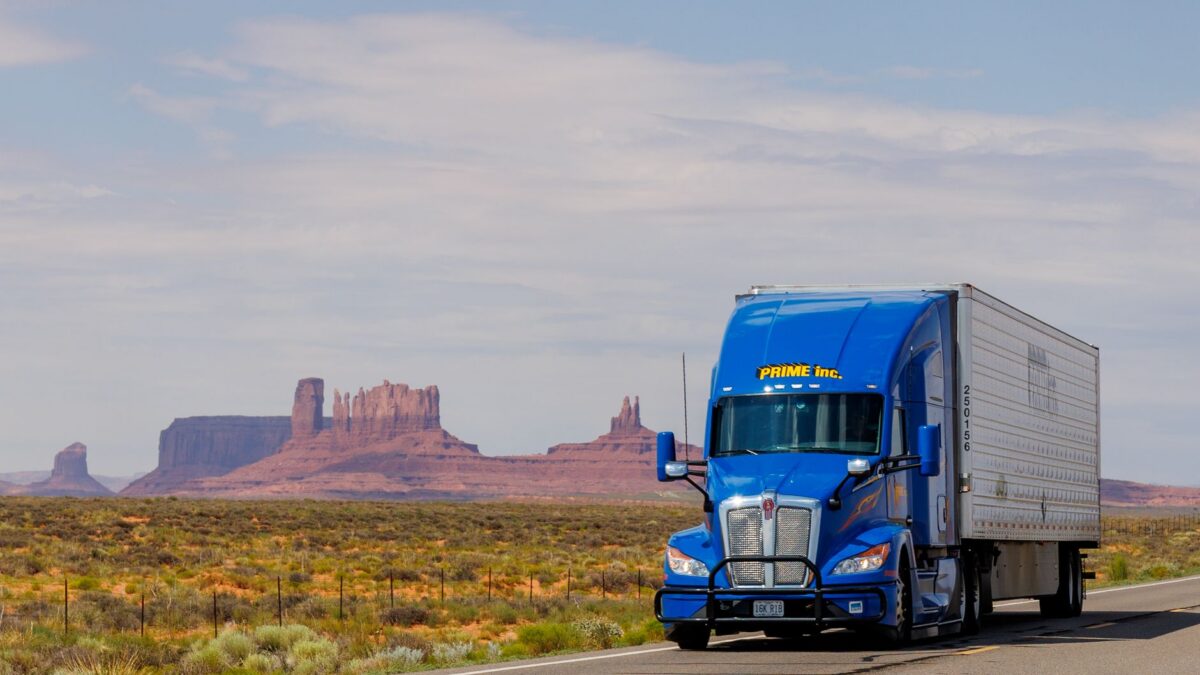
Driverless trucks haul paying freight on public highways in the Sun Belt. Aurora runs trucks with no one in the driver’s seat on lanes linking Dallas, Houston, Fort Worth, El Paso, Laredo and Phoenix, and Kodiak operates driverless trucks for a frac sand hauler in the Permian Basin. As of November 2026, no federal rule bans them, and FMCSA granted a five-year exemption in October 2026 that lets them use cab-mounted warning beacons instead of triangles.
Where do driverless trucks operate today?
Texas is the center of commercial driverless trucking because its law allows it and its freight lanes are long and mostly flat. The main operations, from company filings and announcements:
| Company | Where | Status as reported by the company |
|---|---|---|
| Aurora | Dallas to Houston; Fort Worth to El Paso; El Paso to Phoenix; Fort Worth to Phoenix; Dallas to Laredo | Driverless commercial service began in Texas in 2025; network expanded to these lanes in February 2026; passed 500,000 commercial driverless miles in September 2026 |
| Kodiak | Permian Basin, West Texas | Driverless trucks owned by customer Atlas Energy Solutions; 35 customer-owned driverless trucks at the end of June 2026 |
Both companies also run supervised trucks with a safety driver on other lanes. Aurora’s October 2026 shareholder letter reports revenue from both driverless and operator-supervised loads, and a 500-truck memorandum of understanding with Charger Logistics for deliveries in 2027 and 2028.
The Fort Worth to Phoenix lane is about 1,000 miles, longer than a human driver can cover in one shift under the federal hours-of-service rules. That is the commercial argument the companies make for driverless long-haul.
Do federal rules allow trucks without a driver?
No federal rule bans driverless trucks, and FMCSA has not adopted a rule written specifically for them. Driverless carriers still register with FMCSA and are subject to the same safety regulations, inspections and insurance rules as any motor carrier, and FMCSA has handled conflicts through exemptions.
The clearest example is warning devices. Under 49 CFR 392.22(b), the driver of a truck stopped on the road or shoulder must put out reflective triangles within 10 minutes. A truck with no driver cannot do that. The history:
- December 2024: FMCSA denied a joint request from Waymo and Aurora to use cab-mounted flashing beacons instead.
- October 10, 2025 to January 9, 2026: Aurora ran under a temporary waiver, using beacons on 34 trucks that traveled more than 500,000 miles, according to the FMCSA notice.
- October 9, 2026: FMCSA granted a five-year exemption, effective October 7, 2026 through October 7, 2031, for Aurora and other carriers running Level 4 automated trucks that notify FMCSA in advance.
The exemption bars passenger and placarded hazmat loads, anything that would need an H, X, P or S endorsement with a human driver, and requires crash reporting within five calendar days. The terms are in the FMCSA exemption notice.
Which states allow or restrict driverless trucks?
State law decides where a driverless truck can legally run, and the approaches differ widely:
- Texas has allowed automated vehicles without a human driver since 2017. A 2025 law, SB 2807, added a state authorization: since May 28, 2026, every company operating automated vehicles commercially must hold an active authorization from the Texas Department of Motor Vehicles, with no fee, and the agency can suspend or revoke it.
- California banned testing and deployment of autonomous vehicles rated 10,001 lb or more until the DMV approved new regulations on April 28, 2026. Heavy-duty applicants must start with safety-driver testing and log 500,000 miles in each phase before moving to driverless testing and then deployment. The first heavy-duty testing permits, for supervised operation, were issued in August 2026.
- Arizona and New Mexico are crossed by Aurora’s El Paso and Phoenix lanes, part of the driverless network it announced in February 2026.
Rules in other states range from express permission to no specific law at all, so a carrier planning a lane has to check each state on the route.
What are the union-backed bills requiring human operators?
The Teamsters and allied groups have pushed state bills that would require a trained human operator aboard any heavy autonomous truck. California’s legislature passed such bills twice, and Governor Newsom vetoed them in 2023 and again in 2024, pointing to the DMV’s authority to regulate autonomous vehicles. When the DMV adopted its 2026 heavy-duty rules, Teamsters California sued the agency in state court. Similar human-operator bills have been filed in other legislatures; check the state legislature’s site for current status, since many die in committee.
What does this mean for truck drivers?
For now, driverless trucks run a small number of long Sun Belt lanes, mostly hub to hub, with human drivers handling local pickup and delivery at each end. Aurora said in October 2026 that it expects to exit 2027 with more than 1,000 driverless trucks in operation; that is a company projection, and it compares with the 2.2 million heavy and tractor-trailer driver jobs BLS counted in 2025. The labor market numbers are in our look at the truck driver shortage.
Bottom line
The federal exemption removes a practical obstacle rather than granting a license: driverless carriers still need state permission, and the exemption excludes hazmat and passengers outright. California is the state to watch, since its 2026 rules require 500,000 miles per phase before driverless deployment and face a union lawsuit; how the state also regulates truck emissions and speeds is covered in California trucking rules.
FAQ
Are driverless semi trucks legal?
No federal rule bans them, and FMCSA granted an exemption in 2026 for warning devices. Legality depends on state law; Texas permits it with a state authorization.
Do driverless trucks have anyone on board?
On Aurora’s and Kodiak’s driverless loads, no one is in the cab. Both companies also run supervised loads with a safety driver on other routes.
Can autonomous trucks haul hazmat?
Not under FMCSA’s 2026 warning-device exemption, which excludes loads that would need a hazmat or tank-hazmat endorsement. PHMSA opened an advance notice of proposed rulemaking on automated hazmat transport in December 2025.
Are there driverless trucks in California?
Not driverless as of November 2026. The DMV’s 2026 rules allow heavy-duty autonomous trucks to start with supervised testing, and the first permits issued in August 2026 require a safety driver.