Mountain Driving for Truckers: Downgrade Gears, Brake Fade and Ramps
Pick your downgrade gear before the crest and use snub braking to avoid brake fade. Also covers warning signs and when to take a runaway truck ramp.
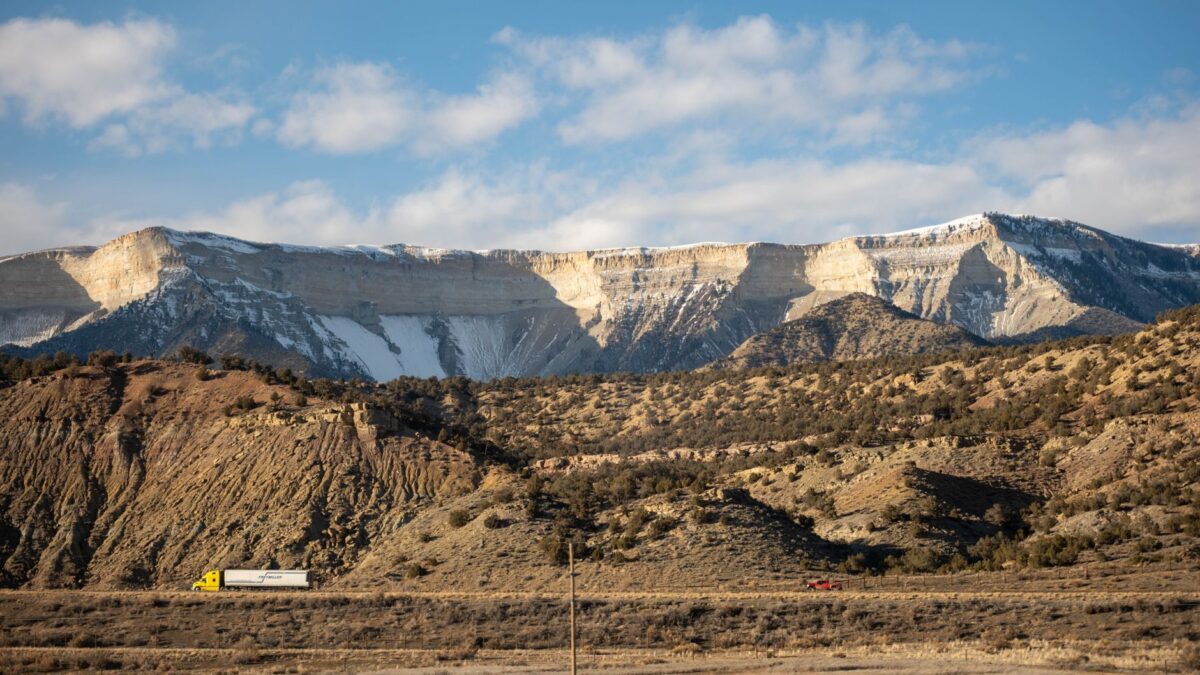
On a long mountain downgrade, a truck driver should pick a low gear before the crest, usually the same gear or one lower than the truck would need to climb that hill, and let the engine and engine brake hold speed. Use the service brakes in short, firm applications (snub braking), because steady use overheats the drums and causes brake fade. If the brakes fade anyway and speed keeps rising, take the first runaway truck ramp.
Gravity, weight and the length of the grade set the safe speed on a downgrade. A heavy truck needs a lower gear and a lower speed than an empty one on the same hill, and a posted truck speed limit is only the maximum for good conditions.
How do you pick the right gear for a downgrade?
Choose the gear before the truck starts down the hill. The standard rule taught in state CDL manuals is to use the gear you would use to climb the grade, or one gear lower. A downshift on the hill itself is risky in a manual transmission: if you miss the shift, the truck can end up in neutral with only the service brakes to stop it.
- Slow down at the top. Brake check areas and pull-outs before steep grades are there for this.
- Read the signs: percent grade, length of the grade in miles, and any truck speed limit or “use lower gear” warning.
- Think about load. A grossed-out truck may need a gear or two lower than the climbing-gear rule suggests.
- With an automated manual, use manual or “hold” mode if the transmission allows it, so it does not upshift as speed builds.
- Never coast in neutral or with the clutch pushed in. Engine braking disappears and getting back into gear at speed may not be possible.
The right gear keeps the truck at or below the safe speed with little or no brake use and engine rpm inside the manufacturer’s range. If you are on the brakes constantly to stop the truck from speeding up, the gear is too high.
What is snub braking and how do you do it?
Snub braking is the method CDL manuals teach for air brakes on long grades: firm, short applications instead of light, continuous pressure. Once the truck is in the right gear, the steps are:
- Pick your safe speed for the grade, weight and conditions.
- Let the truck reach that speed.
- Apply the brakes hard enough to feel a definite slowdown.
- When speed is about 5 mph (8 km/h) below the safe speed, release the brakes. Each application should last about 3 seconds.
- When speed climbs back to the safe speed, repeat.
Short, firm applications give the drums time to cool between snubs. Light dragging keeps them heating the whole way down. An engine brake or retarder carries much of the load between snubs; our guide on how engine brakes work and when to use them covers settings and the conditions where a jake brake is a bad idea, such as slick roads with an empty trailer.
What causes brake fade on a mountain grade?
Brake fade happens when brakes get too hot to stop the truck well. Drum brakes turn speed into heat. On a long downgrade the heat builds faster than it leaves, the drums expand away from the shoes, and the lining material loses friction. The driver has to push harder for the same slowdown, which adds even more heat.
Common causes:
- Starting the grade in too high a gear or too fast.
- Riding the brakes lightly instead of snub braking.
- Brakes out of adjustment, so some axles do little work and the rest overheat.
- Worn linings, cracked drums or air leaks found too late.
Out-of-adjustment brakes are one of the most common out-of-service violations at roadside inspections, as the CVSA Brake Safety Week results show. A pre-trip check of pushrod stroke, slack adjusters, linings and air pressure matters more before a mountain run than anywhere else.
What are the warning signs that brakes are fading?
The first sign is usually needing more pedal pressure to get the same slowdown. Others include:
- Speed creeping up between snubs even though the gear and technique have not changed.
- A burning smell or smoke from the wheel ends.
- The truck pulling to one side under braking.
- Air pressure dropping faster than the compressor can rebuild it after repeated applications.
If you notice these signs early on the grade and a pull-out is ahead, stop safely and let the brakes cool. Do not set the parking brakes on very hot drums if the manufacturer or your company warns against it, since hot drums can crack or the brakes can bind as they cool. Check for a fire before you walk away from the wheels.
When should you use a runaway truck ramp?
Use a runaway truck ramp as soon as you cannot hold or reduce speed with the gear and brakes you have. Waiting for the next ramp or hoping the grade levels out is how runaways become crashes. Ramps are built on many long, steep grades in the western states and the Appalachians, and signs give advance notice of each one.
Most ramps are one of two types: an arrester bed of deep loose gravel or sand that sinks the tires and stops the truck, or an uphill gravity ramp. Some combine both. To use one:
- Turn on hazard lights and stay in your lane until the ramp entrance.
- Steer straight into the ramp and keep the wheels straight. Turning in the gravel can tip the truck.
- Hold the steering wheel firmly. The stop is hard and the load can shift.
- Once stopped, set the brakes, stay in the cab if the load has shifted, and call for help.
Pulling the truck out takes a heavy wrecker and the ramp may close until it is regraded. That cost is small next to a runaway at the bottom of a hill. Drivers who use a ramp should report it to their carrier right away and have the brakes inspected before driving on.
How do weather and the trip plan change mountain driving?
Snow, ice and rain lower the safe speed on every grade and make engine brakes riskier on a light or empty truck. Chain laws apply on many mountain passes in winter, and passes can close with little warning. Our guide to winter truck driving, black ice and jackknife risk covers when to stop. For route planning:
- Check the state DOT road conditions page or 511 service for the pass before you leave.
- Know the grade and length of each descent on the route.
- Plan fuel and rest so you are not tired or rushed at the top of a long grade.
- Give yourself extra following distance on the way down.
Federal safety rules for brakes and inspections are published by the Federal Motor Carrier Safety Administration, and the mountain driving section of your state’s CDL manual has the snub braking method in full.
Quick answers
Is it better to go down a hill too slow or too fast?
Too slow. A truck that starts the grade slow in a low gear can always speed up a little. A truck that starts too fast may never get back to a safe speed without overheating the brakes.
Can you downshift halfway down a grade?
It is possible but risky in a manual transmission, because a missed shift can leave the truck in neutral. Select the gear before the crest so you do not have to.
Does the engine brake replace the service brakes on a downgrade?
No. An engine brake or retarder reduces how often you need the service brakes, but you still use snub braking to keep speed at the safe level.
Will I get a ticket for using a runaway truck ramp?
Ramps are there to be used in an emergency. Expect towing and recovery costs, and report the use to your carrier.