Port of Los Angeles Posts 1,026,872 TEUs in Second-Best Month
The Port of Los Angeles handled 1,026,872 TEUs in October, while a Nov. 20 labor deadline and rail delays hang over truckers at LA and Long Beach.
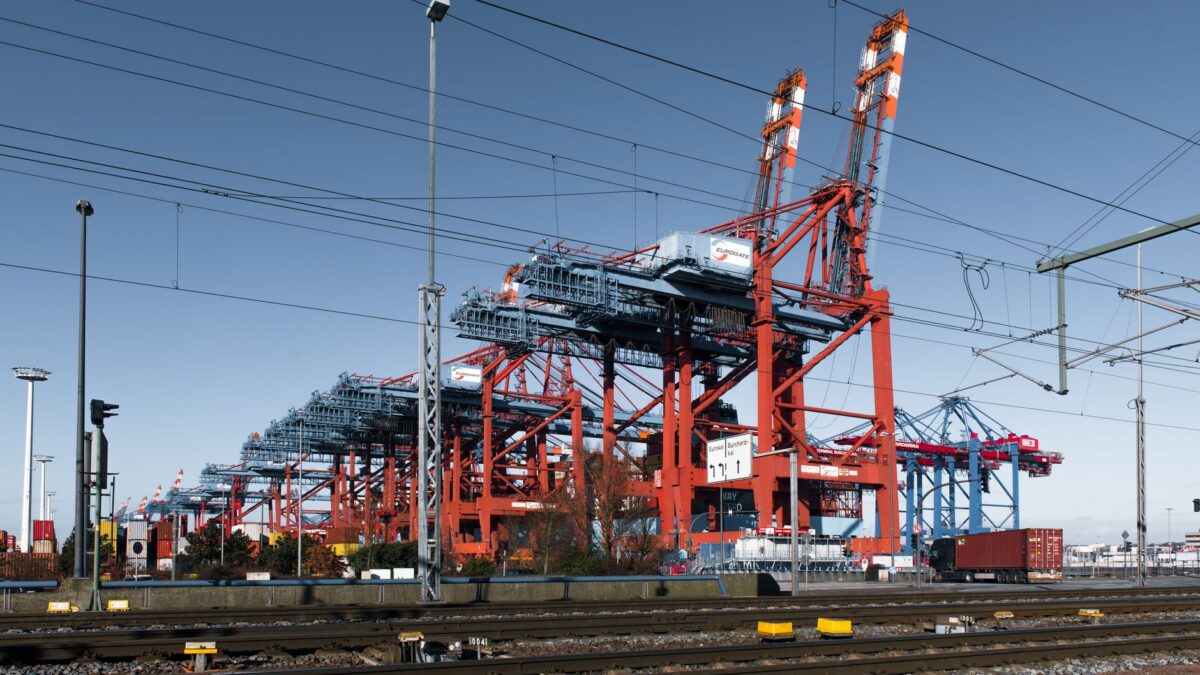
The Port of Los Angeles handled 1,026,872 twenty-foot equivalent units (TEUs, the standard measure of container volume) in October, its second-busiest month ever, according to gCaptain. The total followed September’s all-time record of 1,042,652 TEUs and extended what the port calls its strongest five-month run in 118 years.
The volume is arriving as a possible strike by about 250 maritime watchmen and a backlog of containers waiting for rail trains put pressure on trucking capacity at the Los Angeles and Long Beach ports.
The October numbers
Port Executive Director Gene Seroka said at a media briefing that no other U.S. port has handled 1 million units in a single month, and that Los Angeles has now done it three times this year, including back-to-back months for the first time. From June through October the port processed nearly 5 million TEUs.
- Loaded imports: 538,620 TEUs, up 25% from a year earlier and 30% above the five-year October average.
- Empty containers: a record 373,271 TEUs, as ocean carriers move equipment back to Asia.
- Loaded exports: 114,981 TEUs, down 7% from October 2025.
- Year to date: 9,108,497 TEUs through October, 5% ahead of last year and 9% above the five-year average.
Seroka credited consumer spending, retailers restocking, changes in trade policy and disruptions on other shipping routes. He said exports have fallen year over year in six of the first 10 months of 2026. He added that if December also delivers, this could be the busiest year in the port’s history.
A strike deadline on Nov. 20
The Pacific Maritime Association and International Longshore and Warehouse Union (ILWU) Local 26, which represents about 250 maritime watchmen at the ports, have extended contract talks through Nov. 20. That avoids a walkout for now. A strike remains possible if no agreement is reached.
The unit is small, but ILWU Local 13 (longshore workers) and Local 63 (marine clerks) have indicated they would honor Local 26 picket lines, according to the report.
Rail delays and truck capacity
Both ports already have long container dwell times. About 9,500 import containers at Los Angeles that were bound for rail had waited nine days or longer for on-dock rail service, and 5,063 containers at Long Beach faced similar delays. At Los Angeles, about 67% of import containers moved through terminals within four days, 11% stayed five to eight days and 23% stayed nine days or longer. C.H. Robinson named a shortage of intermodal railcars in Southern California as a contributing factor.
Paul Brashier, vice president of global supply chain at ITS Logistics, said port congestion is highly elevated because of higher import volume and reduced driver capacity. He said congestion cuts the number of containers a driver can move per day, and that shippers should be ready to add trucking capacity through Lunar New Year.
What this means for truckers and shippers
Any labor disruption could lengthen container dwell times further and complicate inland moves for importers, according to gCaptain. Seroka said November volumes also look strong. After two trips to China he said factories there are running at full capacity, and importers are expected to speed up shipments ahead of Lunar New Year.
The report cites the temporary easing of U.S.-China tariff tensions and the extended suspension of U.S. port fees on Chinese vessels as relief for shippers. It lists possible Section 301 tariffs, U.S.-China negotiations and consumer spending as open questions for 2027. The Federal Reserve Bank of New York reported that U.S. credit card balances reached a record $1.29 trillion in the third quarter.
Source: gCaptain