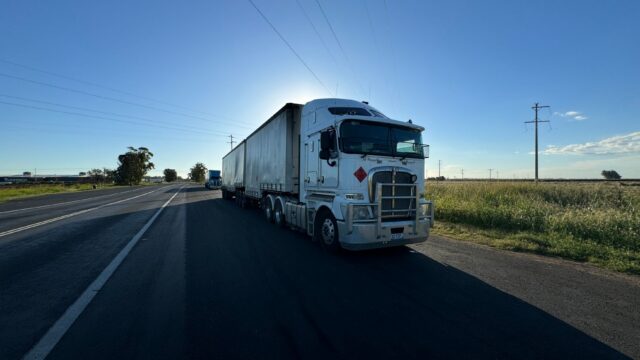
Pre-Trip Inspection and DVIR Rules: What Drivers Must Check and Sign
The federal pre-trip and post-trip rules in 49 CFR 392.7, 396.11 and 396.13, plus an inspection order that follows the CDL skills test.

Federal rules require a truck driver to be satisfied that the vehicle is in safe operating condition before driving, to review the last driver vehicle inspection report (DVIR) and to sign it if defects were listed. At the end of each day’s work, the driver must write a DVIR only when a defect is found or reported.
The rules are in 49 CFR 392.7, 396.11 and 396.13. They apply to interstate motor carriers and their drivers, with exceptions in 396.11(a)(5) for one-truck operations, driveaway-towaway operations and non-business private passenger carriers. Status below is as of November 2026.
What must a pre-trip inspection cover?
Under 49 CFR 392.7, no one may drive a commercial motor vehicle unless the driver is satisfied that 11 items are in good working order. The same list is the minimum for the post-trip report.
| Item | Common defects officers find |
|---|---|
| Service brakes, including trailer brake connections | Out-of-adjustment brakes, air leaks, chafed lines |
| Parking brake | Does not hold the vehicle |
| Steering mechanism | Excessive play, loose components |
| Lighting devices and reflectors | Inoperative lamps, missing reflective tape |
| Tires | Low tread, flat or audibly leaking tires, cuts to the cord |
| Horn | Not working |
| Windshield wipers | Missing or not working |
| Rear-vision mirrors | Broken or missing |
| Coupling devices | Fifth wheel not locked, damaged pintle or safety chains |
| Wheels and rims | Cracks, loose or missing lug nuts |
| Emergency equipment | No fire extinguisher or warning triangles |
Drivers picking up a chassis or other intermodal equipment have their own list in 392.7(b), which adds items such as twist locks, rails and the sliding frame lock. Once you pull that equipment onto the road, the rule treats you as having confirmed those parts were in good order.
When is a post-trip DVIR required?
A written DVIR is required at the end of each day’s work for each vehicle driven, but only when the driver found a defect or one was reported to the driver. FMCSA ended the no-defect report for property carriers in 2014. If you drove two trucks, you need a report for each one that had a defect.
The report must identify the vehicle, list any defect that would affect safe operation or cause a breakdown, and be signed by the driver. On a team, one signature is enough if both drivers agree on the defects. Under a rule effective March 23, 2026, the regulation now states plainly that the DVIR may be created and kept electronically under 49 CFR 390.32. The text of the rule is in 49 CFR 396.11.
Who signs off on repairs?
The motor carrier or its agent, usually a mechanic or shop. Before the vehicle runs again, the carrier must repair any listed defect that is likely to affect safety and certify on the DVIR that the defect was repaired or that repair is unnecessary.
The next driver then closes the loop under 396.13. Before driving, he or she must review the last DVIR and sign it to acknowledge seeing it and that the repair certification is there. That signature is not needed for defects listed on a trailer that is no longer part of the combination.
How long must carriers keep DVIRs?
Three months from the date the report was prepared. The carrier keeps the original DVIR, the repair certification and the next driver’s signed review. Intermodal equipment providers keep reports on their chassis for the same three months. Maintenance records are separate and follow 49 CFR 396.3. Missing DVIRs or repairs not certified are among the items auditors check during a compliance review; see CSA scores explained for how roadside defects affect the Vehicle Maintenance score.
What order should a pre-trip follow?
The CDL skills test begins with a vehicle inspection, and most state CDL manuals lay it out in a fixed order. Using the same order every day makes it harder to skip something. A typical sequence:
- Approach the vehicle. Look for leaks under the truck, damage, lean and anything hanging.
- Engine compartment. With the engine off, check fluid levels, belts, hoses, wiring and leaks.
- Cab check and engine start. Gauges, air pressure build-up, warning buzzers, horn, wipers, heater and defroster, mirrors, seat belt and emergency equipment.
- Lights. Headlights, turn signals, four-ways, clearance and marker lamps, brake lights.
- Walk-around. Steering and suspension parts, brakes and slack adjusters, tires, wheels and rims, lug nuts, fuel tank and cap, frame, doors and cargo securement.
- Coupling. Fifth wheel locking jaws, kingpin, apron, release arm, air and electrical lines; pintle hook and chains on doubles.
- Trailer. Landing gear raised, trailer tires and brakes, lights, rear impact guard and doors.
- In-cab air brake test. Static leak, applied leak, low-air warning, spring brake pop-out and a parking brake and service brake check.
State manuals add details and the exact words examiners want, so check your state’s current CDL manual before a test. More on the test itself is in how to get a CDL.
Bottom line
The signature on the previous DVIR shifts responsibility to you, so read it before you sign; if a listed defect has no repair certification, the truck should not move. A defect you find and report in writing protects you, while the same defect found at a roadside inspection becomes a violation on your record and the carrier’s.
FAQ
Do I have to fill out a DVIR if nothing is wrong?
No. Since 2014, property-carrying drivers prepare a post-trip DVIR only when they found a defect or one was reported to them. Your carrier may still require one by company policy.
Does the law require a written pre-trip inspection?
The federal pre-trip duty in 392.7 and 396.13 is to be satisfied the truck is safe and to review and sign the last DVIR. No separate written pre-trip report is required by federal rule.
Does an owner-operator with one truck need DVIRs?
Not if the carrier operates only one commercial motor vehicle; 396.11 exempts it. The driver must still be satisfied the truck is safe before driving under 392.7.
Can a DVIR be on an app?
Yes. The DVIR and the driver’s review may be electronic, and a rule effective March 23, 2026, wrote that into 396.11 and 396.13.