How Rail Intermodal Works: Containers, IMCs and the Truck Legs
A domestic intermodal load spends most of its miles on a train but starts and ends behind a truck. How the pieces fit, who sells the service, and when it beats over-the-road truckload.
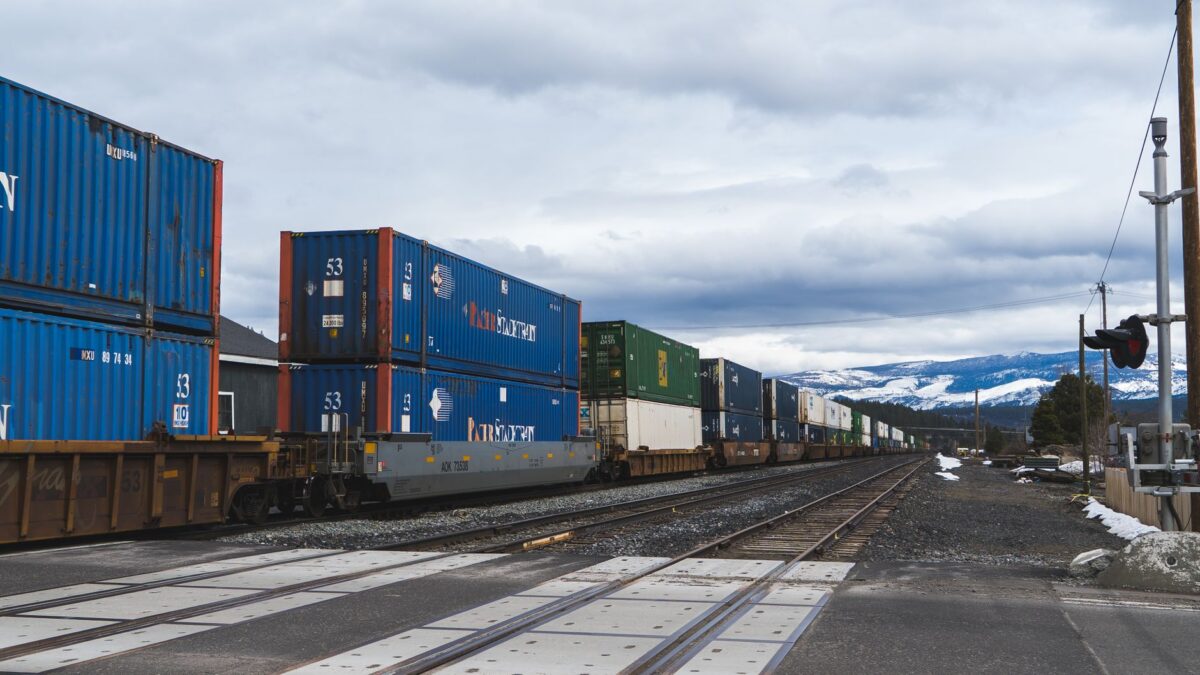
Rail intermodal moves freight in a container or trailer that rides a train for the long middle of the trip and a truck for the first and last miles, without the freight being unloaded in between. Intermodal marketing companies (IMCs) and asset carriers sell it to shippers, railroads haul it between ramps, and drayage drivers handle the truck legs. It is usually cheaper than truckload on long lanes and slower door to door.
How does an intermodal shipment move?
A typical domestic intermodal load has five steps:
- Origin dray. A truck brings an empty container on a chassis to the shipper, which loads and seals it. The driver hauls it to the rail ramp, the intermodal terminal.
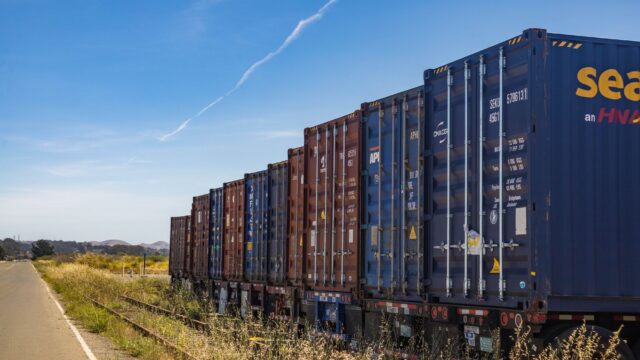
- Ramp in-gate. The terminal records the box’s condition and the container is lifted onto a railcar, often stacked two high on a double-stack car.
- Rail line haul. The train carries it to a ramp near the destination, usually hundreds or thousands of miles away.
- Ramp out-gate. The container is lifted onto a chassis, and a drayage driver picks it up.
- Destination dray. The driver delivers to the consignee, who unloads it, and the empty container goes back into the network.
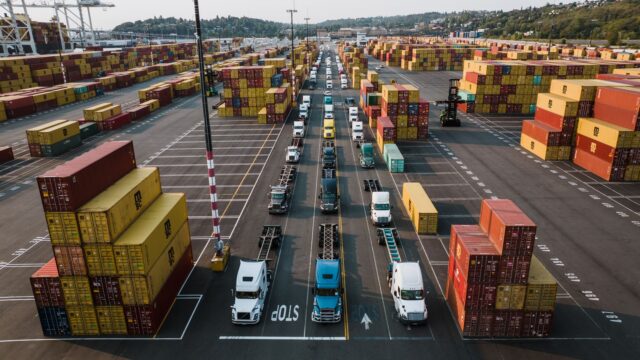
International containers coming off ships follow the same pattern after leaving the port: they ride inland by rail to a ramp, then by truck to a warehouse. The truck side at ports, including appointments, chassis and TWIC cards, is covered in how port drayage works.
What is the difference between containers and trailers on rail?
Most U.S. intermodal today moves in containers; trailers on flatcars are a smaller share.
| Equipment | Typical size | Used for | Notes |
|---|---|---|---|
| Domestic container | 53 feet | Domestic freight inside North America | Matches the cube of a 53-foot dry van; rides on a chassis on the road |
| International (ISO) container | 20, 40 or 45 feet | Imports and exports | Owned or leased by ocean carriers; per diem charges apply after free time |
| Trailer on flatcar (TOFC) | Highway trailers built for rail | Some parcel and LTL freight | Can be pulled directly by a tractor without a chassis |
| Refrigerated container | Domestic or ISO sizes | Temperature-controlled freight | Needs fueling and temperature monitoring en route |
Double-stack trains carry two containers per well car, which is a main reason rail costs less per box than a single truck over long distances.
Who sells intermodal service?
Railroads haul the trains, but shippers usually buy door-to-door intermodal from a third party:
- Asset-based intermodal carriers own or control their own container fleets and drayage trucks and buy rail line haul from the railroads. J.B. Hunt, whose intermodal business runs with BNSF in the West, is the best-known example; Schneider and Hub Group also run large container fleets on Class I railroads.
- Intermodal marketing companies (IMCs) arrange the whole move, often using railroad-owned or leased containers and contracting drayage to local carriers.
- Railroads selling direct, which also market some domestic container programs to shippers and IMCs.
The Class I railroads with large intermodal networks are BNSF and Union Pacific in the West and CSX and Norfolk Southern in the East, plus the Canadian railroads CN and CPKC. A proposed Union Pacific and Norfolk Southern merger under federal review would create the first single-line coast-to-coast railroad in the U.S., and the Surface Transportation Board’s decision will shape intermodal routes and the drayage work around eastern and western ramps.
When is intermodal better than truckload?
Intermodal usually wins on cost for long lanes with steady volume and loses on speed and flexibility. The tradeoffs:
| Factor | Rail intermodal | Over-the-road truckload |
|---|---|---|
| Cost on long lanes | Usually lower | Usually higher |
| Transit time | Slower; extra time at ramps for lifts and train schedules | Faster, especially with team drivers |
| Short lanes | Often uncompetitive, since two drays and ramp time cost too much | Usually better |
| Reliability | Depends on rail service, weather and ramp congestion | Depends on driver hours and road conditions |
| Fuel use per ton-mile | Lower | Higher |
Shippers often move freight between modes with the freight market. When truckload rates are low and capacity is loose, some freight returns to the highway; when truck rates rise, intermodal gains. For how truck rates themselves are set, see how truckload freight rates work.
What trucking jobs does intermodal create?
Every intermodal load needs at least two truck moves, so intermodal is a large employer of local drivers. The jobs are mostly drayage: short runs between ramps, ports, warehouses and container yards, with the driver home daily in most cases. Pay is commonly per move or hourly, and waiting at ramps or docks is a big part of the day.
Drivers pulling containers must inspect the chassis before use. Federal rules in 49 CFR Part 390, Subpart C put duties on intermodal equipment providers, the companies that supply chassis, to keep them roadworthy and to accept drivers’ damage and defect reports. A driver should check tires, brakes, lights, twist locks and the landing gear before leaving the ramp, because roadside violations on a defective chassis can still land on the driver’s and carrier’s records. Drivers coming from long-haul truckload often compare drayage with other freight segments, explained in LTL vs truckload.
Bottom line
Intermodal does not remove trucks from a load; it replaces one long truck haul with two short ones. That makes ramp congestion, chassis condition and dray rates as important to intermodal costs as the rail rate, and it is why drayage capacity near major ramps tightens quickly when freight moves from highway to rail.
FAQ
What does IMC mean in trucking?
IMC stands for intermodal marketing company, a firm that sells door-to-door intermodal service to shippers. It buys the rail move from a railroad and arranges drayage at each end, often with local trucking companies.
Is intermodal slower than trucking?
Usually yes. The train itself can be fast, but lifts at ramps, train schedules and dray appointments add time. The gap is smallest on long, high-volume lanes with frequent trains.
Do drayage drivers need a TWIC card for intermodal ramps?
Rail ramps are not marine terminals, so the federal TWIC requirement does not apply there. Drivers serving container ports need a TWIC to enter secure areas, and many intermodal drivers serve both.
Who owns the chassis on an intermodal load?
It depends on the market. Chassis may belong to a chassis pool, a leasing company, the ocean carrier, the intermodal carrier or the trucking company. Whoever supplies it must keep it roadworthy, and the driver must inspect it before use.