Cross-Border Trucking Rules for Canada and Mexico: Manifests, HOS
Crossing a border with freight means two customs systems, two sets of driver rules and strict limits on domestic loads. The requirements on each side as of November 2026.
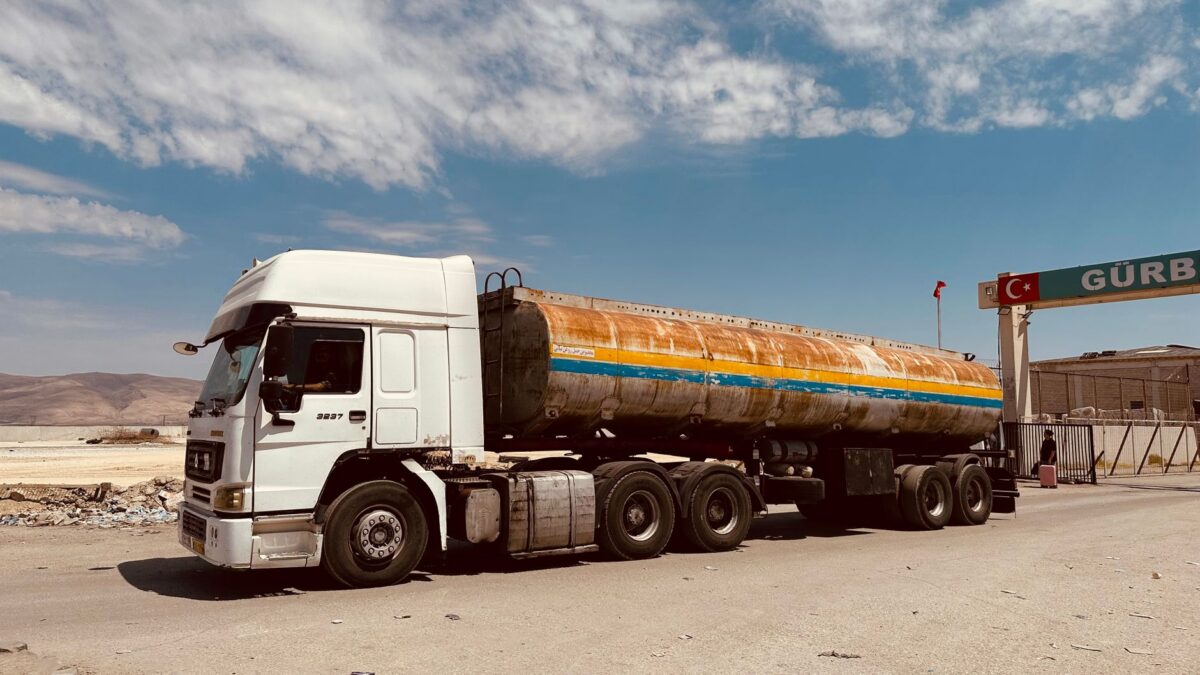
A truck crossing into the United States must send an electronic manifest through CBP’s ACE system at least 1 hour before reaching the port, or 30 minutes before for FAST shipments, and a truck entering Canada must have its ACI eManifest data received by the Canada Border Services Agency at least 1 hour before arrival. Once across, the driver follows that country’s hours-of-service rules, and foreign trucks may not haul purely domestic loads.
When must a truck file an eManifest?
Both countries require advance electronic data, and the clock runs to the first port of arrival:
| Item | Entering the United States | Entering Canada |
|---|---|---|
| System | ACE electronic truck manifest (CBP) | ACI eManifest (CBSA) |
| Deadline | At least 1 hour before arrival; 30 minutes for FAST shipments | Cargo and conveyance data received and validated at least 1 hour before arrival |
| Earliest filing | Varies by filing method | Up to 30 days before arrival |
| Rule | 19 CFR 123.92 | Reporting of Imported Goods Regulations |
CBP measures the U.S. window from when it receives the final manifest submission, not the first draft. In Canada, corrections must also arrive at least 1 hour before arrival, and a new conveyance report is needed if the arrival time moves 30 minutes or more earlier, or 8 hours or more later, than reported. Most carriers file through a service provider or their transportation management software. The U.S. rule text is at 19 CFR 123.92.
What are FAST cards and CTPAT?
The Free and Secure Trade (FAST) program is a trusted traveler card for commercial drivers, run by CBP and, for the northern border, jointly with CBSA. It costs $50 and is valid for 5 years. U.S., Canadian and Mexican drivers age 18 or older with a valid driver’s license can apply through the Trusted Traveler Programs website, followed by an interview.
FAST lanes and the shorter 30-minute manifest window are for shipments that qualify for FAST, which generally means a FAST-carded driver, a carrier that is a member of CBP’s Customs Trade Partnership Against Terrorism (CTPAT) and an eligible importer. CTPAT is a supply chain security program for companies, not individual drivers; Canada’s counterpart is Partners in Protection. A FAST driver is added to a U.S. manifest using the FAST card number.
How do Canada’s hours-of-service and ELD rules differ?
Canada’s federal hours-of-service regulations allow more driving per day than U.S. rules but cap the workday differently. Once a U.S. driver enters Canada, Canadian rules apply. South of latitude 60:
| Limit | Canada (federal, south of 60) | United States |
|---|---|---|
| Daily driving | 13 hours | 11 hours |
| On-duty limit | 14 hours on duty, and no driving after 16 hours elapsed since the last 8-hour break | No driving after the 14th hour since coming on duty |
| Daily off-duty | At least 10 hours in a day | 10 consecutive hours before a new shift |
| Cycle | Cycle 1: 70 hours in 7 days; Cycle 2: 120 hours in 14 days, with 24 hours off after 70 | 60 hours in 7 days or 70 hours in 8 days |
| Cycle reset | 36 hours off (Cycle 1) or 72 hours off (Cycle 2) | 34 hours off |
The Canadian text is in the Commercial Vehicle Drivers Hours of Service Regulations; the U.S. side is in our guide to hours-of-service rules.
Canada’s ELD mandate took effect June 12, 2021, and provinces began enforcing it with penalties in January 2023. Canada requires ELDs certified by an accredited third-party body, so a device registered with FMCSA is not automatically legal in Canada; carriers need a model on Transport Canada’s certified list, and some vendors offer a separate Canadian mode. U.S. requirements are in ELD rules explained.
Can a foreign truck haul a domestic load?
Only in narrow cases. Under 19 CFR 123.14, a foreign-based truck may carry goods between two U.S. points only when the move is incidental to its international trip, such as a load in the general direction of its export move or on its way back to its home country. Anything else is cabotage, and improper use can bring Customs penalties. Canada applies similar limits to U.S. trucks and drivers inside Canada, so check CBSA’s rules before accepting a domestic Canadian move.
Drivers face the same limit on the immigration side. Canadian and Mexican drivers enter the U.S. as business visitors to deliver or pick up international cargo, and the USMCA business-visitor provision in federal immigration rules states that purely domestic service in competition with U.S. operators is not permitted.
What can Mexican carriers do in the United States?
A Mexico-domiciled carrier that only works the border area needs an FMCSA Certificate of Registration, applied for on Form OP-2. It lets the carrier haul in U.S. border municipalities and their commercial zones, which typically extend a short distance from the border. Under 49 CFR 368.1, a carrier with only this certificate that operates outside those zones faces penalties and an out-of-service order.
Long-haul operations beyond the commercial zones require separate FMCSA operating authority for Mexico-domiciled carriers, with its own safety review. All drivers in the U.S. must meet the English proficiency standard; an April 16, 2026 FMCSA memo narrowed the earlier exception for border commercial zones, as explained in our English proficiency guide.
Bottom line
The fastest crossings depend on preparation done months before: a FAST card for the driver, CTPAT membership for the carrier and a Canada-certified ELD. Without the first two, a carrier loses the 30-minute manifest window and the dedicated lanes; without the third, a U.S. truck can be cited in Canada even when its logs are clean.
FAQ
Can a US truck driver drive in Canada?
Yes, for international loads. The driver needs a valid passport or other accepted travel document, must follow Canadian hours-of-service rules while in Canada and cannot haul a purely domestic Canadian load except in narrow cases.
How much does a FAST card cost?
$50 for 5 years, paid when applying through the Trusted Traveler Programs website.
Can Canadian drivers do domestic loads in the US?
Generally no. A Canadian truck may carry a U.S. domestic load only when it is incidental to its international trip, such as a load toward the border on its way home.
Is my US ELD legal in Canada?
Only if the model is third-party certified under Canada’s standard and appears on Transport Canada’s list. A device built for the U.S. rules may need a software update and Canadian certification.