Bill of Lading Explained: What It Must Show and Why Drivers Sign It
The BOL is the one document that follows freight from dock to dock. What belongs on it, the difference between straight and order bills, and what a driver's signature commits to.
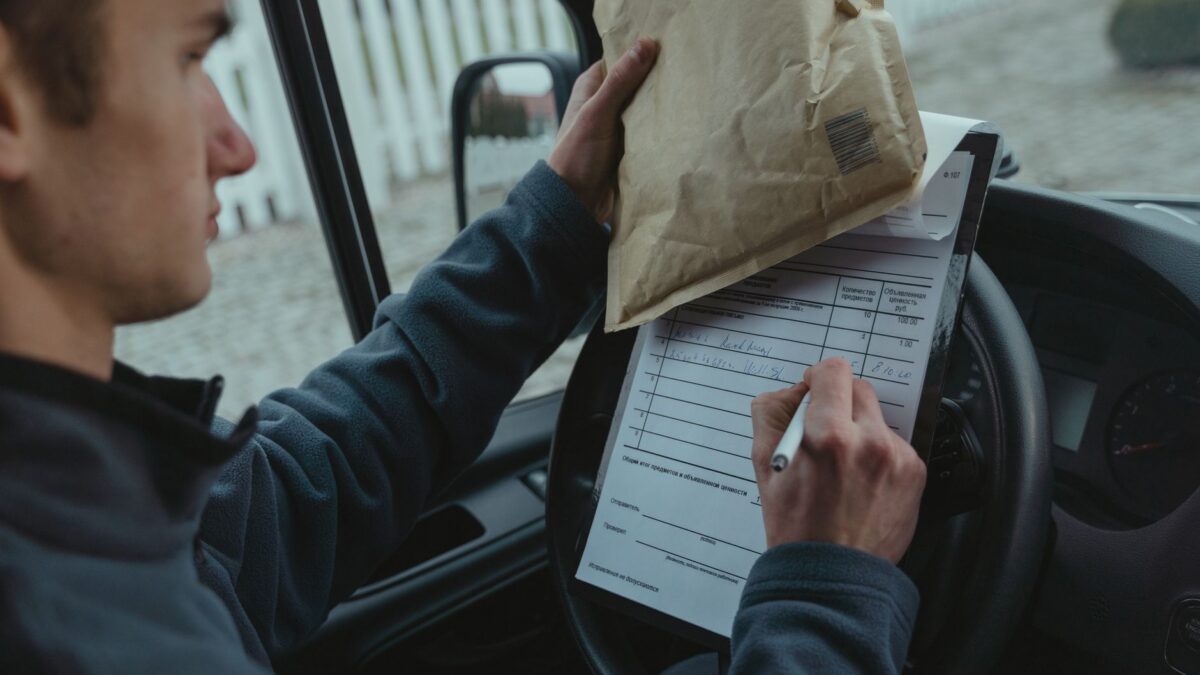
A bill of lading (BOL) is the document a motor carrier issues when it takes freight: it is a receipt for the goods, the shipping contract, and, in some forms, a document of title. Under 49 CFR 373.101, a for-hire interstate carrier’s BOL must name the shipper and consignee, the origin and destination, the number of packages, a description of the freight, and its weight or volume where that affects the rate.
What does a bill of lading do?
The BOL does three jobs at once. It records what the carrier received and in what condition. It holds or refers to the contract terms, including the carrier’s liability limits. And for an order bill, it controls who can take delivery of the goods.
Federal law ties the carrier’s cargo liability to this document. Under the Carmack Amendment, 49 U.S.C. 14706, a carrier must issue a receipt or bill of lading for property it receives, and the carrier is liable to the person entitled to recover under it. A carrier that fails to issue one is still liable, but the paperwork is what both sides use to prove what was loaded and delivered. Our guide to cargo claims under the Carmack Amendment covers how that liability is enforced.
What must be on a bill of lading?
The federal minimum is short. The rest comes from the shipper’s form, the carrier’s tariff and industry practice.
| Item | Required by 49 CFR 373.101? | Why it matters |
|---|---|---|
| Names of shipper (consignor) and consignee | Yes | Identifies who tendered and who receives the freight |
| Origin and destination points | Yes | Defines the move the contract covers |
| Number of packages | Yes | The basis for shortage claims |
| Description of freight | Yes | Needed for rating, liability and hazmat rules |
| Weight, volume or measurement | Yes, if it affects the rate | Used to bill LTL freight and check reweighs |
| Seal number | No, but common | Shows whether a trailer was opened in transit |
| Freight class or NMFC item | No, but standard for LTL | Sets the LTL rate |
| Declared value or released-value terms | No, but affects liability | Can limit what the carrier pays on a claim |
| Hazmat shipping description and emergency contact | Yes for hazmat, under DOT hazmat rules | Required for placarded and regulated loads |
The carrier must keep a record of this information under 49 CFR Part 379. The full text of the rule is on the eCFR page for 49 CFR 373.101.
What is the difference between a BOL, a POD and a rate confirmation?
They are three separate papers, each with a different signer and purpose.
- The bill of lading is signed at pickup by the shipper and the driver. It describes the freight and the contract of carriage.
- The proof of delivery (POD) is usually the delivery copy of the BOL, signed by the consignee with the date and time and any exceptions. Carriers and brokers use it to bill and get paid.
- The rate confirmation is the agreement between a broker and a carrier on price, pickup and delivery windows, detention, and payment terms. It is not shown to the shipper and does not describe the freight in detail.
When a load goes wrong, each document answers a different question: the BOL shows what was tendered, the POD shows what arrived, and the rate confirmation shows what the carrier was promised. Carriers vetting a broker should check that the rate confirmation’s details match the BOL; mismatched names and addresses are a known sign of fraud, as covered in how to check a freight broker.
What is a straight bill vs an order bill of lading?
A straight bill of lading names one consignee, and the carrier delivers to that party. It is not negotiable, and nearly all domestic truckload and LTL freight moves on straight bills.
An order bill of lading is negotiable. The goods are consigned “to the order of” a party, and whoever holds the properly endorsed original bill is entitled to the freight. Order bills are used when goods are sold or financed in transit. A carrier that delivers order-bill freight without collecting the original can be liable to the holder, which is why drivers should never release such freight on a phone call.
Why do seal numbers matter?
A seal is a numbered tag or bolt on the trailer or container door, applied after loading. If the number on the door at delivery matches the number on the BOL and the seal is intact, it supports the carrier’s position that the load was not opened in transit.
Drivers should write the seal number on the BOL at pickup, check it at each stop, and note any broken or changed seal with the time and reason, such as a roadside inspection. When a shipper loads and seals the trailer without the driver watching, the BOL commonly carries the note “SLC” (shipper’s load and count) or “SL&C”. That notation records that the driver could not verify the count. Its legal effect in a claim depends on the facts and the court.
What is clean vs noted delivery, and why does the signature matter?
A clean delivery is one the consignee signs for with no exceptions. A noted delivery carries written exceptions on the POD, such as “2 pallets short” or “1 carton crushed.”
Signatures matter because they are the main evidence of condition at each handoff. A driver who signs a clean BOL at pickup accepts that the freight was in good order as far as could be seen. A consignee who signs clean at delivery makes a later damage claim harder to prove, although concealed damage can still be claimed. Under 49 CFR 370.3(c), a notation of shortage or damage on a delivery receipt is not itself a claim; the shipper or consignee must still file a written claim with the carrier.
- At pickup, count pieces if allowed, match them to the BOL, and note any damage or count you could not verify before signing.
- Record the seal number and the time you left.
- At delivery, let the receiver count and inspect; get any exceptions written on the POD in specific terms.
- Get a printed name, signature, date and time on the POD, and take photos where the receiver allows.
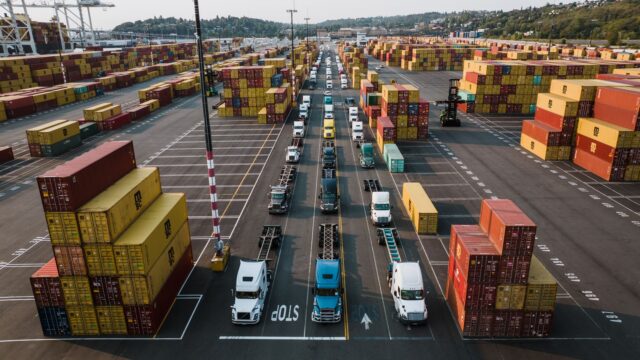
Drayage drivers face the same rules with the extra step of an equipment interchange receipt at the terminal; see how port drayage works. LTL shipments add the freight class line that truckload BOLs often leave out, explained in LTL vs truckload.
Bottom line
Most freight disputes are settled on paper, and the driver writes much of it at the dock in a few seconds. A specific exception written on the bill at pickup or delivery carries more weight in a claim than any phone call or later email.
FAQ
Can a driver refuse to sign a bill of lading?
A driver can decline to sign a BOL that misstates the count or condition, or can sign with written exceptions. Most carriers instruct drivers to note problems on the bill rather than refuse it outright, and to call dispatch before leaving.
Is an electronic bill of lading valid?
Electronic BOLs are widely used and accepted by many carriers and shippers. The federal rule lists required information, not a paper format, but the carrier’s tariff and the shipper’s contract decide which form is used.
Who keeps the original bill of lading?
Copies typically go to the shipper, the carrier and the consignee. For an order bill, the original is the controlling document and must be surrendered to take delivery.
Does a broker issue the bill of lading?
Brokers often prepare the BOL form, but the BOL is the carrier’s receipt. The motor carrier that takes the freight is the one Carmack treats as issuing the receipt and carrying the liability.