How Port Drayage Works: Appointments, Chassis, TWIC and Fees
A short haul with a long list of rules: what a drayage driver needs before the gate, where the time goes inside the terminal, and who pays when a box sits too long.
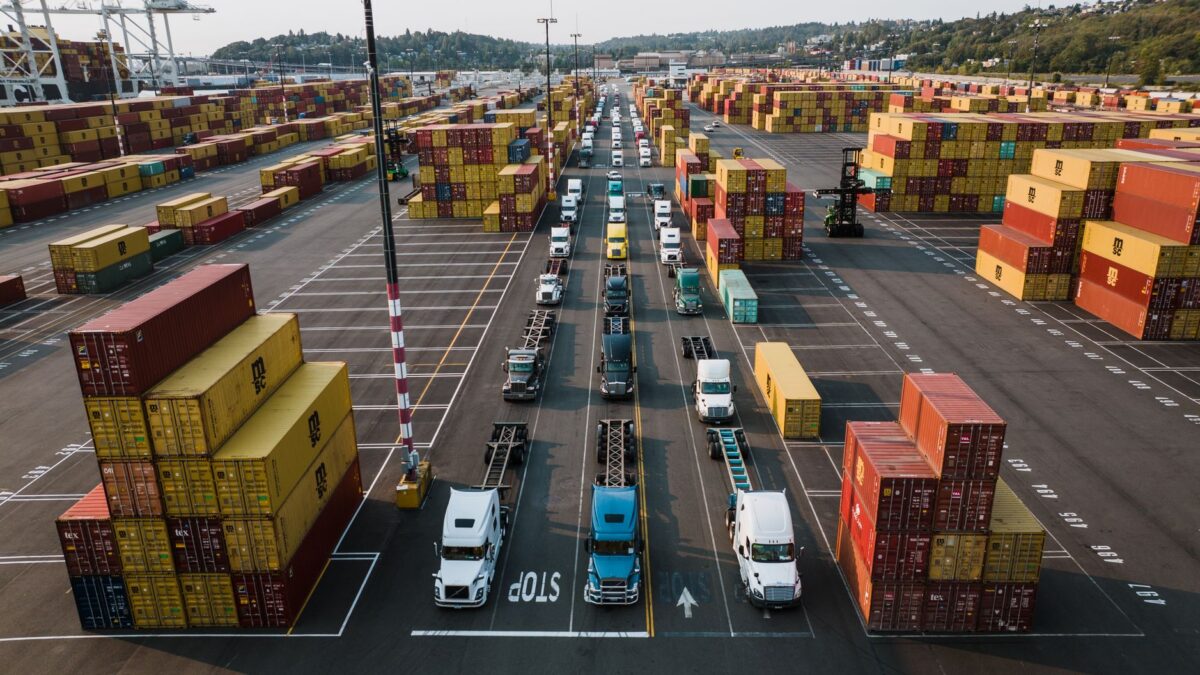
Port drayage is the short truck move of an ocean container between a marine terminal and a nearby warehouse, rail ramp or container yard. A drayage driver needs a TWIC card to enter the terminal unescorted, a terminal appointment, a road-ready chassis and release of the container, and the carrier pays per diem if the box is kept past its free days.
What does a drayage driver actually haul?
Most drayage loads are import containers pulled from a terminal to a distribution center within a day’s round trip, then returned empty. Export moves run the other way: an empty is picked up, loaded at the shipper, and delivered back to the terminal before the vessel’s cutoff. Some moves go to an off-dock rail ramp instead of a warehouse.
The container belongs to the ocean carrier, not the trucker. The chassis it rides on may belong to the ocean carrier, a chassis pool, a leasing company or the trucking company. That split ownership is why so many fees in drayage depend on who had the equipment and for how long.
Drayage is usually paid per move, plus accessorials such as chassis rental, prepull, storage, waiting time and fuel surcharge. Rates vary by port and by mileage, and spot prices swing with vessel arrivals. Our explainer on how freight rates work covers the linehaul and surcharge split that also shows up on drayage invoices.
What do you need before you can pull a container?
Before a driver reaches the gate, four things must line up: credentials, an appointment, equipment and a released container.
- TWIC card. The Transportation Worker Identification Credential, issued by TSA, is required for unescorted access to secure areas of ports regulated under the Maritime Transportation Security Act. A card is valid for five years. TSA’s most recent published fee notice, in effect since November 2022, set the standard enrollment fee at $125.25; check the TSA TWIC program page for the current amount before enrolling.
- Operating authority and terminal registration. Interstate drayage carriers need a USDOT number and operating authority (see how to get USDOT and MC authority). Most terminals also require the trucking company to be registered with the terminal or its gate system, with proof of insurance on file.
- Interchange agreement. Carriers that take ocean carrier containers usually sign the Uniform Intermodal Interchange and Facilities Access Agreement (UIIA). It sets who is responsible for equipment damage and per diem while the box is out.
- Release and appointment. An import box can leave only after the ocean carrier has been paid, customs has released it and no holds remain. Many busy terminals then require a pickup appointment booked in their online system for a specific window.
How does the terminal visit work?
A typical import pickup runs through the in-gate, a yard or exchange area, and the out-gate. At the in-gate, the driver’s TWIC, the appointment and any empty or export being returned are checked. Inside, the driver either has the container lifted onto a chassis in the yard or picks up a box that was already grounded on a chassis. At the out-gate, the seal number, container number and equipment condition are recorded on an interchange receipt.
That interchange receipt matters later. It is the record of what condition the container and chassis were in when the trucker took them. Damage not noted at the out-gate can be billed to the trucking company. Drivers should also check the seal against the paperwork, since the seal number travels onto the bill of lading and becomes evidence in any cargo claim.
Turn time is the clock from in-gate to out-gate. Long turn times cut the number of moves a truck can make in a day, and most drayage rates assume a set number of turns. Several ports publish turn-time data, but there is no single national standard for what counts as a normal turn.
Who supplies the chassis?
In most US ports today the chassis comes from a pool or a leasing company rather than from the ocean carrier. The trucker rents it per day and returns it to an approved location. Some carriers and shippers own their own chassis to avoid shortages. A missing or out-of-service chassis can stop a move even when the container is ready, which is one reason drivers sometimes wait inside the terminal for equipment.
Chassis must pass a roadability check before leaving. Under federal rules, the driver inspects the chassis for brakes, lights, tires and other parts, and the intermodal equipment provider is responsible for keeping it road ready. A driver who finds defects should report them and refuse a chassis that is not safe to pull.
What are free time, demurrage and per diem?
Free time is the number of days an importer or exporter can use the container or terminal space before charges start. The two charges that follow are different:
| Charge | What it covers | When it runs | Who usually gets billed |
|---|---|---|---|
| Demurrage | Container sitting at the terminal | After terminal free days, until pickup | Importer or its customs broker |
| Per diem (detention) | Container or chassis kept outside the terminal | After free days out, until the empty is returned | Trucking company under the UIIA, often passed to the importer |
| Chassis rental | Daily use of a pool or leased chassis | Each day out | Trucking company or shipper, per contract |
| Storage at a trucker’s yard | Prepulled box parked at a drayage yard | Per day, per the drayage rate sheet | Shipper or importer |
Federal billing rules from the Federal Maritime Commission apply to demurrage and detention invoices issued by ocean carriers, marine terminal operators and NVOCCs. Those rules set deadlines for invoices and disputes; the details are in our guide to demurrage vs detention.
Why do ports back up?
Port congestion usually starts with more boxes arriving than the terminal can move out. Common causes:
- Several vessels arriving at once after weather or schedule delays, which floods the yard with imports.
- Too few appointments, gate hours or longshore labor to match the volume.
- Chassis shortages or chassis sitting out at warehouses that cannot unload fast enough.
- Warehouses full, so importers leave containers on wheels instead of returning empties.
- Empty-return restrictions, where a terminal stops taking empties for a given ocean carrier and the trucker has nowhere to drop.
Each of these pushes cost onto the trucker. Waiting time is lost revenue, and an empty that cannot be returned keeps adding per diem even when the delay is the terminal’s fault. Drayage carriers keep gate receipts, screenshots of closed return windows and appointment records as evidence to dispute those charges.
Bottom line
Drayage pay depends less on miles than on how many turns a truck makes in a day, so the paperwork from each terminal visit is worth as much as the load itself. Carriers that log every appointment, interchange receipt and refused empty return have a documented basis to contest per diem and waiting time under the FMC’s billing rules.
FAQ
Do I need a TWIC card to haul containers?
You need a TWIC card for unescorted access to the secure areas of MTSA-regulated port terminals, which covers most container pickups. Some off-dock rail ramps and warehouses do not require one. Without a card, a driver must be escorted, which most terminals do not offer for truckers.
Can an owner-operator run drayage under someone else’s authority?
Yes. Many port owner-operators are leased to a drayage carrier and run under its USDOT number, insurance and terminal registration. The lease must follow federal truth-in-leasing rules, and state law decides whether the driver is treated as a contractor or an employee.
Who pays per diem if the terminal will not take the empty back?
Under the UIIA the trucking company is usually billed first. Whether the charge stands depends on the ocean carrier’s tariff, the evidence that returns were closed, and the dispute rules in the FMC billing regulation. Keep dated proof of each attempted return.
What is a prepull?
A prepull is when the trucker takes a container out of the terminal early and parks it at its own yard before delivery. It stops demurrage at the port but adds a yard storage fee and chassis days, so shippers use it when terminal charges would cost more.