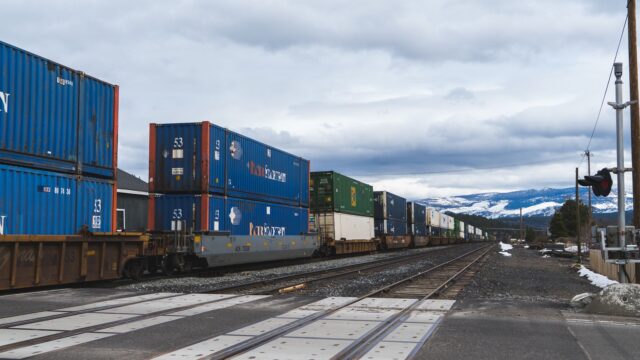
Demurrage vs Detention: Port Fees, Per Diem and Truck Detention Pay
Three charges that sound alike and land on different people. A side-by-side table, the federal invoice deadlines, and how detention pay at shippers works for truckers.

Demurrage is a charge for leaving a loaded container at the marine terminal past its free days. Detention, often called per diem, is a charge for keeping the carrier’s container or chassis outside the terminal past its free days. Truck detention is a different fee again: what a shipper or broker pays a trucking company when a driver is held past the free time at a dock.
What is the difference between demurrage, detention and per diem?
The difference is where the equipment sits and who controls it. Demurrage runs while the box is inside the terminal. Detention and per diem run while the box is outside, on a chassis at a warehouse or at a trucker’s yard. Federal Maritime Commission rules treat “per diem” as part of detention, and the charges are set in the ocean carrier’s tariff or the shipper’s service contract.
| Charge | Where the equipment is | Charged by | Usually billed to | Federal rules |
|---|---|---|---|---|
| Demurrage | Inside the marine terminal | Ocean carrier or terminal operator | Importer, exporter or their agent | FMC billing rule, 46 CFR Part 541 |
| Detention / per diem | Outside the terminal | Ocean carrier (or NVOCC) | Trucking company under the UIIA, or the shipper | FMC billing rule, 46 CFR Part 541 |
| Chassis per diem | Chassis outside the pool | Chassis pool or lessor | Trucking company or shipper | Contract terms |
| Truck detention | Truck waiting at a shipper or receiver | Trucking company | Shipper or broker | No federal rate; set in the rate confirmation or contract |
For how a container moves from the gate to the warehouse and back, see our explainer on how port drayage works.
What did the Ocean Shipping Reform Act change?
The Ocean Shipping Reform Act of 2022 (OSRA) gave the Federal Maritime Commission power to require specific information on demurrage and detention invoices and created a charge complaint process. Under that process, anyone billed by a common carrier can submit the bill of lading numbers and invoices and ask the FMC to review whether the charges were reasonable, and the complaint can seek a refund.
The FMC then adopted the billing rule at 46 CFR Part 541, which took effect on May 28, 2024. It covers invoices from ocean common carriers, marine terminal operators and NVOCCs. On September 23, 2025, the U.S. Court of Appeals for the D.C. Circuit, in World Shipping Council v. Federal Maritime Commission, set aside one section of the rule, the part that listed who a bill could be sent to. The FMC removed that section, 541.4, effective December 29, 2025, and the eCFR now shows it as reserved. The rest of the rule remains in force as of November 2026.
What must a demurrage or detention invoice include?
Under 46 CFR 541.6, an invoice must let the billed party identify the container, the time, the rate and how to dispute. At a minimum it must show:
- the bill of lading number and container number, plus the port of discharge for imports;
- why the billed party is the proper party to pay;
- the invoice date, due date, allowed free time in days, and the start and end of free time;
- for imports, the container availability date; for exports, the earliest return date;
- the specific dates charged, the total due, the tariff rule or contract section and the daily rate;
- a contact for disputes, a link or QR code to the dispute instructions, and the time limits for disputes;
- a statement that the charges follow FMC rules and that the billing party’s own performance did not cause them.
An invoice missing any of the required information does not have to be paid, according to section 541.5. The full text is on the eCFR page for 46 CFR Part 541.
What are the deadlines for billing and disputes?
Three 30-day clocks run under the FMC rule. Missing the first one costs the billing party the charge.
| Step | Deadline | Rule |
|---|---|---|
| Ocean carrier or terminal issues the invoice | Within 30 calendar days of the date the charge was last incurred, or the charge is not owed | 46 CFR 541.7(a) |
| NVOCC passes the charge on | Within 30 calendar days of the invoice it received | 46 CFR 541.7(b) |
| Billed party asks for mitigation, refund or waiver | At least 30 calendar days from the invoice date | 46 CFR 541.8(a) |
| Billing party tries to resolve the request | Within 30 calendar days of receiving it, or later if both agree | 46 CFR 541.8(b) |
How do you dispute a demurrage or detention invoice?
- Check the invoice against the required elements in 541.6. Note any missing item in writing.
- Compare the dates billed with your gate records: out-gate and in-gate receipts, appointment confirmations, and any notice that the terminal was closed or not accepting empties.
- File the dispute through the contact or web page named on the invoice, inside the window it states, and keep a copy with the date sent.
- If the billing party does not resolve it, you can submit a charge complaint to the Federal Maritime Commission with the bill of lading numbers and invoices. Claims of $50,000 or less can go to an FMC small claims officer if both sides agree.
Truckers often face per diem through the UIIA rather than directly from an importer’s contract. In that case, the dispute usually goes to the ocean carrier first, with the motor carrier’s records showing that the delay was outside its control.
How does truck detention pay work at shippers?
Truck detention pay is a contract term, not a federal requirement. No federal rule sets a free-time limit or an hourly rate for drivers held at a dock. The terms come from the carrier’s rate confirmation, the broker-carrier agreement or the shipper contract, which commonly allow a set number of free hours before an hourly charge starts.
To collect, carriers usually need arrival and departure times recorded on the bill of lading or in the ELD, notice to the broker when free time runs out, and the detention terms written on the rate confirmation. Company drivers should check whether their employer passes any of that money through as detention pay; see how truck drivers are paid for the common pay types. For how accessorials fit into a load’s total revenue, see how freight rates work.
Bottom line
The FMC’s 30-day invoice deadline is the strongest tool a billed party has: a late or incomplete demurrage or detention invoice can be refused outright under 46 CFR 541.5 and 541.7. Truck detention at shippers has no such federal backstop, so its value depends entirely on what was written into the rate confirmation before the load was accepted.
FAQ
Is per diem the same as detention?
In ocean shipping, yes in most uses. Both refer to a charge for keeping the ocean carrier’s container outside the terminal past free time, and the FMC billing rule treats per diem as detention. Chassis per diem is a separate daily charge from the chassis provider.
Do FMC billing rules apply to truck detention at a warehouse?
No. The FMC rule governs invoices from ocean carriers, marine terminal operators and NVOCCs. Detention a trucking company bills a shipper or broker for waiting at a dock falls under the contract between them.
What if the invoice arrives 45 days after the container was returned?
If the charge was last incurred more than 30 calendar days before the invoice was issued, 46 CFR 541.7(a) says the billed party is not required to pay it. Keep the return receipt that shows the date.
Can a trucker file an FMC charge complaint?
The charge complaint process is open to any person billed by a common carrier who submits the bill of lading numbers and invoices. A trucking company billed for per diem can use it; an attorney can advise whether it fits a specific case.