Oversize Load Permits: When You Need One and How State Permits Work
Federal law sets the baseline, but every state issues its own oversize and overweight permits with its own routes, hours and escort rules. How the system fits together and where to apply.
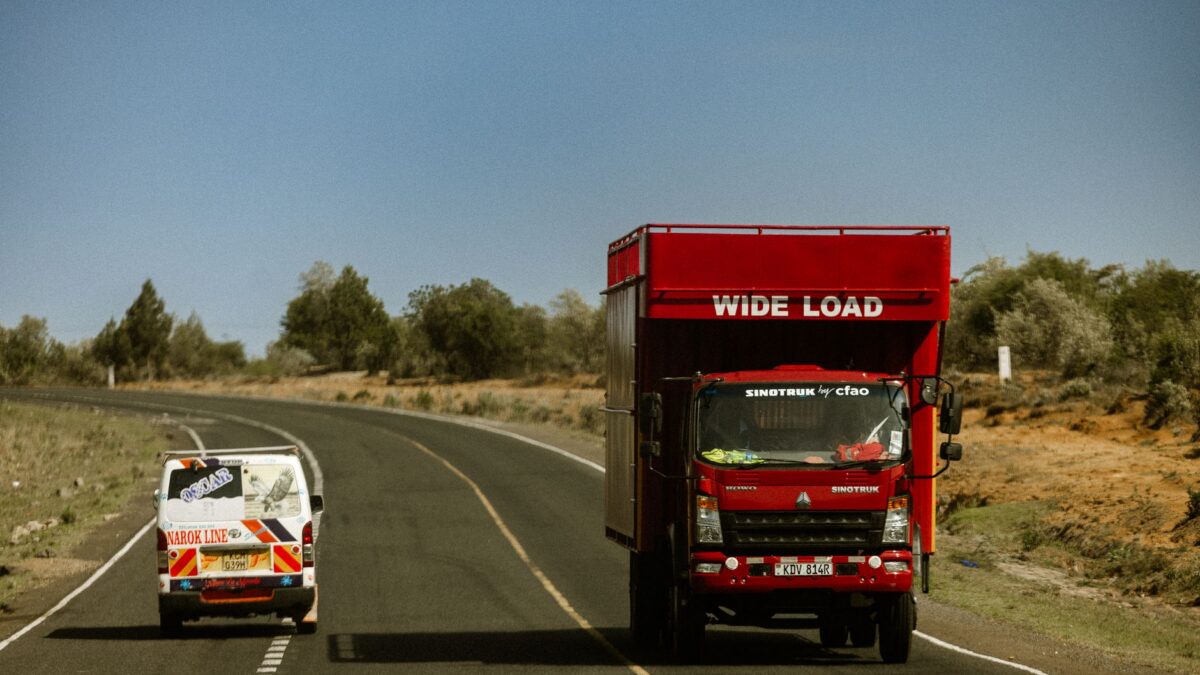
A truck load is oversize when it is wider than 8.5 feet (102 inches) or exceeds a state’s height or length limit, and overweight when it goes over 80,000 lb gross, 20,000 lb on a single axle, 34,000 lb on a tandem or the Bridge Formula. Moving it legally takes a permit from every state on the route, and each state sets its own routes, travel hours and escort rules.
When is a load oversize or overweight?
A load is oversize or overweight when the vehicle and cargo together exceed the legal limits for the road it travels. Federal rules in 23 CFR Part 658 set the main limits for the Interstate System and the National Network, and states set the rest.
| Dimension | Legal limit without a permit | Who sets it |
|---|---|---|
| Width | 102 inches (8.5 feet) on the National Network; Hawaii keeps 108 inches | Federal, 23 CFR 658.15 |
| Gross weight | 80,000 lb on the Interstate, or less if the Bridge Formula requires | Federal, 23 CFR 658.17 |
| Single axle | 20,000 lb | Federal, 23 CFR 658.17 |
| Tandem axle | 34,000 lb | Federal, 23 CFR 658.17 |
| Semitrailer length | States may not set less than 48 feet in a tractor-semitrailer combination on the National Network | Federal minimum, 23 CFR 658.13; many states allow 53 feet |
| Height | No federal limit | Each state |
Most loaded vans and reefers stay inside these numbers. Construction equipment, wind turbine blades, transformers, prefabricated buildings and large machinery often do not. For how the Bridge Formula spreads weight across axles, see our guide to federal truck size and weight limits.
Can any load get an overweight permit?
No. On the Interstate, states may issue overweight permits only for nondivisible loads or vehicles, under 23 CFR 658.17(h). A load counts as nondivisible when splitting it would make it unable to do its job, destroy its value, or take more than 8 workhours to take apart, as defined in 23 CFR 658.5. The applicant has to prove the dismantling time.
That rule is why a trailer of steel coils that could be split into two loads does not qualify for an overweight Interstate permit, while a single 120,000 lb transformer can. States have their own rules for state highways, and some allow divisible-load permits for specific commodities off the Interstate.
How do state oversize and overweight permits work?
Each state on the route issues its own permit, usually through an online system run by the state DOT or a permit office. A permit is tied to a specific vehicle, load, set of dimensions and route. There is no single federal oversize permit.
- Single-trip permits cover one move on one approved route within a set number of days. They are the norm for unusual or very large loads.
- Annual or blanket permits cover repeated moves within set dimensions, such as a contractor hauling the same excavator. Many states limit them to loads below a certain width or weight.
- Route surveys and bridge analysis are required by many states for the largest loads before a permit is issued.
Permit terms commonly cover the hours of travel (many states allow oversize moves only from sunrise to sunset), weekend and holiday bans, curfews in metro areas, weather restrictions and required equipment. The permit must be in the truck, and the driver must follow the route exactly. A missed turn onto an unpermitted road is a violation even if the truck is legal in every other way.
Fees, maximum dimensions and processing times differ by state. FHWA keeps a list of state oversize/overweight permit contacts with links to each office.
What signs, flags and lights does an oversize load need?
Marking rules are set by each state and written into the permit, but most follow the same pattern:
- “OVERSIZE LOAD” banners on the front of the truck and the rear of the load, in black letters on a yellow background, at a size the state specifies;
- red or orange flags on the corners and extremities of the load;
- amber warning lights on the truck or load for wide moves, and clearance lights on the widest points for any movement allowed at night.
The exact sign size, flag size and light placement are in the state’s permit regulations and on the permit itself. Inspectors check them at weigh stations and during roadside inspections; see DOT inspection levels for what each type of inspection covers.
When are escort or pilot cars required?
Escort vehicles, also called pilot cars, are required when a load passes the width, length or height thresholds that each state sets. The thresholds differ by state and by road type, so a load that runs without escorts in one state may need one or two in the next.
States commonly set rules on:
- how many escorts are needed and whether they lead, follow or both;
- whether the escort driver needs a state certification (several states require it);
- the escort’s own equipment, such as a roof sign, amber lights, a height pole for tall loads and a two-way radio;
- when a police escort is required instead of or in addition to private escorts, usually for the widest or heaviest moves or on specific highways.
The permit tells the driver what is required for that move. Do not rely on another state’s rules or a rule of thumb.
What is a superload?
A superload is a move so large or heavy that the state handles it separately from routine oversize permits. Each state defines its own superload threshold by weight, width, height or length. Superloads usually need longer lead time, an engineering review of bridges on the route, a detailed route survey, extra escorts or police escorts, and sometimes utility crews to lift lines or traffic signals. Some states require the carrier to pay for bridge analysis or road repairs.
What else does an oversize carrier need to have in place?
A permit does not replace federal safety rules. The driver still needs the right CDL and medical card, and the move still falls under hours-of-service rules, which matter more when daylight-only travel shortens the usable day. Cargo must be secured under 49 CFR 393.100 to 393.136, and heavy machinery has its own securement section. Carriers also need insurance that covers the cargo value and the higher liability that comes with large moves.
Bottom line
The hard part of an oversize move is the patchwork: one load may need five permits with five sets of hours, signs and escort rules. Carriers that plan the route state by state before quoting the load avoid the most common costs, such as waiting a weekend at a state line or hiring an extra escort on short notice.
FAQ
Is 8.5 feet wide a legal load?
Yes. 102 inches (8.5 feet) is the federal width limit on the National Network, so a load that is exactly 102 inches wide is legal without a width permit. Anything wider needs a permit in each state on the route.
Can an oversize load travel at night?
Many states allow oversize moves only from sunrise to sunset, and some allow night travel for loads under certain widths with extra lighting. The permit states the allowed hours for that move.
Who gets the oversize permit, the carrier or the driver?
The permit is issued for the vehicle and load, and the motor carrier or a permit service usually applies for it. The driver must carry it in the truck and follow its route and conditions.
Is there a federal oversize load permit?
No. States issue oversize and overweight permits. Federal rules set the baseline limits on the Interstate and decide which loads states may permit as overweight there.