Truck Weight and Size Limits: 80,000 Pounds and the Bridge Formula
The federal numbers behind every scale ticket, a worked Bridge Formula example, and the trailer length and width rules states must allow.
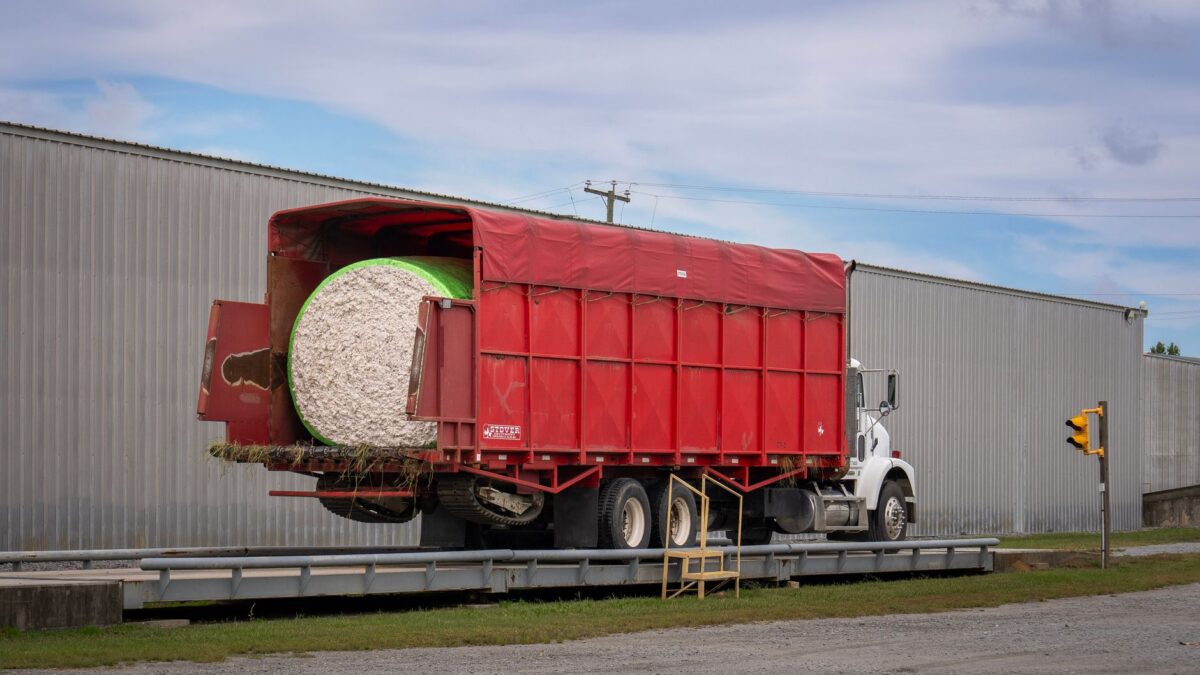
On the Interstate System, federal law caps a truck at 80,000 pounds gross vehicle weight, 20,000 pounds on a single axle and 34,000 pounds on a tandem axle, and every group of axles must also pass the Federal Bridge Formula. Width is set at 102 inches (8.5 feet) on the National Network.
These limits come from 23 U.S.C. 127 and 23 CFR Part 658, which the Federal Highway Administration administers. States enforce them and set their own limits for roads off the Interstate. Figures below are current as of November 2026.
What are the federal truck weight limits?
Four limits apply at the same time on Interstates, and the lowest one that applies controls.
| Limit | Federal maximum | Rule |
|---|---|---|
| Gross vehicle weight | 80,000 lb, or less if the Bridge Formula says so | 23 CFR 658.17(b) |
| Single axle | 20,000 lb | 658.17(c) |
| Tandem axle (centers more than 40 and not more than 96 inches apart) | 34,000 lb | 658.17(d) |
| Any group of two or more axles | Bridge Formula result | 658.17(e) |
| Idle-reduction unit (APU) allowance | Up to 400 lb extra, with proof of weight | 658.17(n) |
These numbers include all tolerances. The only allowance is for portable wheel-load scales, and it may not exceed 5 percent. A state fine schedule that ignores the first 1,000 pounds over is treated as an unauthorized tolerance.
How does the Federal Bridge Formula work?
The Bridge Formula limits weight on any group of consecutive axles based on how many axles are in the group and how far apart they are. It protects bridges by spreading weight over a longer wheelbase. The formula is:
W = 500 [ (L × N) / (N − 1) + 12N + 36 ]
W is the maximum weight on the group, rounded to the nearest 500 pounds. L is the distance in feet between the outer axles of the group. N is the number of axles in the group. FHWA’s Bridge Formula Weights guide publishes the full table.
Worked example for a standard five-axle tractor-semitrailer:
- Measure from the steer axle to the last trailer axle. Say it is 51 feet. N is 5.
- Compute (51 × 5) / 4 = 63.75.
- Add 12 × 5 + 36 = 96, for a total of 159.75.
- Multiply by 500: 79,875, which rounds to 80,000 pounds. This matches FHWA’s table.
- Repeat with a shorter rig, 45 feet overall: (45 × 5) / 4 = 56.25, plus 96, times 500 = 76,125, which rounds to 76,000 pounds. That truck cannot legally gross 80,000 on the Interstate.
One exception helps the common setup. Two consecutive tandems may carry 34,000 pounds each if the distance from the first axle of the drive tandem to the last axle of the trailer tandem is 36 feet or more. Run the formula on four axles at 36 feet and you get 66,000 pounds; the exception lets that group carry 68,000. Inspectors check several groups, including axles 1 through 5, 1 through 3 and 2 through 5.
How wide and long can a truck be?
States must allow, and may not exceed, a width of 102 inches on the National Network (Hawaii keeps a 108-inch limit). Mirrors, lights and certain safety devices are excluded from the measurement under 23 CFR 658.16.
Length rules in 23 CFR 658.13 apply to tractor-semitrailers and doubles on the National Network:
- States may not set a semitrailer limit under 48 feet in a tractor-semitrailer combination.
- States may not set a limit under 28 feet for each trailer in a set of doubles, and must allow 28.5-foot trailers that were in lawful use on December 1, 1982.
- States may not impose an overall length limit on these two combinations.
- States may allow longer trailers than these minimums, and trailer dimensions a state allowed on December 1, 1982, stay legal there; that list is in Appendix B to Part 658.
- Traditional auto transporters get at least 65 feet overall and stinger-steered ones at least 75 feet, plus 3 feet of front and 4 feet of rear overhang.
There is no federal height limit. Each state sets one, and low bridges are the driver’s problem. States must also give STAA-size trucks reasonable access between the National Network and terminals, fuel, food, repairs and rest, and may not deny access within 1 road-mile of the network except for specific safety reasons.
What are grandfathered state limits?
Congress let states keep heavier limits that were legal before the federal caps took effect. Axle and gross weights legal under state law on July 1, 1956, and axle group tables in place on January 4, 1975, are protected under 23 CFR 658.17(i). That is why some states allow heavier trucks or longer combination vehicles on parts of their Interstates. A few route-specific exceptions are written into the regulation itself, such as coal and log haulers on I-68 in western Maryland.
For a load that cannot be broken down, such as a transformer or an excavator, states issue special permits outside these limits under 658.17(h).
What happens if you are over?
Fines and procedures are set by each state, usually by the pound over and the size of the overload. An officer can also require the load to be shifted, the trailer tandems slid or part of the freight removed before the truck continues, and an overweight truck stopped at a scale often gets a closer look at the rest of the equipment. Axle and bridge limits are also separate from the registered gross weight on the cab card; a truck can pass the scale and still be over the weight it is registered for under IRP apportioned plates.
Bottom line
The 80,000-pound number gets the attention, but a short wheelbase or tandems slid too far forward can make a truck illegal well below it. Before scaling, know your outer-axle distances; a 45-foot rig tops out at 76,000 pounds no matter how the axles read. Weight responsibility also appears on the shipping papers, covered in our bill of lading guide.
FAQ
What is the max weight for a semi truck?
On the Interstate System, 80,000 pounds gross, unless the Bridge Formula sets a lower number for that axle spacing. Some states allow more on other roads or under grandfather rights and permits.
How much can a tandem axle carry?
34,000 pounds federally. A single axle is limited to 20,000 pounds, and steer axle limits may not be set below 20,000 pounds or the manufacturer’s rating, whichever is lower.
Is there a federal height limit for trucks?
No. Each state sets its own height limit, so check the state’s size and weight rules for every state on the route. Clearance under bridges and overpasses is the driver’s responsibility.
Does the 400-pound APU allowance apply everywhere?
It is in the federal rule for gross, axle and bridge weights, but the driver must carry written proof of the unit’s weight and show it works. The extra weight cannot exceed 400 pounds or the certified weight, whichever is less.