CDL Endorsements and Restrictions: H, N, T, P, S, X and Codes
What each federal endorsement lets you haul, the tests and TSA check behind it, which jobs ask for which, and what the restriction letters on your license mean.
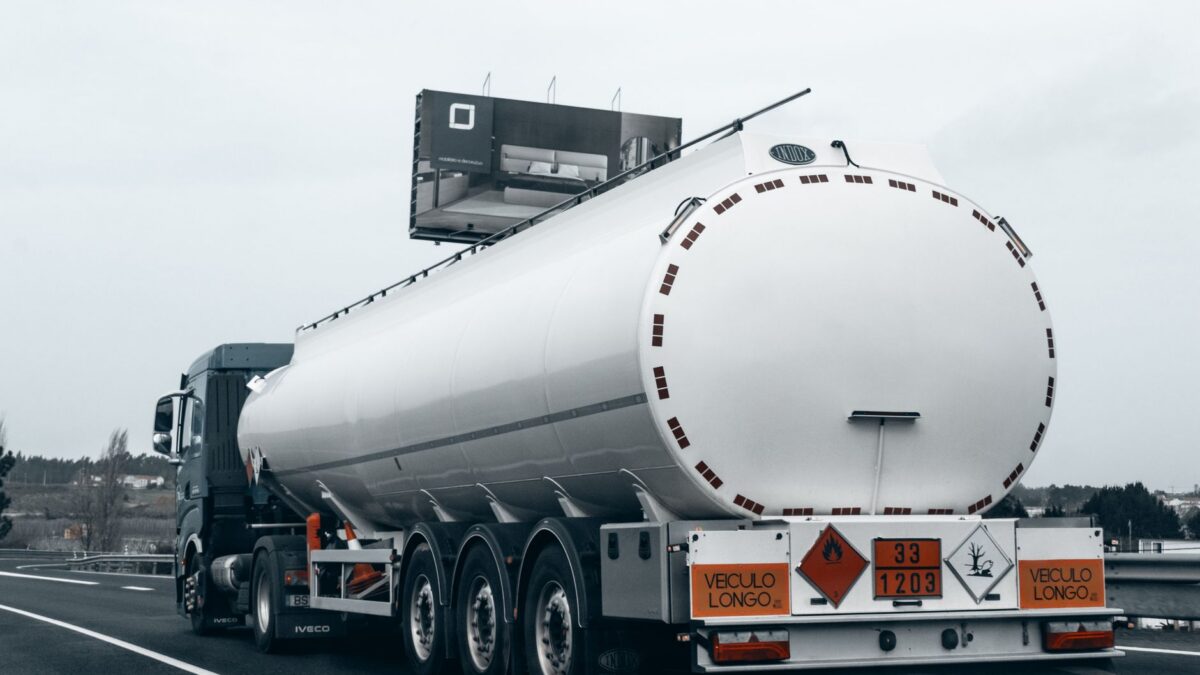
A CDL endorsement adds a type of vehicle or cargo to your license: H for hazardous materials, N for tank vehicles, T for double and triple trailers, P for passengers, S for school buses, and X for the tank and hazmat combination. A restriction does the opposite, limiting what you may drive, such as E for no manual transmission or L for no air brakes.
The codes are standardized in federal rules (49 CFR 383.93, 383.95 and 383.153), so every state prints the same letters. States may add their own codes if they explain them on the license. Details below are current as of November 2026.
What does each CDL endorsement allow?
| Code | Endorsement | What it allows | Tests required |
|---|---|---|---|
| H | Hazardous materials | Hauling hazmat in amounts that require placards | Knowledge test, TSA security threat assessment, entry-level training (theory) |
| N | Tank vehicle | Vehicles carrying liquid or gas in tanks of more than 119 gallons each and 1,000 gallons or more in total | Knowledge test |
| T | Double/triple trailers | Pulling two or three trailers | Knowledge test |
| P | Passenger | Vehicles designed to carry 16 or more people including the driver | Knowledge and skills tests, entry-level training |
| S | School bus | School buses carrying students | Knowledge and skills tests, entry-level training; P also required |
| X | Tank plus hazmat | Tank vehicles hauling hazardous materials, such as fuel tankers | Both the N and H requirements |
The tank definition matters at the margin. A truck hauling an empty storage tank of 1,000 gallons or more that is temporarily attached to a flatbed and not designed for transport is not a tank vehicle. The full definitions are in 49 CFR 383.5.
How do you get the hazmat (H) endorsement?
The hazmat endorsement takes more steps than any other because it includes a federal security check.
- Complete the hazmat theory portion of entry-level driver training with a provider on FMCSA’s Training Provider Registry, if this is your first H endorsement.
- Apply for the Transportation Security Administration (TSA) security threat assessment, which includes fingerprinting at an enrollment center and checks of criminal history and immigration status.
- Pass the state’s hazmat knowledge test.
- Wait for TSA’s determination to reach the state. The state may not issue, renew, upgrade or transfer the endorsement until TSA clears you, or you hold a valid TWIC card.
The endorsement must be renewed at least every 5 years so that drivers go through the TSA check again. States must remind you at least 60 days before it expires, and you should apply no later than 30 days before. Start on TSA’s hazmat endorsement page.
Which trucking jobs need which endorsements?
- Fuel and chemical tankers: X (or N and H). Most fuel hauling jobs ask for X.
- Food-grade and water tankers: N. No hazmat is involved, but the liquid surge changes how the truck handles.
- LTL linehaul with doubles: T, and often H as well, since mixed LTL freight can include placarded shipments.
- General freight with occasional hazmat: H, which lets dispatch assign placarded loads to you.
- Motorcoach, transit and shuttle: P. School bus driving needs S and P.
Endorsements can affect pay and the loads you are offered. How pay is structured is covered in our guide to truck driver pay.
Which endorsements can you hold on a learner’s permit?
Only P, S and N are allowed on a commercial learner’s permit (CLP), and each needs its knowledge test first. With P or S on a CLP you may not carry passengers other than trainers, examiners and other trainees. With N, you may drive only an empty tank vehicle that has been purged of any hazmat residue. CLP holders may never haul hazardous materials. The permit and training steps are in our guide on how to get a CDL.
What do CDL restriction codes mean?
Most restrictions come from the vehicle you used on the skills test. Taking the test in a truck without a certain feature restricts you from driving trucks that have it.
| Code | Restriction | Usual cause |
|---|---|---|
| E | No manual transmission | Skills test taken in an automatic |
| L | No air brakes | Failed the air brake knowledge test or tested in a vehicle without air brakes |
| Z | No full air brakes | Skills test taken in a vehicle with air-over-hydraulic brakes |
| O | No tractor-trailer | Class A test taken with a pintle hook or other non-fifth-wheel connection |
| M | No Class A passenger vehicle | Passenger skills test taken in a Class B bus |
| N | No Class A or B passenger vehicle | Passenger skills test taken in a Class C vehicle |
| K | Intrastate only | Set by the state, for example a driver under 21 or one who self-certified for in-state driving only |
| V | Medical variance | Driver holds a medical exemption or skill performance evaluation certificate |
Note that N means tank vehicle as an endorsement but no Class A or B passenger vehicle as a restriction. Drivers who held a CDL before July 8, 2015, did not have to retest for the E, Z and O restrictions.
How do you remove a restriction?
You remove an equipment restriction by passing the relevant test again in a vehicle that has the feature. For E, that means a skills test in a manual transmission truck. For L, it means passing the air brake knowledge test and a skills test in an air-brake vehicle. Ask your state DMV whether a full skills test or only part of it is needed, and whether an appointment and fee apply.
A K restriction can usually be removed when its reason ends, for example after a driver turns 21 and self-certifies for interstate driving; the state sets the process. A V restriction stays as long as the medical variance is on record.
Bottom line
T and N need only a knowledge test, so they are the quickest endorsements to add; H takes the longest because of the TSA check and, for first-time applicants, registered training. An E restriction from testing in an automatic rules out any truck with a manual transmission, so check the equipment a carrier runs before accepting a job. Endorsements also bring their own disqualification rules for drivers who break hazmat or railroad crossing laws, covered in our guide to CDL disqualification offenses.
FAQ
Do I need a hazmat endorsement for every hazmat load?
You need it when the load requires placards under DOT hazmat rules. Small quantities that do not require placards do not need the endorsement.
Does a TWIC card replace the TSA check for hazmat?
A valid TWIC is accepted in place of a separate hazmat threat assessment under 49 CFR 383.141. You still need to pass the hazmat knowledge test and, for a first H endorsement, the training.
Is a tanker endorsement needed for a dry bulk trailer?
The N endorsement covers liquids and gases. A pneumatic dry bulk trailer is generally not a tank vehicle under the federal definition, but confirm with your state DMV.
Can I add an endorsement without retaking the skills test?
H, N and T need only knowledge tests (plus the TSA check and training for H). P and S also require a skills test.