Adverse Driving Conditions Exception: 2-Hour Extension Rules
The adverse driving conditions exception adds up to 2 hours to the 11-hour driving limit and 14-hour window. Here is what qualifies and how to log it.
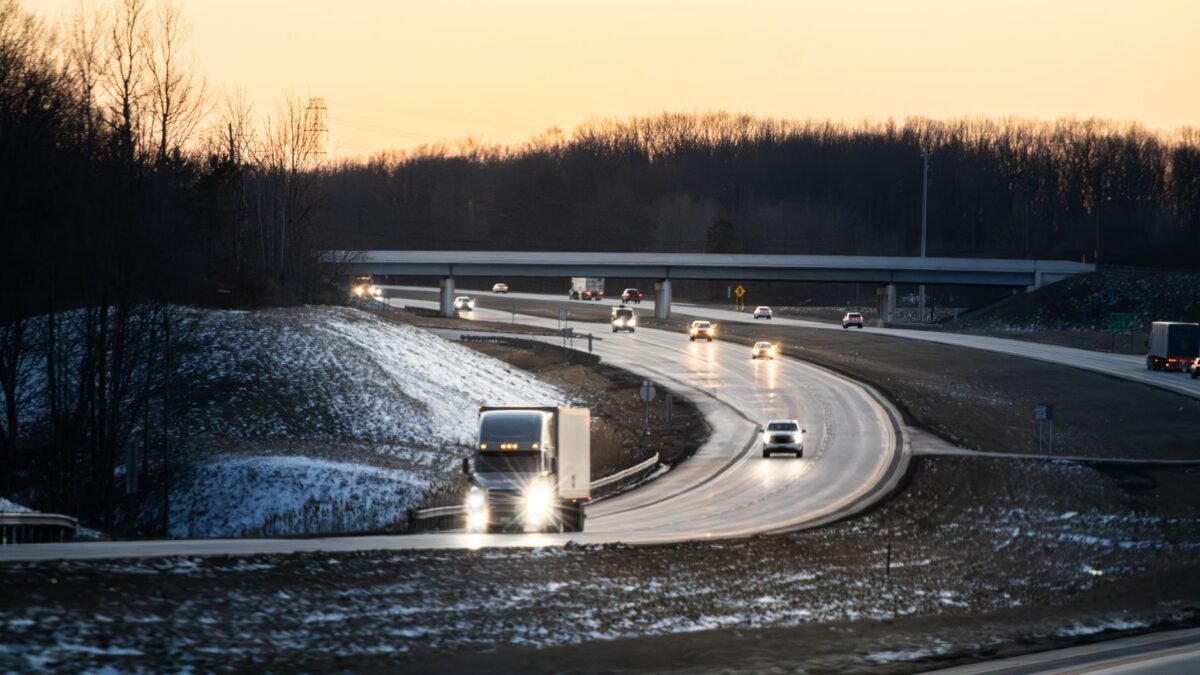
The adverse driving conditions exception lets a property-carrying truck driver extend the 11-hour driving limit and the 14-hour driving window by up to 2 hours when snow, ice, sleet, fog or unusual road or traffic conditions slow a trip. The conditions must have been unknown to the dispatcher when the run began. The rule is in the federal hours-of-service regulations at 49 CFR 395.1(b)(1), published by the Federal Motor Carrier Safety Administration.
In practice, a driver who is legally allowed 11 hours of driving inside a 14-hour window may drive up to 13 hours inside a 16-hour window. The extra time covers the delay the conditions caused. It is not a standing bonus for every winter trip.
What counts as adverse driving conditions?
The regulation names snow, ice, sleet, fog and other adverse weather, and a highway covered with snow or ice. It also covers unusual road and traffic conditions. The test is whether the condition was apparent from the information the dispatcher had when the run was started.
Situations that commonly fit:
- A crash that closes lanes and stops traffic for hours on a route that was clear at dispatch.
- A sudden storm or fog bank that forces slow speeds on a stretch not covered by a forecast at the time of dispatch.
- A road closure and detour that appeared after the trip started.
What does not qualify?
Conditions that were known or could have been known when the run began do not qualify. If a winter storm warning covered the whole route before the driver left, the dispatcher could have planned for it, and the exception does not apply. Regular rush-hour congestion, a long wait at a shipper’s dock, a late load and a driver’s own wrong turn are also outside the rule.
The exception also does not stretch every limit. It applies to the 11-hour driving time and the 14-hour window. It does not add hours to the weekly 60-hour or 70-hour limit, and it does not replace the required off-duty rest before the next shift.
How do you note it in the log?
Record the condition in the electronic logging device (ELD) or paper log so an inspector can see why the driver went past 11 or 14 hours. A useful entry covers:
- the type of condition, such as snow, fog or a crash closure;
- the location and the time it was met;
- why it was not known at dispatch;
- the extra driving time used.
Most ELDs let the driver add an annotation or remark to a duty-status entry. Write it in plain words at the time, while the details are fresh. A vague note such as “weather” is weak. A note such as “I-80 closed after crash, 90 minute standstill, not known at dispatch” gives an auditor something to check. Keep any supporting records the carrier can get, such as dispatch messages, road-closure alerts and the time of the crash report.
Does the exception override safety?
No. The exception adds legal driving time, but a driver must still stop when conditions become too dangerous. The federal rule on hazardous conditions requires a driver to reduce speed or stop when snow, ice, fog or similar conditions make driving unsafe. A driver who has hours left but cannot see the road should park. For tips on handling bad conditions, see the guides on driving a truck in dense fog and winter truck driving.
Planning also matters. Checking closures and chain controls before and during the trip, as described in the guide to 511 road conditions, shows whether a problem was knowable at departure. That record also helps show whether the exception was properly used.
Who decides if the exception was valid?
Enforcement officers and auditors review the log after the fact. They look at the annotation, the route, the weather and traffic records, and whether the carrier could have known about the condition. If they conclude the delay was foreseeable, the extra hours can be treated as an hours-of-service violation. Both the driver and the carrier can face consequences, so honest, specific entries protect both.
Quick answers
How many hours does the exception add?
Up to 2 hours. The 11-hour driving limit becomes 13 hours, and the 14-hour window becomes 16 hours.
Can a dispatcher plan a trip around the extra 2 hours?
No. The exception is for conditions that were not apparent when the run began. A trip that only fits legally if the extension is used was not planned within the rules.
Does the exception apply to a forecast storm?
Generally not. A storm already forecast along the route before dispatch was knowable, so the extra time is hard to justify.
Does the 2 hours reset the clock?
No. The 14-hour window keeps running, and the driver still needs the full off-duty period before starting the next shift.