IRP Apportioned Plates: Who Needs Them and How Fees Are Split
One plate, one cab card, many states. The International Registration Plan divides registration fees by where the truck actually ran.
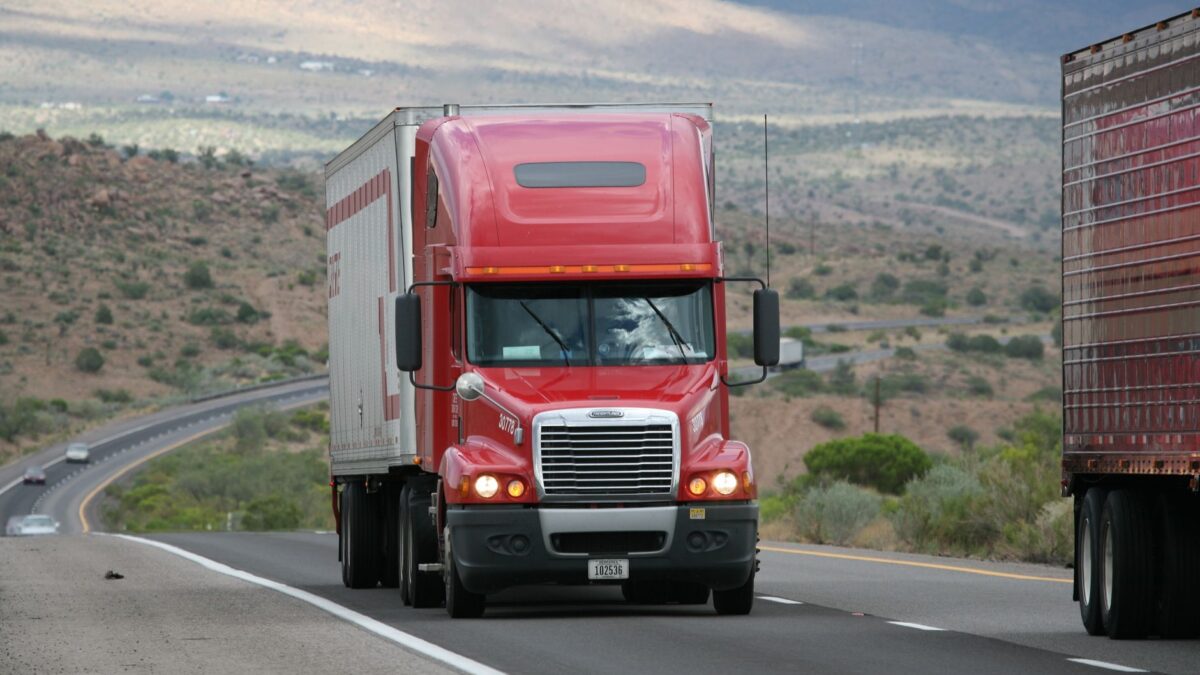
The International Registration Plan (IRP) lets a truck that runs in more than one state or province register once in its base jurisdiction and get one apportioned plate and cab card. The registration fee is split among the jurisdictions where the truck travels, in proportion to the miles driven in each. Trucks over 26,000 pounds or with three or more axles generally need it.
Who needs IRP apportioned registration?
A vehicle needs apportioned registration if it travels in two or more member jurisdictions, carries people or property, and meets one of these tests:
- two axles and a gross vehicle weight or registered gross vehicle weight over 26,000 pounds (11,793 kilograms);
- three or more axles, regardless of weight; or
- used in a combination whose gross vehicle weight exceeds 26,000 pounds.
Recreational vehicles, government vehicles and vehicles with restricted plates such as farm plates are not apportionable. Lighter two-axle trucks can join IRP voluntarily. IRP members are the 48 contiguous states, the District of Columbia and the 10 Canadian provinces.
How are IRP fees calculated?
Each jurisdiction’s share of your fee is its full registration fee for your vehicle’s weight, multiplied by the percentage of your fleet’s miles driven there. Your base jurisdiction collects the total and sends each member its part.
The miles come from a reporting period, which is the 12 months ending June 30 of the year before your registration year begins. A new carrier with no miles in that period uses estimated distance, set by the base jurisdiction from IRP’s estimated-distance figures, until actual miles are available.
This example uses made-up full fees to show the method. Real fees depend on each jurisdiction’s schedule and your registered weight.
| Jurisdiction | Miles in reporting period | Share of total miles | Example full fee | Apportioned fee |
|---|---|---|---|---|
| Base state | 40,000 | 40% | $1,500 | $600 |
| State B | 35,000 | 35% | $1,800 | $630 |
| State C | 25,000 | 25% | $1,200 | $300 |
| Total | 100,000 | 100% | $1,530 |
Some states also charge plate, title or administrative fees on top of the apportioned amount. Your base jurisdiction’s IRP office can give an exact quote before you pay.
What is a base jurisdiction and how do I qualify?
Your base jurisdiction is the state or province where you have an established place of business, where your fleet accrues miles, and where your operational records are kept or can be made available. You cannot pick a state for lower fees. A mailbox or registered agent address is not an established place of business, and states can deny or cancel registration that does not meet the test.
How do I apply for apportioned plates?
- Get a USDOT number. Under the PRISM program, states check the USDOT number of the carrier responsible for safety and will not register vehicles for a carrier under a federal out-of-service order. Our guide to USDOT numbers and operating authority covers that step.
- File IRS Form 2290 if the vehicle has a taxable gross weight of 55,000 pounds or more, and bring the stamped Schedule 1. See Form 2290 heavy vehicle use tax.
- Gather the title or lease, proof of your place of business, the VIN, axles, unladen weight and the weight you will run in each jurisdiction.
- Apply to your base state’s IRP office, often part of the DMV or revenue department. Many states accept IRP applications online.
- Pay the apportioned fees. You receive a plate and a cab card listing each jurisdiction and the weight registered there.
- Carry the cab card in the truck at all times. A leased owner-operator also carries the lease.
The IRP, Inc. website lists every member jurisdiction’s registration contact.
Can I use a trip permit instead of IRP?
Yes, for occasional trips. A trip permit lets an unregistered or not-apportioned truck enter a state for a short, fixed period, and each state sets its own price and duration. Trip permits make sense for a carrier that runs interstate only a few times a year. A truck crossing state lines every week pays far more in permits than in apportioned fees.
What records do I need to keep for IRP?
IRP requires distance records that show the miles each vehicle ran in each jurisdiction, with trip dates, origin, destination and odometer or hubometer readings. Carriers must keep these records for the period an audit can reach, generally three years after the registration year. The same trip records support your IFTA fuel tax returns, and an audit in one program can lead to questions in the other.
Bottom line
Your IRP bill next year is built from where you drove this year, so lanes matter. A carrier that shifts its freight toward higher-fee states will see the change at renewal, not right away. Weight matters too: registering for less weight than you haul can lead to fines at the scale, and registering for far more than you need raises the fee in every jurisdiction.
FAQ
Is IRP the same as IFTA?
No. IRP covers vehicle registration fees, and IFTA covers fuel taxes. Most interstate trucks need both, and both use mileage by jurisdiction.
Do I need IRP for a pickup and gooseneck trailer?
Only if the combination exceeds 26,000 pounds gross vehicle weight and runs in two or more jurisdictions. Below that, apportioned registration is optional.
Can I register in a state where I don’t live?
Only if you have an established place of business there, accrue miles there and keep or can provide records there. Using an address only for registration is not allowed.
How long does IRP registration last?
Apportioned registration generally runs for 12 months and is renewed each year through the base jurisdiction, which sets the renewal month. The renewal uses miles from the latest reporting period.