Commercial Truck Insurance Requirements: Federal Minimums by Cargo
What the federal rules require, what lenders and brokers add on top, and how FMCSA knows a carrier is covered. Plus the terms owner-operators mix up most: bobtail, non-trucking liability and occupational accident.
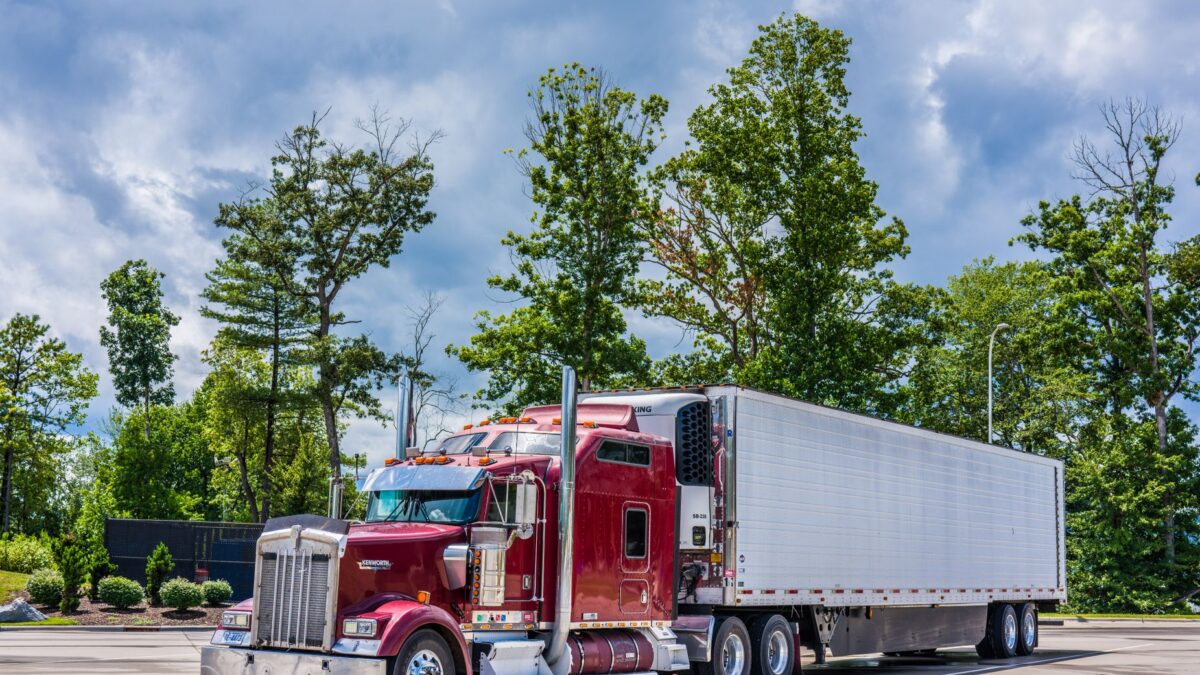
Federal rules in 49 CFR 387.9 require for-hire interstate trucks of 10,001 pounds or more hauling nonhazardous freight to carry at least $750,000 in public liability coverage. Oil and most hazardous materials require $1 million, and certain bulk hazmat, explosives and highway-route-controlled radioactive loads require $5 million. Those amounts are unchanged as of November 2026.
What liability insurance does FMCSA require?
Public liability, often called auto liability or primary liability, pays for injuries and property damage to others in a crash. It is the only coverage FMCSA requires of nearly every interstate motor carrier of property. The minimums depend on what is hauled and whether the carrier is for-hire or private.
| Type of carriage | Cargo | Federal minimum |
|---|---|---|
| For-hire, interstate or foreign, 10,001 lb GVWR or more | Property (nonhazardous) | $750,000 |
| For-hire and private, interstate or foreign (any quantity) or intrastate (bulk only), 10,001 lb or more | Oil listed in 49 CFR 172.101; hazardous waste, materials or substances not in the $5 million row | $1,000,000 |
| For-hire and private, interstate, foreign or intrastate, 10,001 lb or more | Hazardous substances in bulk in cargo tanks, portable tanks or hoppers; bulk Division 1.1, 1.2 or 1.3 explosives; bulk Division 2.3 Hazard Zone A; bulk Division 6.1 PG I Hazard Zone A; bulk Division 2.1 or 2.2; highway-route-controlled quantities of Class 7 | $5,000,000 |
| For-hire and private, interstate or foreign, under 10,001 lb | Bulk explosives 1.1 to 1.3, bulk 2.3 or 6.1 Hazard Zone A, highway-route-controlled Class 7 | $5,000,000 |
The source is the schedule of limits on the eCFR page for 49 CFR 387.9. In practice most brokers and shippers ask for $1 million in liability even on general freight, so that is what most new authorities buy.
Which FMCSA filings prove a carrier is insured?
A carrier does not send FMCSA its policy. The insurer files a certificate electronically, and FMCSA shows it in its Licensing and Insurance records. Operating authority is not granted, and stays revoked, until the right filing is on record.
- Form BMC-91 or BMC-91X: the insurer’s certificate of public liability coverage for a for-hire motor carrier. The 91X version is the one the rules call for when coverage is split among several insurers, and many insurers file it for single policies too.
- Form MCS-90: the federal endorsement attached to the liability policy. It guarantees payment to the public up to the required minimum even if the policy would otherwise exclude the claim; the carrier must repay the insurer in that case.
- Form BMC-34: the cargo insurance certificate, required only of household goods carriers.
- Form BMC-84 or BMC-85: the $75,000 surety bond or trust fund agreement for freight brokers and forwarders, not motor carriers.
Policies stay in effect until cancelled, and cancellation requires 35 days’ written notice under 49 CFR 387.7. Proof of coverage must be kept at the carrier’s principal place of business. Anyone can check a carrier’s filings for free; our guide to checking a trucking company’s safety record shows where. Getting these filings in place is one step of getting USDOT and MC authority.
Is cargo insurance required?
Federal rules require cargo insurance only for household goods carriers. For general freight carriers it is a business requirement, not a federal one: most brokers and shippers will not tender a load without proof of cargo coverage, and the limit they ask for rises with the value of the freight. The carrier remains liable for cargo loss under the Carmack Amendment whether it is insured or not.
What other coverages do owner-operators need?
Other coverages come from lenders, lease agreements, state law or a carrier’s own risk choices. The names are similar and easy to confuse.
| Coverage | What it pays for | Who usually requires it |
|---|---|---|
| Physical damage | Repair or replacement of your own tractor and trailer after a crash, fire or theft | Lenders and lessors on financed equipment |
| Non-trucking liability | Liability while a leased owner-operator uses the truck for personal purposes, not under dispatch | Motor carriers that lease on owner-operators |
| Bobtail liability | Liability while driving the tractor without a trailer; some policies cover bobtailing under dispatch, others do not | Lease agreements, depending on the carrier’s own policy |
| Occupational accident | Medical bills, disability and death benefits for an independent contractor injured on the job | Carriers using contractors where workers’ compensation does not apply |
| Workers’ compensation | Injuries to employees | State law for employers; rules vary by state |
| General liability | Non-driving claims, such as injuries at a customer’s dock or yard | Some shippers and facilities |
A leased owner-operator runs under the motor carrier’s primary liability while under dispatch. Whether non-trucking liability or bobtail coverage is needed depends on the wording of both the lease and the carrier’s policy, so drivers should read the definitions before buying either. For how insurance fits into the total cost of running a truck, see owner-operator vs company driver.
What drives truck insurance premiums?
Insurers price trucking risk mainly on the driver, the operation and the claims history. Factors they commonly ask about:
- years the business has held authority, with new authorities usually paying the most;
- driver age, CDL experience and motor vehicle record;
- FMCSA safety data, including inspection results and crashes;
- cargo type and value, and any hazmat;
- radius of operation and states where the truck is garaged and runs;
- equipment age and value, and use of cameras or other safety technology;
- prior claims and any lapse in coverage.
Large jury awards also push up the cost of liability coverage across the industry, a trend covered in nuclear verdicts in trucking. Insurers do not publish standard rates, and quotes for the same truck can differ widely, so brokers often shop several markets for a new authority.
Bottom line
The $750,000 federal floor has not changed since 1985 and is lower than what most freight customers require, so the practical minimum is set by contracts, not by FMCSA. A lapse in the insurer’s filing can revoke operating authority even when the carrier believes its policy is active, which makes checking the FMCSA record after any policy change worth the few minutes it takes.
FAQ
Do intrastate carriers need federal insurance minimums?
Federal minimums for nonhazardous freight apply to interstate for-hire carriers. Intrastate carriers follow their state’s rules, which may adopt the federal amounts or set their own. Bulk hazmat rules apply to intrastate carriers too.
Does a leased owner-operator need their own liability policy?
Usually not for loads under dispatch, because the motor carrier’s policy and filing cover those. The lease often requires the owner-operator to buy non-trucking liability and physical damage.
What happens if my insurance is cancelled?
The insurer must give 35 days’ notice, and it files a cancellation with FMCSA. If no replacement filing arrives, FMCSA revokes the operating authority.
Is $1 million the legal minimum for trucks?
Not for general freight. The federal minimum is $750,000; $1 million is the federal minimum for oil and most hazmat, and the amount most brokers and shippers require by contract.