How a Trucking Fuel Surcharge Is Calculated, With Worked Examples
The standard per-mile formula, a table of surcharges at this year's diesel prices, why the surcharge trails the pump, and the contract terms that decide what you are paid.
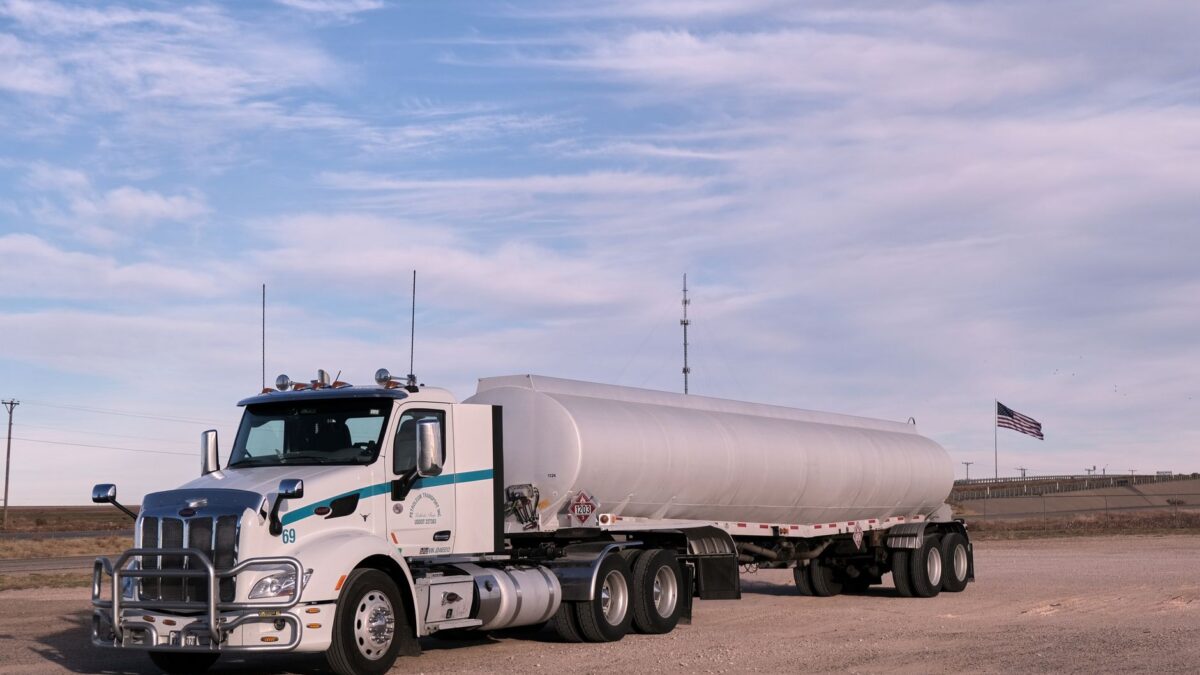
A trucking fuel surcharge is usually calculated per mile as the current weekly diesel price minus a base price, divided by an agreed miles-per-gallon figure. Most contracts use the U.S. Energy Information Administration (EIA) weekly on-highway diesel average. At the EIA’s $6.292 price for the week of November 2, 2026, a $1.25 base and 6 mpg produce a surcharge of about 84 cents a mile.
The surcharge sits on top of the linehaul rate and changes every week with fuel. How it fits into the total load price is covered in our guide to how freight rates work.
What is the fuel surcharge formula?
The standard per-mile formula is:
Fuel surcharge per mile = (current diesel price - base price) / mpg
- Current diesel price. Usually the EIA national average for a set week. Some contracts use a regional average instead.
- Base price. The fuel price already assumed in the linehaul rate. No surcharge is paid when diesel is at or below it. The base is negotiated; there is no federal standard.
- Miles per gallon. The fuel economy the parties agree to use, such as 6 mpg. A lower mpg in the formula pays a higher surcharge.
Multiply the result by the miles in the contract’s mileage basis to get the surcharge for a load. Some shippers publish the same math as a step table, for example one extra cent per mile for every 6 cents diesel rises above the base, which is the formula at 6 mpg.
What does the surcharge look like at 2026 diesel prices?
The table uses three EIA weekly national averages from 2026 and two example base prices at 6 mpg.
| EIA week | Diesel price | Surcharge per mile, $1.25 base | Surcharge per mile, $2.50 base | Surcharge on 1,000 miles, $1.25 base |
|---|---|---|---|---|
| March 2, 2026 | $3.897 | $0.441 | $0.233 | $441 |
| June 1, 2026 | $5.350 | $0.683 | $0.475 | $683 |
| November 2, 2026 | $6.292 | $0.840 | $0.632 | $840 |
The base price makes a large difference: at the November price, moving the base from $1.25 to $2.50 cuts the surcharge by about 21 cents a mile. Prices come from the EIA Gasoline and Diesel Fuel Update.
Where does the diesel price in the formula come from?
The EIA surveys retail on-highway diesel prices every Monday and publishes a national average plus regional averages for the East Coast, Midwest, Gulf Coast, Rocky Mountain and West Coast regions, with California shown separately. The figure for Monday, November 2, 2026, was released November 3.
Regional prices can be far apart. For the week of November 2, 2026, the EIA reported:
- Gulf Coast: $5.912
- Midwest: $6.402
- West Coast: $7.272
- California: $8.076
A contract tied to the national average underpays a carrier that fuels mostly in California and overpays one that fuels on the Gulf Coast. Some shippers use the regional price for the lane’s origin to narrow that gap.
Why do fuel surcharges lag pump prices?
Most schedules use the EIA price from the week before the load ships, or the week it was tendered. Pump prices change every day, so the surcharge trails the market by about a week.
The lag hurts carriers when diesel jumps. Between the EIA weeks of March 2 and March 9, 2026, the national average rose from $3.897 to $4.859, an increase of 96 cents in one week. Carriers paid surcharges based on the lower price while buying fuel at the higher one. When prices fall, the lag works the other way.
Does the surcharge cover the whole fuel bill?
No. The surcharge pays only for fuel above the base price; the linehaul rate is supposed to cover fuel up to the base. If a truck actually gets 6.5 mpg and pays $6.292 a gallon, fuel costs about 97 cents a mile. A $1.25 base at 6 mpg returns 84 cents, so the remaining 13 cents or so has to come out of linehaul. Each carrier’s real fuel cost depends on its own mpg and where it buys fuel.
What should you check in a rate confirmation or contract?
- Base price and mpg. Both are negotiable and together set the payout.
- Which EIA series. National average or a named region.
- Which week. The week of pickup, the week of tender, or the prior week.
- Mileage basis. Practical miles, shortest miles, or a mileage software version. Shorter route miles pay less surcharge.
- All-in quotes. On spot loads quoted as one number, there is no separate surcharge to adjust if fuel rises before delivery.
- Extra miles. Whether out-of-route miles, stop-offs and deadhead earn surcharge.
- Pass-through for leased drivers. Owner-operators leased to a carrier should check how much of the surcharge the carrier collects from shippers reaches them. The comparison with company driving is in our guide to owner-operator vs company driver.
Bottom line
The base price and mpg in a fuel schedule are worth negotiating as hard as the linehaul, because they decide how much of a diesel spike lands on the carrier. In 2026 that matters more than in most years: the EIA national average for the week of November 2 was $2.54 higher than a year earlier. Fuel bought across state lines also has to be reported each quarter under IFTA fuel tax rules.
FAQ
Is the fuel surcharge taxable or regulated by the government?
No federal rule sets fuel surcharge formulas for truckload freight. They are contract terms between shippers, brokers and carriers. Tax treatment depends on your business, so ask a tax professional.
What base price do most shippers use?
There is no standard. A contract written when diesel was cheap may carry a low base, while another may use a higher base with a higher linehaul. Compare the total of linehaul plus surcharge, not the surcharge alone.
How often does the fuel surcharge change?
Weekly in most contracts, following the EIA Monday survey. Some contracts update monthly or use a table that changes only when diesel crosses set price steps.
Do LTL carriers use the same formula?
Usually not. LTL fuel surcharges are commonly a percentage of the linehaul charge, set by a table that rises with the diesel price.