Agricultural Exemption From Hours of Service: 150 Air-Mile Rule
The agricultural exemption lifts federal hours-of-service limits for hauling farm goods within 150 air-miles during state-set seasons. See what counts and what does not.
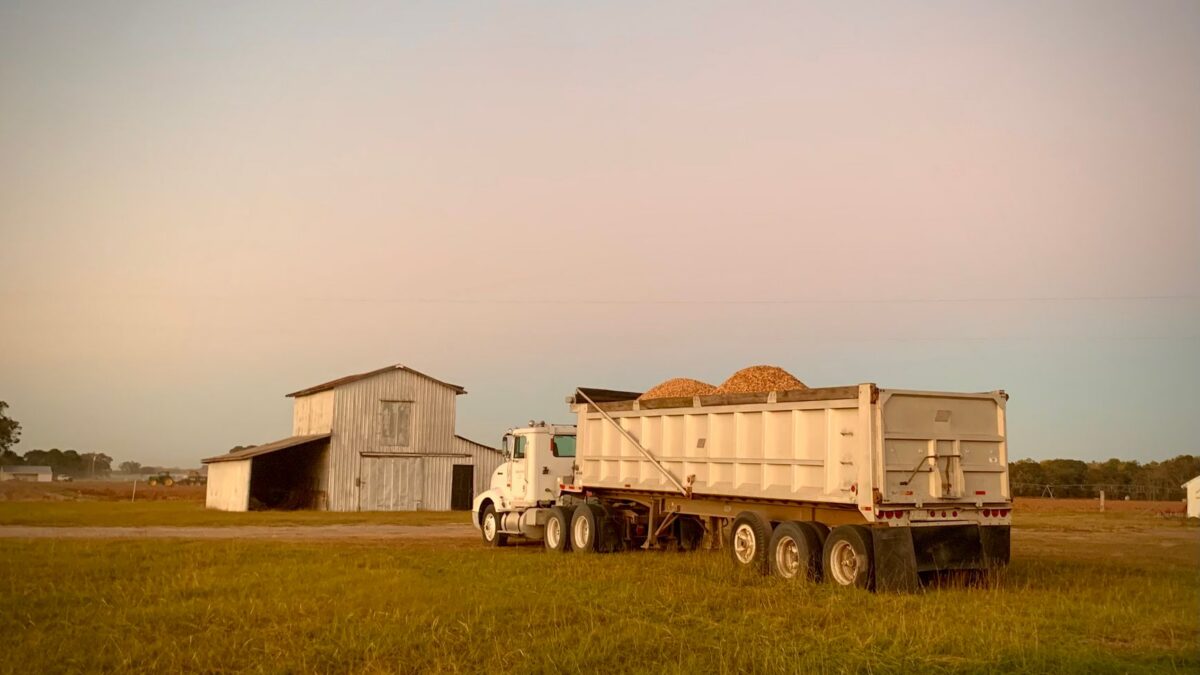
The agricultural exemption removes the federal hours-of-service limits for a driver hauling agricultural commodities from the source to a delivery point within a 150 air-mile radius, but only during the planting and harvest seasons set by the state. The same relief applies to farm supplies carried from a distribution point to a farm within that radius. It is found in the federal rules at 49 CFR 395.1(k).
The exemption covers the driving and on-duty limits and the 30-minute break. It does not cover the commercial driver’s license (CDL), medical certification, drug and alcohol testing, vehicle inspection or weight rules.
What is the 150 air-mile radius, and where is it measured from?
For commodities, the radius is measured from the source: the field, orchard, barn or other place where the product was harvested or produced. An air-mile is a straight-line distance on a map, not the distance on the road. A route of 200 road miles can still fit inside the radius if the destination is within 150 air-miles of the source in a straight line.
For farm supplies such as seed, fertilizer or feed, the circle is drawn around the distribution point where the supplies are picked up. The delivery location, a farm or another place where the supplies will be used, must fall inside it.
When do planting and harvest seasons apply?
Each state decides the dates. The federal rule defers to the state’s determination of planting and harvest periods, and many states set them by crop or by county. A driver cannot assume the exemption is open year-round. Before relying on it, check the state agency that declares the seasons, which is often the state department of agriculture or the state’s motor carrier office, and keep a copy of the dates for the crop and state involved.
Seasons also differ by the state where the load starts and by the state where it travels. If the trip crosses a state line, confirm how each state treats the exemption, since a season in one state may not match the other.
Which commodities count?
The federal definition covers agricultural commodities, non-processed food, feed, fiber and livestock. In plain terms:
- Raw crops such as grain, hay, fruit, vegetables, cotton and similar products from the field or orchard.
- Non-processed food, meaning food that has not been heated or otherwise changed in form.
- Feed for animals.
- Livestock, which includes cattle, horses, sheep, goats, swine and poultry, along with other animals the definition lists.
Processed goods are the usual trouble spot. Flour, packaged meat, canned vegetables and products that have been cooked or turned into something new generally fall outside the definition. A load that mixes raw and processed items needs a careful look at the rule text, and a call to FMCSA or the state enforcement agency settles close cases better than a guess at the roadside.
What happens when the trip goes past 150 air-miles?
The exemption stops applying once the driver passes the radius. From that point the normal rules apply, including the daily driving and on-duty limits explained in our guide to the 11, 14 and 60/70 hour rules. Hours worked while the exemption applied are not counted against the driver in the same way, but the driver should be able to show where the trip started and where the radius ended.
A short-haul driver should not mix up this rule with the separate relief described in the short-haul 150 air-mile exemption. Both use the same distance, but they work differently: the short-haul rule is tied to reporting to the same location and a set duty period, while the agricultural rule is tied to the commodity and to the season.
What records and responsibilities remain?
Hours-of-service records are not required for the exempt part of the trip. Everything else stays in force:
- A valid CDL and medical card when the vehicle requires them.
- Daily vehicle inspections and a truck in safe working order.
- Weight limits, load securement and permits.
- Drug and alcohol testing rules.
Safety still matters when the clock does not apply. During harvest a driver can run very long days, and the 30-minute rest requirement discussed in the break rule article is waived by the exemption, but fatigue is not. A driver who is too tired can still be placed out of service by an inspector, and a crash investigation will look at how long the driver had been working.
Drivers who move between exempt and regulated work in the same week should keep a simple log of each trip: the origin, the destination, the commodity and the date. Those notes show an inspector why the exemption applied. The rules and definitions are published by the Federal Motor Carrier Safety Administration, which also answers questions about how they are applied.
Quick answers
Does the exemption apply to a farmer driving the farm’s own truck?
A farmer driving a farm truck often falls under separate farm-vehicle rules and may not need a CDL at all. The agricultural exemption matters most for hired and for-hire drivers who do need a CDL and would normally have to follow the hours-of-service limits.
Can a driver use the exemption on a return trip with an empty trailer?
The relief attaches to the transport of the commodity or the supplies. An empty trailer returning from a delivery is a gray area, so a carrier should ask the state enforcement agency how it treats the return leg before assuming it is covered.
Is the 150 air-mile limit the same for every commodity?
Yes. The same radius applies to commodities and to farm supplies, though the starting point of the circle differs: the source for commodities and the distribution point for supplies.
Where do owner-operators find the season dates?
The state sets them, so the state department of agriculture or the state motor carrier safety office is the place to ask. Write down the dates and the crop they cover before the first load.